



McDonald’s Targets Household Goods Firm After Trademark Loss Abroad
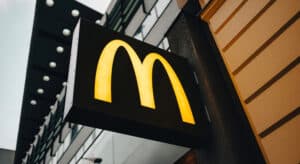
Major news outlets have reported extensively on the major intellectual property loss recently experienced by McDonald’s. Within the European Union (EU), the American restaurant chain no longer owns the “Big Mac” trademark in relation to certain goods and services. However, it turns out McDonald’s has additional trademark issues back at home.
Mere days after the company’s loss in the EU General Court, McDonald’s filed a notice of opposition against entrepreneur Jacob McVay. McVay sought to trademark the word “McVaze” for razor holders, cooking utensils, laundry drying racks, and a variety of other household goods. With its trademark opposition filed on June 4, McDonald’s decided to push back.
Big Mac Trademark Troubles Come Home
Trademark litigation did not go well for McDonald’s overseas. They argued that the restaurant chain Supermac’s should not be able to register its trademark in the European Union. The courts found that McDonald’s had not used the term “Big Mac” enough in relation to its restaurant or chicken sandwich offerings, so Supermac’s won the case.
What’s going on in America is a little different. In their filing, McDonald’s claims that registration of the McVaze trademark would confuse consumers and cause trademark dilution. Although any potential McVaze brand would not seem to be a direct competitor of McDonald’s, it could be argued that their trademark would diminish the distinctive quality of the McDonald’s trademarks.
However, the Trademark Trial and Appeal Board (TTAB) will have to make a decision on this issue — and the fast-food giant could potentially face a defeat on this side of the Atlantic.
Would McVaze Truly Create Consumer Confusion?
In the trademark opposition filing, McDonald’s points out that the U.S. Patent and Trademark Office (USPTO), along with its TTAB courts, have repeatedly sided with them over its “Mc” marks. They explain that “the public has come to recognize marks combining ‘Mc’ with a common word for a wide variety of goods and services as being uniquely associated with (Mcdonald’s).”
Clearly, they’re right on this front. We’ve seen this with popular items such as the McRib, McMuffin, McChicken, McFlurry, and the recent door-service option of McDelivery. However, each of these terms takes a common word and places “Mc” in front of it. If one were to look at the McVaze trademark, you may have to wonder if this is the same issue at all.
Put simply, “Vaze” is not a common word. It seems clear that McVaze is a play on the trademark applicant’s name (i.e., McVay) — and it could likely be argued that it is not an attempt to capitalize on McDonald’s trademarks. In fact, it could be a strong fanciful trademark. And considering the fact that McDonald’s doesn’t sell the products listed in the McVaze trademark application, one might wonder if this case has validity.
What Happens Now?
Everything from former TTAB cases to its own corporate materials shows that McDonald’s takes its trademark rights very seriously. The restaurant chain will clearly fight battles — even losing battles — that take place far and away, across entire oceans. However, what comes next could depend upon the decision of the Trademark Trial and Appeal Board. Barring any delays, Jacob McVay has until July 14, 2024 to file an answer with the TTAB.
If he chooses to go this route, he’ll need to argue that registration of “McVaze” with the USPTO will not infringe on the McDonald’s trademarks. If he does not file an answer — a common outcome when individuals and small brands face pushback from major corporations — then his filing will essentially become an abandoned trademark.
After the overseas case concluded, the managing director of Supermac’s said that McDonald’s was “trademark bullying to stifle competition.” Back home, McVaze doesn’t appear to even be competition — so one has to wonder if bullying is actually occurring or if a likelihood of confusion truly would exist. For now, we’ll have to wait to see how TTAB proceedings play out.