

California Intellectual Property Blog

Background image

Woodstock Trademark Owners Target Festival Despite Name Change

The Woodstock trademark fight was over before it began — but it began anyway.

The 1969 Woodstock Festival was a turning point in counterculture history. While the event itself was aligned with anti-capitalist ideology, the organizers secured commercial rights over the Woodstock trademark in 1978. And while it’s been over a quarter-century since the last official festival, recent federal filings show the owners are still fighting to protect the brand.

On March 24, 2026, Woodstock IP, LLC filed a trademark opposition against another festival organizer. The target was Alexander Richard Klinge, a man who attempted to register the name “Wubstock” for an upcoming music festival held in Iowa. The interesting issue is that this battle seemed to be over even before Woodstock’s official owners filed the Opposition.

A Tight Grip on the Woodstock Trademark

The owners of the Woodstock brand filed their first trademark application in 1978. While many may have seen such commercialization as a betrayal of the original festival’s values, it ensured the men who organized the event maintained control of the trademark. This certainly allowed them to cash in on the follow-up festivals in 1994 and 1999.

However, the 1999 festival was – put simply – an absolute trainwreck. In fact, that’s the actual name of the Netflix documentary that focuses on the event. Due in part to bad publicity and monetary issues, there have been no other festivals since that year. However, this hasn’t prevented the owner from capitalizing on the name.

Enter Wubstock, a 2-day electronic music festival. While Wubstock organizers didn’t directly use the Woodstock trademark, the owners of the original brand felt the name was too similar. That’s why they took swift action when organizers of Wubstock sought registration in June 2025. While the new event’s organizer seemed to concede, the issue still ended up before the U.S. Patent and Trademark Office (USPTO).

Woodstock vs. Wubstock

In its opposition, Woodstock IP, LLC claims that registration of Wubstock would confuse consumers. The complaint states that the festival name creates “a false sense of connection” with the actual Woodstock brand. In any other instance, it would be up to the Wubstock organizers to prove that registration would not create a likelihood of confusion with the Woodstock trademark.

However, it seems likely that there will be no attempt to do so. The owners of Woodstock sent a cease and desist letter to Alexander Klinge regarding the festival. In response, Klinge said he would end all use of the “Wubstock” name to avoid any perceived infringement of the Woodstock trademark. The festival name was abruptly changed to Sonic Roots.

However, it seems that Klinge did not act quickly enough for Woodstock. Less than two weeks after he promised to end any promotion under the Wubstock name, Woodstock IP, LLC filed its opposition. The brand noted that Klinge agreed to withdraw his application voluntarily, but that it had not been done in a “timely manner.” 

Is a Legal Fight Coming?

Now that a formal opposition has been filed, the Trademark Trial and Appeal Board (TTAB) is involved. On paper, the Wubstock applicant has until May 23, 2026, to file an answer with the TTAB. In many cases, we would have to wait and see what happens next. Filing an answer by the deadline would be necessary if the owner of the opposed application wanted to fight back.

However, this doesn’t seem to be the case with Wubstock. As promised in Klinge’s response to Woodstock IP, LLC, it seems that the Wubstock moniker has been scrubbed from existence. A rebranding process clearly occurred, but the owners of the Woodstock trademark still filed an opposition. If Klinge chooses not to respond, Wubstock will become an abandoned trademark.

The real question is whether the opposition was even necessary.

Did Woodstock IP, LLC Need to Go After Wubstock?

No statement of use was filed for Wubstock, which would show commercial use of the trademark. Without it, the USPTO will not grant registration. Additionally, withdrawing an application can take up to four weeks to process. Even without a formal withdrawal of the application, it was likely to die soon due to the lack of an answer.

Of course, the owners of the original brand recently sought permission to use the Woodstock trademark for a marijuana brand. For a company trying to capitalize on a festival with clear anti-capitalistic undertones – a festival that hasn’t had a follow-up in over 25 years – perhaps the Wubstock application didn’t need to die.  Perhaps it simply wasn’t dying soon enough.
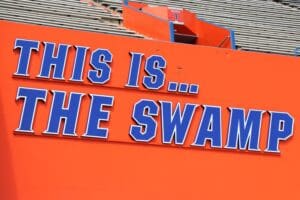
 

Florida Gators Trademark Battle Erupts After Denied License

Florida Gators Trademark Battle Erupts After Denied License

The University Athletic Association (UAA) handles almost everything related to the University of Florida’s sports program. This includes intellectual property disputes, and the organization appears to be in an emerging fight after denying a trademark license. Could the strength and potential ownership of the Florida Gators trademark be at risk?

At the moment, it’s unlikely. A trademark application filed with the U.S. Patent and Trademark Office (USPTO) seems like an attempt to circumvent trademark license requirements.

Trademark Opposition Filed on Behalf of the Florida Gators

On November 6, 2024, an individual named Lynnea Bamberg filed an application to register “Gator Done” with the USPTO. Bamberg sought to gain the exclusive right to use the term on a wide range of clothing items. On September 26, 2025, the University Athletic Association filed a trademark opposition to prevent the registration of the term.

In the opposition filing, the organization claims that the ‘Florida Gators’ trademark will suffer harm by the approval of the “Gator Done” registration. The filing states that consumers might mistake the source of products bearing the trademark. This could happen via a likelihood of confusion or a false suggestion of connection to the university.

Of course, countless brands share similar trademarks. Simply having the word “Gator” in a name doesn’t necessarily mean the applicant is trying to profit off the college’s name recognition. However, Bamberg may have difficulty proving this if the claims made by the UAA are true.

Accusations of a Denied Florida Gators Trademark License

Anyone who wants to use the Florida Gators trademark has to seek permission to do so. The Collegiate Licensing Company handles such requests. However, a trademark featuring the word “Gator” would only need to get permission if its use is somehow related to the sports team or could potentially confuse consumers.

Within the UAA’s filing is the following claim:

“Prior to the Application’s filing date, Applicant contacted Opposer requesting a license to use Applicant’s Mark, but Opposer declined the license request and did not otherwise authorize Applicant to use or apply to register Applicant’s Mark and/or any of Opposer’s Marks.”

If this is true, it would likely indicate that the applicant had every intention of suggesting a connection between their products and the University of Florida. The Trademark Trial and Appeal Board (TTAB) deals with disputes like these. If the University Athletic Association proves that the applicant requested a license, this case may go through the TTAB trial process quickly.

What Happens Now?

Once the UAA filed an opposition notice, this information was sent to the applicant.  The applicant seeking to trademark “Gator Done” must prove that registration wouldn’t infringe on the ‘Florida Gators’ trademark and other trademarks related to it. The UAA will instead seek to establish that such infringement would occur.

Applicant Lynnea Bamberg has until November 25, 2025, to file an answer with the USPTO. If she fails to do so, then this will result in trademark abandonment. This means she’ll have no rights over “Gator Done.” If she decides to fight back, the case will continue. However, this seems unlikely at the moment.


USPTO Sees Influx of Charlie Kirk Trademarks

Mandour USPTO

America was shocked on September 10, 2025, when a shooter took the life of Charlie Kirk. The young political activist spent years building a national brand. However, other brands surrounding the controversial figure suddenly popped up in the days after his death. The U.S. Patent and Trademark Office (USPTO) suddenly received an influx of Kirk-related trademark applications.

Interestingly, none of these applications were filed by Charlie Kirk’s political organization (e.g., Turning Point USA) or his estate.

USPTO Sees Influx of Charlie Kirk Trademark Applications

In the days after the Charlie Kirk assassination, there was a flood of tributes to the deceased activist. One particularly notable rallying cry was “Live Like Charlie.” The Heritage Foundation posted the quote the day after his death. The “spirit rock” in Charlotte, NC, was also vandalized with “Live Like Kirk” soon after.

As it turns out, the USPTO immediately received an application for “Live Like Charlie.” The filing came the day after Kirk’s death. If granted, this trademark registration would grant the applicant federal rights over the term. An e-commerce website also filed a trademark under the name. However, these were far from the only attempts to establish commercial rights after the assassination.

On September 13, 2025, an application seeking exclusive rights over “For Charlie” was filed. Just two days later, the use of Kirk’s name and organization in trademark applications became more blatant. Applicants sought registration for both “Turning Point USA Constitutional Churches of America” and “Charlie Kirk’s Life Matters.”

Can People Legally Profit Off Charlie Kirk’s Name?

There are a variety of considerations to account for when it comes to trademarks related to an actual person. When that person is living, the USPTO typically always refuses registration if the person does not consent. We’ve seen this repeatedly in prior months as people unrelated to President Trump unsuccessfully tried to file trademarks using his name.

In those instances, the applicants would have needed consent from Donald Trump to secure registration. However, things are more complicated when it comes to deceased figures. There are various legal mechanisms that are likely to prevent applicants from profiting from Kirk’s death.

For instance, the USPTO will reject an application if it believes there’s a false suggestion of connection to Kirk. Each of the aforementioned applications could run into this issue. Some states also provide protection via right of publicity – even after a person dies. Charlie Kirk’s estate could also file trademark oppositions to prevent registration.

Put simply, each of these applications will likely encounter hurdles.

What Happens Now?

A trademark attorney with the USPTO will review each of the applications that mention Charlie Kirk. However, this is likely to take months. The current wait time for a first review is about seven months. Unless the applicants have some connection to Charlie Kirk or his Turning Point USA organization, there’s a good chance that each will be denied.

The applications featuring the full name of Kirk or Turning Point may be rejected due to a false suggestion of connection or likelihood of confusion. The applications that only mention his first name (i.e., “Live Like Charlie” and “For Charlie”) are likely to face similar issues. Even though they only feature part of his name, the inference will likely be clear.

This is particularly true if the “Live Like Charlie” website is related to the trademark application of the same name. After all, the website specifically mentions the name Charlie Kirk – even if the “Buy Now” button doesn’t work as of this writing. Of course, it will be up to the USPTO to make these final decisions.
