California Intellectual Property Blog

Background image

Meta Trademark Dispute Could Upend Facebook Parent Company

Meta Trademark Dispute Could Upend Facebook Parent Company

It’s been nearly half a decade since Facebook rebranded to Meta. The brand is now so well-known that it’s easy to assume the social media giant owns its name in the intellectual property world. However, securing the Meta trademark hasn’t been a straightforward effort. In fact, a new administrative filing could upend the entire process.

Just under five years ago – around the same time Facebook rebranded to Meta – the company filed a trademark application for “Meta.” Almost immediately, the company faced lawsuits and pushback over its attempt. News about these issues somewhat died down after Mark Zuckerberg’s company purchased other brands featuring the name.

However, a new trademark opposition has shown that one company is still not giving in.

Meta Platforms vs Metaformers

The brand formerly known as Facebook – Meta Platforms – filed multiple applications to register the Meta trademark with the U.S. Patent and Trademark Office (USPTO). After some administrative issues, one of the company’s applications was published in the Official Gazette. That’s when Metaformers showed up on the scene.

The smaller Virginia company submitted an opposition in early 2024. This case is still pending, but Metaformers apparently did not want to wait for the outcome. On April 22, 2026, the brand filed another opposition against a separate trademark application filed by Meta Platforms. This means the social media juggernaut is currently facing multiple hurdles from a company that’s a fraction of its size.

This certainly has all the elements of a David versus Goliath story, and while it has far fewer resources, Metaformers may have the upper hand.

A Meta Trademark Battle on Multiple Fronts

Facebook’s rebrand to Meta has been – in a word – turbulent for the company. The entire purpose of the rebrand was to push Zuckerberg’s virtual metaverse focus. The legal issues that arose, which included lawsuits from MetaX, were the least of the brand’s problems. Nearly five years and $70-80 billion in losses later, the metaverse is effectively dead.

Unfortunately for Zuckerberg, ending support for his metaverse endeavor doesn’t reverse the rebrand. With the company now facing multiple trademark oppositions from Metaformers, it has found itself in the unenviable position of protecting a moniker that represents the brand’s biggest and most embarrassing failure.

Worse yet, the platform could be in a losing battle. While Metaformers didn’t immediately seek trademark rights over the Meta trademark and related terms, it has seemingly used the name in commerce since 2001. Moreover, the USPTO approved the “Meta” trademark for the brand just three months after Meta Platforms first sought to register its new name.

What Happens Now?

The problem for Meta Platforms isn’t that it shares a name with another company. This happens all the time. For instance, there’s a Delta brand that sells faucets and another that offers airline travel. The two companies can coexist – each with trademark rights over their respective names – because there’s no likelihood of confusion between them.

No one will look at a Delta faucet and think the airline manufactures it. Unfortunately for the Zuckerberg empire, Metaformers offers software solutions, data storage, cloud modernization, IT consulting, data mining, and computer services. Clearly, the services offered by one company are at least tangentially related to those provided by the other.

This case now stands before the Trademark Trial and Appeal Board (TTAB). Even as the 2024 opposition makes its way through the process, Meta Platforms has to now respond to the new opposition before June 21, 2026. There’s no way to predict how these cases will end with 100% certainty, but there’s no denying that Zuckerberg’s Meta trademark could be in danger.

It seems the failed metaverse is a gift that keeps on giving.

Is Using the Word Emoji Illegal? The Emoji Trademark Saga Continues

Owner of emoji trademark targets another brand.

Very few symbols have established themselves across the entire cultural consciousness. Emoticons are arguably one of them. Using typeset symbols to create emotions [e.g., 🙂 for a smiley face], could date to 1648. Emojis are the clear successor to basic punctuation-based representations. This is why most people are surprised to learn that someone owns the emoji trademark.

Even more surprising, many brands have gotten into big trouble for using the word to advertise their emoji-related products. The company that owns the term – Emoji Co. GmbH – has filed various trademark infringement claims against those who use the word. In fact, they submitted a new filing to the U.S. Patent and Trademark Office (USPTO) just before Thanksgiving Day 2025.

Bicycle Company Targeted With Emoji Trademark Claim

On February 23, 2020, Movingetc, LLC submitted a trademark application for the term “iMoji.” The company sought exclusive use of the word for electrical adapters, cables, plugs, and headphones. While the terms “iMoji” and “emoji” might be spelled differently, they sound the same when spoken aloud. This would open the door for trademark litigation.

Because of this potential issue, Emoji Co. GmbH filed a trademark opposition on November 26, 2025. However, there are many questions related to this case. For instance, most trademark infringement claims must show that consumers are likely to confuse the source of products or services.

One must question whether a likelihood of confusion would truly exist between small characters conveying emotions and a line of headphones or electric cables. However, the opposition filing also claims that the famous emoji trademark may become less distinctive if the USPTO grants the iMoji application. Interestingly, this case raises even more intriguing issues than these.

A History of Litigation

You may be asking why the brand that owns the word “emoji” would target a company that doesn’t even appear to use the small pictograms. The reasoning becomes more obvious once you know that – in addition to licensing their intellectual property to Sony Pictures and Nestlé – Emoji Co. GmbH also has its name on medical foot cushions and patient safety restraints.

Put simply, the brand has built an empire across many industries – and it has the backing of major corporations. However, it’s interesting to see how the brand pulled this off. It’s reported that they’ve sued at least 10,000 defendants over simply using the word “emoji” in product titles and descriptions. In many cases, these claims targeted Amazon sellers who were merely describing a trait of their product.

While Emoji Co. GmbH owns several unique emojis, it can’t claim ownership over all emotion-based pictographs. Courts ruled in many cases that infringement was not willful, and they seem to indicate that the word was merely descriptive in its use. Still, the defendants often didn’t respond to court filings – meaning Emoji Co. received default judgments in their favor.

What Happens Now?

There are many unanswered questions involved in this case. Several exist because defendants have rarely chosen to fight the global Emoji Co. GmbH brand. However, this time may be different. Movingetc, LLC spent more than five years trying to get its application approved.  They seem unlikely to just give up.

If Movingetc, LLC decides to fight back, they have until January 25, 2026, to file an answer with the Trademark Trial and Appeal Board (TTAB). The brand might claim that the emoji trademark is generic, and thus not eligible for protection. They could also argue that no confusion or loss of distinctiveness would occur if registration were granted.


Disney Dodges Definitive Ruling Over Mickey Mouse Trademark

Disney's Mickey Mouse trademark survives another day. https://depositphotos.com/photos/mickey-mouse.html?filter=all&qview=535982086

Mickey Mouse made his first appearance in the 1928 cartoon Steamboat Willie. The popular character quickly became a mainstay for Disney. Interestingly enough, U.S. intellectual property laws have literally been altered to protect the animated rodent since that time. And while the Mickey Mouse trademark seemed to be in danger recently, Disney appears to have pulled off another win.

However, this victory wasn’t in the form of a court ruling. In fact, the company seems to have succeeded by merely avoiding a definitive judicial decision.

Decades of Lobbying Followed by Uncertainty

When Disney released Steamboat Willie, U.S. copyright law only afforded 56 years of protection. Disney lobbied to have this protection extended when its copyright was set to expire in 1984. They were successful in doing this and accomplished the same feat again in 1998. However, 2024 finally saw the expiration of the company’s copyright.

Disney took steps to ensure Mickey still enjoyed protection once his copyright expired. One obvious move was to secure Mickey Mouse trademarks, which would limit how other brands could use the character. It’s because of this that Morgan & Morgan, a Florida-based law firm, suddenly found itself thrust into a dispute with the company. The issue? A commercial featuring Mickey.

The legal practice sought assurances from Disney that they wouldn’t be sued over their commercial. When they received none, they decided to take their case to court. Disney’s current victory stems from Morgan & Morgan choosing to end that fight.

Can the Mickey Mouse Trademark Protect Expired Copyrights?

There’s no question that Disney’s Steamboat Willie copyright has expired. However, its Mickey Mouse trademarks certainly provide some level of protection. However, trademark law typically focuses on whether there will be a likelihood of confusion among consumers. Mickey has already been used outside of Disney when such confusion would be unlikely.

For instance, Screamboat is a horror movie that parodies the Steamboat Willie version of Mickey. The film even has a sequel in the works – rumored to feature Minnie Mouse. Most consumers would not mistake a killer mouse for a work of Disney, but what about the commercial that Morgan & Morgan intended to release?

In that commercial – which would be a black-and-white ad in the same style as Steamboat Willie – Minnie Mouse seeks legal help after Mickey’s boat collides with her vehicle. The ad featured several disclaimers saying that Disney had no link to their brand or advertisement. Still, the law firm was reluctant to use the ad without knowing how Disney would respond.

Disney Secures Victory by Avoiding a Ruling

Morgan & Morgan claimed that Disney would not provide clarity on whether it would pursue legal action if the firm’s commercial aired. The entire point of their declaratory judgment lawsuit was to have the courts decide whether their use of Mickey and Minnie was within legal boundaries. By dropping the lawsuit less than two months later, the law firm and the world still have no definitive answer.

Just months before Morgan & Morgan’s lawsuit, Disney sued a company for selling Mickey Mouse jewelry. However, it appeared the brand was trying to convince consumers that the jewelry was directly from Disney. This is far from what Morgan & Morgan attempted, apparently going above and beyond to eliminate any likelihood of confusion or perceived connection to Disney.

There is no telling if anything went on behind the scenes between the law firm and the entertainment giant. The two parties may have come to an agreement to end the lawsuit. The terms of such agreements are often kept secret. It’s also possible that the legal practice decided that the ad was no longer worth the hassle of trademark litigation.

Regardless, Disney’s Mickey Mouse trademark seems to have served its purpose for another day – even if we still don’t know how far the brand’s intellectual property rights truly extend.

Home Warranty “Scammers” Face Trademark Infringement Lawsuit

Fannie Mae targeting companies that consumers call home warranty scams over trademark infringement.

If you’re a homeowner, you’ve undoubtedly received a letter claiming “Your home warranty is about to expire.” These notices often look incredibly official, but in reality, recipients do not have any prior relationship with the company sending them. One might expect these brands to get in trouble for home warranty scams, but it turns out their undoing may be trademark law.

On October 23, 2025, Federal National Mortgage Association – better known as Fannie Mae – filed a trademark lawsuit targeting these companies. In the filing, several defendants are accused of misleading consumers through fraudulent marketing. Consumers have complained about this for years. Fortunately, it seems relief may be on the horizon.

Home Warranty Companies Targeted in Federal Litigation

When homeowners started getting notices claiming their home warranty was about to expire, it raised some eyebrows across the country. People who had no home warranty were receiving these notices. So were folks whose home warranties were far from expiring. The verbiage used would be enough to deceive many, but Fannie Mae alleges these companies went even further.

The complaint targets Warranty Global Group, Inc., Superior Home Protections, LLC, Oasis Home Protection, LLC, and US Home Guard LLC. Fannie Mae alleges that these companies used their well-known service mark (a form of trademark) to deceive consumers into believing the mortgage company offered or endorsed their services.

The examples listed in the complaint probably seem all too familiar to homeowners.

Is Fannie Mae Targeting Home Warranty Scams?

It’s difficult to call the services offered by these home warranty companies a “scam.” After all, they do offer actual insurance. While most of these companies have horrible reviews on the Better Business Bureau website, they are legitimate businesses. Still, their marketing tactics have garnered them a reputation as little more than home warranty scams.

Fannie Mae is a government-sponsored enterprise that purchases mortgages from banks and other lenders. In their filing, the company claims these home warranty brands sent unsolicited marketing materials that featured terminology like “Fannie Mae Mortgage,” “Official Business,” and “Immediate Response Needed.”

While news outlets have been hesitant to use the word “scam,” financial institutions aren’t as diplomatic. Many have warned their clients of these deceptive practices. Interestingly, it might not be false advertising or similar legal issues that get the defendants in trouble. It might be something as simple as trademark infringement.

What Happens Now?

In its complaint, Fannie Mae requested a temporary restraining order to immediately stop the defendants from continuing infringing activities. The company also requested a  trademark injunction — which would permanently force the defendants to cease their alleged deceptive practices. Lastly, the filing requests that the courts award punitive damages.

If Fannie Mae is successful on all fronts, the defendants would have to end any marketing that implies an affiliation or endorsement by the mortgage association. Additionally, punitive damages would be issued as a form of punishment. This legal remedy is intended to deter similar actions in the future. However, the defendants may fight back.

While these brands likely won’t have to answer to allegations of home warranty scams, they will face their day in court over allegedly deceptive practices. There’s no way to predict how this case will resolve. However, the defendants may have an uphill battle if the claims in Fannie Mae’s filing are proven true.


Florida Gators Trademark Battle Erupts After Denied License

Florida Gators Trademark Battle Erupts After Denied License

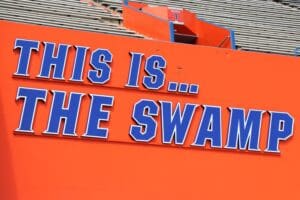
The University Athletic Association (UAA) handles almost everything related to the University of Florida’s sports program. This includes intellectual property disputes, and the organization appears to be in an emerging fight after denying a trademark license. Could the strength and potential ownership of the Florida Gators trademark be at risk?

At the moment, it’s unlikely. A trademark application filed with the U.S. Patent and Trademark Office (USPTO) seems like an attempt to circumvent trademark license requirements.

Trademark Opposition Filed on Behalf of the Florida Gators

On November 6, 2024, an individual named Lynnea Bamberg filed an application to register “Gator Done” with the USPTO. Bamberg sought to gain the exclusive right to use the term on a wide range of clothing items. On September 26, 2025, the University Athletic Association filed a trademark opposition to prevent the registration of the term.

In the opposition filing, the organization claims that the ‘Florida Gators’ trademark will suffer harm by the approval of the “Gator Done” registration. The filing states that consumers might mistake the source of products bearing the trademark. This could happen via a likelihood of confusion or a false suggestion of connection to the university.

Of course, countless brands share similar trademarks. Simply having the word “Gator” in a name doesn’t necessarily mean the applicant is trying to profit off the college’s name recognition. However, Bamberg may have difficulty proving this if the claims made by the UAA are true.

Accusations of a Denied Florida Gators Trademark License

Anyone who wants to use the Florida Gators trademark has to seek permission to do so. The Collegiate Licensing Company handles such requests. However, a trademark featuring the word “Gator” would only need to get permission if its use is somehow related to the sports team or could potentially confuse consumers.

Within the UAA’s filing is the following claim:

“Prior to the Application’s filing date, Applicant contacted Opposer requesting a license to use Applicant’s Mark, but Opposer declined the license request and did not otherwise authorize Applicant to use or apply to register Applicant’s Mark and/or any of Opposer’s Marks.”

If this is true, it would likely indicate that the applicant had every intention of suggesting a connection between their products and the University of Florida. The Trademark Trial and Appeal Board (TTAB) deals with disputes like these. If the University Athletic Association proves that the applicant requested a license, this case may go through the TTAB trial process quickly.

What Happens Now?

Once the UAA filed an opposition notice, this information was sent to the applicant.  The applicant seeking to trademark “Gator Done” must prove that registration wouldn’t infringe on the ‘Florida Gators’ trademark and other trademarks related to it. The UAA will instead seek to establish that such infringement would occur.

Applicant Lynnea Bamberg has until November 25, 2025, to file an answer with the USPTO. If she fails to do so, then this will result in trademark abandonment. This means she’ll have no rights over “Gator Done.” If she decides to fight back, the case will continue. However, this seems unlikely at the moment.


The USPTO Is Fending Off Unauthorized ‘Trump’ Trademarks

Unofficial Trump trademarks infiltrating the USPTO.

As President of the United States, Donald Trump is ever-present in the news. However, many people don’t see what goes on relative to the president in the background of government agencies. This is particularly true for the U.S. Patent and Trademark Office (USPTO). As the agency’s backlog continues to grow, it has found itself fighting off repeated unauthorized ‘Trump’ trademark applications.

Even though Trump filing lawsuits over intellectual property misuse is no rarity, there’s a constant barrage of applicants looking to build brands off his name.

USPTO Receives Influx of ‘Trump’ Trademark Applications

The backlog at the USPTO has ballooned in recent years. Filings that once flew through the agency in four months or less are now taking up to one year. Experts believe that certain Trump-era mandates have worsened this issue. That makes it all the more interesting that USPTO examining attorneys are having to spend time rejecting ‘Trump’ trademark applications.

Here are just some of the most recent filings that feature the president’s name:

  • Trump 2028
  • “THREE-PEAT Donald J Trump President of the United States 2016 2020 2024 BS”
  • “TGIF Thank God Its Trump” [sic] 
  • “Don’t Tread on Trump”
  • “F*ck Trump” (asterisk added)

While they all bear his name, none of these applications comes from the president or related entities. However, these trademark registration filings are submitted by both fans and opposers. Some hope for a legally dubious third term in office, while others hurl expletives at Trump himself. The one thing they share in common is that the USPTO is in no hurry to approve them.

Trademark Office Repeatedly Rejecting ‘Trump’ Trademarks

Each of the trademark applications mentioned above – along with many other Trump-focused filings – has received office actions. These are an integral part of the trademark process. They’re sent to applicants to officially notify them of issues with their application. Once received, filers typically have an opportunity to correct these issues.

However, any attempt to fix problems in these applications will likely be unsuccessful. The one term you’ll repeatedly see in these office actions is “consent refusal.” Some of these filings also cite a likelihood of confusion as a reason, which means consumers may confuse the source of a product or service. Still, consent refusal is the main issue with Trump related trademark applications.

To register a federal trademark that contains another person’s name, an applicant must have that person’s consent. If there’s no consent agreement on file, the USPTO will refuse the application. Since these individuals seem to have no affiliation with the president, their requests are unlikely to move forward.

What Happens Now?

Each of the trademark applications listed above has received a non-final office action from the USPTO. However, these will likely turn into final office actions or abandoned trademarks. In the former situation, the agency will formally reject the application. In the latter, the applicant will cease their efforts to secure a ‘Trump’ trademark. Put simply, the application will “die.”

However, the path forward for these individuals can look very different. One thing they have in common is that the USPTO refusal does not mean they can’t use these marks. It simply means they cannot secure federal registration and protection. For instance, provided there is no likelihood of confusion, the “F*ck Trump” applicant would likely be protected by free speech if they sold products featuring the phrase.

However, things may be more complex for the individual seeking a “Trump 2028” trademark. While the chief executive cannot run again in 2028, the name suggests an official campaign connection. The president is no stranger to suing over the use of his name – even targeting products that support him. Therefore, this applicant may be better off just giving up.

Either way, the influx of unofficial ‘Trump’ trademarks will likely continue to be an issue for the USPTO.

Beast Trademark Dispute: MrBeast Sued Over Basketball Branding

MrBeast vs The Beast trademark

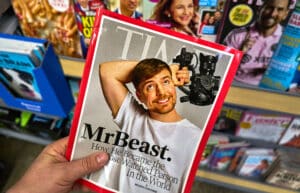
Even those who don’t watch MrBeast have heard of the YouTube star. As of August 2025, he had 422 million subscribers on the video platform. Unfortunately, such fame often brings additional scrutiny. That scrutiny has landed the popular influencer in hot water, as he now faces a lawsuit over The Beast trademark.

Russell Brands – the company that owns Spalding – filed a trademark lawsuit on August 12, 2025. However, this isn’t where the legal battle began. Apparently, this fight has been going on behind the scenes since last year. And while MrBeast may have hundreds of millions of adoring fans, that may not be enough to protect him.

MrBeast Sued Over The Beast Trademark

MrBeast is no rookie to the intellectual property world. He’s owned the trademark registration to his screen name since 2019. One might think this would protect him when manufacturing products featuring The Beast. However, it appears he may have infringed on a preexisting trademark when he released basketballs featuring the moniker.

In its filing, Russell Brands claims that its Spalding company has owned the trademark for The Beast since 2002. This didn’t stop MrBeast from selling a basketball with “BEAST” emblazoned across the front – a product similar to a Spalding release. Prior conversations between the two companies would indicate that the issue was resolved, but the lawsuit shows that problems persist.

In fact, Russell Brands claims that MrBeast promised to discontinue sales of the product in question after receiving two cease and desist letters. While the YouTuber’s brand does seem to have taken steps towards resolution, it does not appear to be enough for Spalding’s parent company.

Why Was the Issue Not Resolved?

Whether MrBeast infringed The Beast trademark may be a question for the courts to decide. While the influencer could claim that consumers are unlikely to be confused, his actions could be seen as an acknowledgement of infringement.

As of August 13, 2025, the MrBeast basketball is no longer for sale. However, the listing on both Amazon and his store’s non-indexed pages remained. This seems to be the crux of the lawsuit. Russell Brands claims that MrBeast representatives said the basketball and related sporting goods featuring “MrBeast,” “The Beast,” and “Beast” would no longer be sold by May.

However, the listings for the products remained – although apparently not for sale. The lawsuit further claims that no settlement has been reached between the two regarding prior sales of the products. Because of these issues, Russell Brands is seeking monetary damages in addition to a trademark injunction preventing further sales.

What Happens Next?

If Russell Brands owns The Beast trademark for basketballs, they have the exclusive right to use it or license its use. This doesn’t mean that Russell Brands owns the word “beast.” Rather, it means it’s the only business that can use “The Beast” in relation to certain products and services. Put simply, they have the right to prevent any likelihood of confusion.

If consumers could misidentify the source of a product, then potential confusion might exist. It’s easy to understand the underlying legal claim. After all, it wouldn’t be difficult to confuse sporting equipment featuring the word “Beast” with The Beast trademark – which is specifically categorized as being used for sports equipment.

Although MrBeast has taken actions to avoid legal issues, it will be interesting to see if the influencer is willing to roll over and pay damages. If he chooses to fight the lawsuit, we’ll have to await a judge’s decision. However, this could all be over relatively quickly if the two parties reach a settlement. Who knows? Maybe this will be the subject of MrBeast’s next viral video.


NCAA Takes on the Marines Over March Madness Trademark

March Madness trademark fight. NCAA vs Marines

The National Collegiate Athletic Association (NCAA) is one of the most well-known organizations in America. The same can obviously be said about the U.S. Marine Corps. While these two groups don’t typically intersect, they have now found themselves at odds over a trademark application filed by the Marines that may infringe on the March Madness trademark.

On November 22, 2024, the NCAA filed a trademark opposition against an application submitted by the Marine Corps. The Marines sought trademark rights over the term “March Mania” in relation to a tournament focused on marching bands. While this Marine Corps competition has existed for years, their attempt at trademark registration has pushed the NCAA into action.

U.S. Marine Corps vs NCAA

Most people are familiar with the March Madness basketball tournament hosted by the NCAA. In fact, the brackets showing teams facing off against each other are easily identifiable even among those who don’t enjoy sports. Fewer people have heard of March Mania, the yearly competition hosted by the Marine Corps where marching bands advance to championship rounds.

At first glance, March Mania and March Madness share definite similarities. In fact, the primary difference is the type of competition involved (e.g., basketball vs. marching bands). The similarities that exist are the basis of the NCAA filing a trademark opposition related to their March Madness trademark and other “March-formative” properties.

While the Marine Corps claims their March Mania trademark has been used commercially since at least March 2014, they did not file a trademark application until April 2024. However, the timing seems to matter less than the perceived likelihood of confusion that the NCAA believes would exist among consumers if the trademark is granted to the Marines.

Would Consumers Really Confuse the Tournaments?

The U.S. Patent and Trademark Office (USPTO) is tasked with granting trademark registrations. However, they have to make sure that approving a registration would not confuse consumers about the source of a product or service. Such a likelihood of confusion could negatively affect brands with an established following if consumers equate other products to their company.

The NCAA claims that the March Mania trademark sought by the Marines “is similar in appearance, sound, meaning, and commercial impression to the March Madness [trademarks].” The sports organization also points out that the dictionary lists “madness” and “mania” as synonyms, further arguing their point of potential consumer confusion.

Finally, the NCAA says that registering March Mania would create trademark dilution for the March Madness trademark. Its claim is that March Mania would weaken the connection between March Madness and the NCAA in the minds of consumers. It’s easy to see how such confusion may exist, but it will be up to the USPTO to make a decision.

What Happens Next?

The NCAA is no stranger to trademark infringement issues. The organization has gone after brands using “Markdown Madness,” “April Madness,” “March Modness,” “Marsh Madness,” and even “Vasectomy Madness.” Clearly, the NCAA is no stranger to trademark disputes. However, very few brands have the same level of resources as the U.S. Marine Corps.  With the force of the U.S. Government behind it, this case seems destined for trademark litigation if the Marines decide to press the issue.

In the notice sent to the U.S. Marine Corps, the USPTO states that the Marines have until New Year’s Day, 2025, to file an answer to the charges levied by the NCAA. At this point, the case will proceed before the Trademark Trial and Appeal Board (TTAB) — but if either side doesn’t like the resolution, they can file a complaint in federal court.

The Marines could drop its application, but if they choose not to, a fight between the U.S. Military and collegiate sports could make March Madness look like a scrimmage.

Jimmy Fallon’s Production Company Faces a Trademark Battle

Jimmy Fallon Electric Hot Dog Trademark

While his focus may be on making people laugh, late night host Jimmy Fallon has had his fair share of disputes over time. At a few points, he’s even been at odds with a former President of the United States. However, his latest battle involves trademark rights over his production company, Electric Hot Dog. And if one clothing and accessories company has anything to say about it, Fallon won’t secure the trademark rights he’s seeking.

The current dispute involves a brand known as Electric Visual Evolution. In a filing with the U.S. Patent and Trademark Office (USPTO), the company claims that registration of Fallon’s Electric Hot Dog trademark will create confusion among consumers. Electric Visual Evolution produces clothing and fashion accessories (e.g., sunglasses, goggles, etc.), and Fallon wants to use his trademark for clothing as well. However, the opposer may have an uphill battle against Fallon.

Jimmy Fallon Files for Electric Hot Dog Trademark

Jimmy Fallon filed a trademark application for the term “Electric Hot Dog” on March 8, 2023. This is the brand name of his production company, and his application sought trademark protection for a wide range of products and services. While entertainment services and board games were on the list, so were products that are currently produced by Electric Visual Evolution.

Among these goods are those contained in Trademark Class 25 — which include bandanas, hats, coats, shirts, and a variety of other apparel. On August 23, 2024 – over a year after Fallon’s initial application – Electric Visual Evolution filed a partial trademark opposition against the late-night host. They claimed that consumers would likely confuse the two brands’ products, and they provided their registration of the word “Electric” in Trademark Class 25 as evidence.

One of the primary factors the USPTO considers when deciding trademark oppositions is whether products or services will be sold within the “same or similar channels of trade.” Clearly, two companies selling clothing would likely meet this requirement. However, proving the case against Fallon may still be difficult for Electric Visual Evolution.

Will Consumers Confuse Electric With Electric Hot Dog?

Fallon filed his application as an intent to use trademark. This means that commercial use had not yet been established at the time of filing. However, the company has created a website since that time. Both Fallon and Electric Visual Evolution clearly have goals of commercial success, but in order to successfully oppose a trademark registration, the opposer needs to show that their trademark rights will be harmed by registration.

This could be a difficult endeavor for Electric Visual Evolution. While they do have trademark rights over “Electric” when it comes to certain products, their claim that a likelihood of confusion would exist with Fallon’s brand will need to be established in court. This might be simple if the following statement from their filing were proven true:

“[Fallon’s] Mark so resembles Opposer’s ELECTRIC Marks in appearance, sound and commercial impression such that registration of Applicant’s Mark will likely cause confusion among consumers within the relevant markets. The parties’ respective marks both include the initial and dominant term ELECTRIC as part of their marks.” 

While both trademarks do contain “Electric,” it may be difficult for the Trademark Trial and Appeal Board (TTAB) to believe that consumers would confuse “Electric” with “Electric Hot Dog.” After all, plenty of companies that sell similar goods are able to trademark similar respective names. Facebook and FaceTime, PayPal and Payoneer, or Microsoft and Microchip Technology are all examples.

So, does Electric Visual Evolution have a case against Electric Hot Dog?

What Happens Next?

If there’s one predictable aspect of the trademark world, it’s that nothing is truly predictable. Companies certainly have a right to protect their trademarks. For instance, fast-food giant McDonald’s would likely be able to successfully oppose an application from a meat production company named “McDonald’s Food Production” — or even a company simply trying to add “Mc” before the name of their products.

So, why would Electric Visual Evolution have an issue stopping Fallon’s Electric Hot Dog trademark?  Because proving that consumers would be confused comes down to the reasonable person standard. You have to ask if a reasonable person would look at a product — such as two T-shirts — and believe the same company produced them if one said “Electric” and the other said “Electric Hot Dog.”

This could be a tough case to prove, but there have been many surprising intellectual property verdicts. Electric Visual Evolution can undertake different strategies to show that consumer confusion exists. However, the next move falls to Jimmy Fallon and his Electric Hot Dog production company. He has until October 2, 2024 to file an answer to the opposition, and then we’ll have a better idea of how the case will move forward.

Battle Emerging Over Who Owns the “Sound of Freedom” Trademark

QAnon film favorite "Sound of Freedom" encounters another legal issue, this time with trademark rights.

Plenty of films gain widespread attention once they hit the box office. However, few garner that attention in the same way that “Sound of Freedom” did. While the movie may have initially gotten noticed due to its underlying political message, it’s currently in the news due to an emerging trademark dispute revolving around who can use the film’s title.

In July 2023, DN Marks LLC filed a trademark application seeking rights over “Sound of Freedom” in regard to graphic novels, film production, celebrity appearances, and other goods and services. Almost exactly one year later, Sound of Freedom Movie LLC filed a similar application seeking trademark rights over the title for film production only.

As if the film didn’t generate enough controversy, this dispute looks like it could get messy.

The Battle for the ‘Sound of Freedom’ Trademark

While sound of Freedom Movie, LLC took nearly a year after the release of the film to file a trademark application with the USPTO, it recently filed a trademark opposition against the “Sound of Freedom” trademark application by DN Marks LLC so it appears they are serious about their effort.

Of course, this raises the question of who DN Marks LLC is and who it represents. A cursory trademark search shows that the company owns over 100 trademarks in a variety of areas — including film production. Interestingly, its application for “Sound of Freedom” was filed only days after the film initially hit the big screen.

The preexisting trademarks owned by DN Marks LLC do not necessarily mean they’re the rightful owners of the film’s title. And while some trademark disputes seem to stem from misunderstandings or similar names — the fact that both applications focus on stories of human trafficking seems to indicate that the two parties are fighting over the same intellectual property.

Mounting Legal Issues for “Sound of Freedom”

When ‘Sound of Freedom’ was released, many viewed it as a means to further the QAnon conspiracy theory. The film tells the story of human trafficking victims, but it seems to play into the tropes of the conspiracy movement in many ways. This caused a tremendous amount of debate online, but once that died down, the film’s legal issues began to mount.

While the film was well-received among conservative audiences, information eventually emerged showing that the supposed “true story” behind the film was greatly embellished. This story was told by Tim Ballard, an activist who has since been removed from organizations that he founded due to allegations of sexual assault.

The alleged criminal acts aren’t where the legal troubles end. In addition to several lawsuits targeting Ballard, cases have been filed against the media companies involved in what Rolling Stone called “mythologizing his exploits.” The current trademark opposition filed by Sound of Freedom Film LLC is just another trouble in the film’s growing list of issues.

Can You Trademark a Film Title?

Similar to trademarking a book title, securing trademark rights over a single film title with no other use is difficult.  A trademark for a series of films is permitted by the trademark office since the name then becomes a source identifier for more than just a single work.   Separately, the owner of a film can copyright the creation — a copyright that Sound of Freedom Film LLC claims to own.

In this case, it seems like the company may be looking to do more than a one-off film. There’s already talk of a potential sequel. Of course, even the news of a potential sequel came with debate over who actually owns the rights to a potential sequel.

The current trademark dispute between Sound of Freedom Film LLC and DN Marks LLC is interesting because DN Marks clearly believed that it had rights over the title as soon as the film was released, and the claimed owner of the copyright only came forward seeking a trademark a full year later.

There’s definitely a lot more to figure out about this case, but it seems to indicate that “Sound of Freedom” is having trouble in almost every area of the law one could imagine.