California Intellectual Property Blog

Background image

Company Aims to Take the Twitter Trademark Away From Elon Musk

twitter

It’s been years since Elon Musk took over Twitter and rebranded it as “X.” Since then, he’s aggressively tried to leave Twitter’s iconography behind. In one post, he even said he would “bid adieu to the Twitter brand and… all the birds.” However, this aggressive rebrand may have left the Twitter trademark vulnerable to appropriation.

On December 2, 2025, an American startup company known as Operation Bluebird filed a trademark cancellation petition against the social media giant. The brand claims that Musk’s social media platform has essentially abandoned the Twitter trademark. If the cancellation is successful, a new Twitter may be on the horizon.

Could Musk Lose the Twitter Trademark?

Under U.S. trademark law, companies have to use their trademarks actively in commerce to retain rights. One cannot simply sit on their rights and not exercise them. If a brand identifier falls out of use, it becomes an abandoned trademark. At such a point, other companies could hypothetically file for registration and take control of the trademark.

This is the goal of Operation Bluebird. The brand plans to launch a new Twitter platform, Twitter.new. On the website, the term “The public square is broken” immediately pops up. This is a reference to Twitter once being known as the public square. Taking on X Corp. and Elon Musk may be a tall order, but it’s very possible that Operation Bluebird could be successful.

In the cancellation filing, the company claims that X has abandoned the Twitter trademark. The submission also states that X committed fraud by requesting trademark extensions with no bona fide intent to use certain Twitter-adjacent marks. However, this is not the first time X has faced such a challenge. In the past, it has been successful at maintaining its unused trademark.

What Are the Arguments Against X Corp. Owning Twitter?

In May 2022, a trademark application was submitted to claim exclusive rights to the term “But his tweets.” The filing was a play on “But her emails,” a term used in support of Hillary Clinton, submitted by a Donald Trump fan. Even though Musk was still friendly with Trump at the time, X Corp. submitted a trademark opposition to prevent registration.

Even though Twitter had rebranded to X and Musk wanted to “bid adieu” to the entire brand, the company still fought to safeguard the Twitter trademark. In the end, a ruling was issued against the applicant. “But his tweets” did not receive registration. However, this seems to have been a default judgment based on the applicant’s failure to respond to the opposition.

That means no real decision was reached in the case regarding the continued rights belonging to X. In fact, it appears as if the individual applicant simply wasn’t ready to take on a social media powerhouse with the world’s richest person at the helm. Twitter.new doesn’t seem to have the same reservations.

What Happens Next?

When X submitted a trademark opposition against the “But his tweets” trademark application, it essentially went on the offensive. Since the company was taking on a single individual – who undoubtedly did not have the resources of Musk – it easily emerged victorious. In reality, there wasn’t even a real fight to witness.

With Twitter.new aiming to take over the Twitter trademark, X now needs to go on the defensive. Operation Bluebird has fired the first shot in what could be an extended war. In reality, the startup company has a solid argument. While proving fraud may be a difficult endeavor, it does seem as though X Corp. may have abandoned commercial use of the Twitter brand.

While the abandonment claim is plausible — and targets several Twitter trademarks – this is unlikely to be an easy win for Project Bluebird. X Corp. could claim that it maintains residual goodwill since consumers still commonly refer to the website as “Twitter.” The brand can also claim that it intends to resume use at some point.

Regardless of the eventual outcome, it will be interesting to see how far Musk will go to protect a brand he has no interest in using.


Is Using the Word Emoji Illegal? The Emoji Trademark Saga Continues

Owner of emoji trademark targets another brand.

Very few symbols have established themselves across the entire cultural consciousness. Emoticons are arguably one of them. Using typeset symbols to create emotions [e.g., 🙂 for a smiley face], could date to 1648. Emojis are the clear successor to basic punctuation-based representations. This is why most people are surprised to learn that someone owns the emoji trademark.

Even more surprising, many brands have gotten into big trouble for using the word to advertise their emoji-related products. The company that owns the term – Emoji Co. GmbH – has filed various trademark infringement claims against those who use the word. In fact, they submitted a new filing to the U.S. Patent and Trademark Office (USPTO) just before Thanksgiving Day 2025.

Bicycle Company Targeted With Emoji Trademark Claim

On February 23, 2020, Movingetc, LLC submitted a trademark application for the term “iMoji.” The company sought exclusive use of the word for electrical adapters, cables, plugs, and headphones. While the terms “iMoji” and “emoji” might be spelled differently, they sound the same when spoken aloud. This would open the door for trademark litigation.

Because of this potential issue, Emoji Co. GmbH filed a trademark opposition on November 26, 2025. However, there are many questions related to this case. For instance, most trademark infringement claims must show that consumers are likely to confuse the source of products or services.

One must question whether a likelihood of confusion would truly exist between small characters conveying emotions and a line of headphones or electric cables. However, the opposition filing also claims that the famous emoji trademark may become less distinctive if the USPTO grants the iMoji application. Interestingly, this case raises even more intriguing issues than these.

A History of Litigation

You may be asking why the brand that owns the word “emoji” would target a company that doesn’t even appear to use the small pictograms. The reasoning becomes more obvious once you know that – in addition to licensing their intellectual property to Sony Pictures and Nestlé – Emoji Co. GmbH also has its name on medical foot cushions and patient safety restraints.

Put simply, the brand has built an empire across many industries – and it has the backing of major corporations. However, it’s interesting to see how the brand pulled this off. It’s reported that they’ve sued at least 10,000 defendants over simply using the word “emoji” in product titles and descriptions. In many cases, these claims targeted Amazon sellers who were merely describing a trait of their product.

While Emoji Co. GmbH owns several unique emojis, it can’t claim ownership over all emotion-based pictographs. Courts ruled in many cases that infringement was not willful, and they seem to indicate that the word was merely descriptive in its use. Still, the defendants often didn’t respond to court filings – meaning Emoji Co. received default judgments in their favor.

What Happens Now?

There are many unanswered questions involved in this case. Several exist because defendants have rarely chosen to fight the global Emoji Co. GmbH brand. However, this time may be different. Movingetc, LLC spent more than five years trying to get its application approved.  They seem unlikely to just give up.

If Movingetc, LLC decides to fight back, they have until January 25, 2026, to file an answer with the Trademark Trial and Appeal Board (TTAB). The brand might claim that the emoji trademark is generic, and thus not eligible for protection. They could also argue that no confusion or loss of distinctiveness would occur if registration were granted.


Disney Dodges Definitive Ruling Over Mickey Mouse Trademark

Disney's Mickey Mouse trademark survives another day. https://depositphotos.com/photos/mickey-mouse.html?filter=all&qview=535982086

Mickey Mouse made his first appearance in the 1928 cartoon Steamboat Willie. The popular character quickly became a mainstay for Disney. Interestingly enough, U.S. intellectual property laws have literally been altered to protect the animated rodent since that time. And while the Mickey Mouse trademark seemed to be in danger recently, Disney appears to have pulled off another win.

However, this victory wasn’t in the form of a court ruling. In fact, the company seems to have succeeded by merely avoiding a definitive judicial decision.

Decades of Lobbying Followed by Uncertainty

When Disney released Steamboat Willie, U.S. copyright law only afforded 56 years of protection. Disney lobbied to have this protection extended when its copyright was set to expire in 1984. They were successful in doing this and accomplished the same feat again in 1998. However, 2024 finally saw the expiration of the company’s copyright.

Disney took steps to ensure Mickey still enjoyed protection once his copyright expired. One obvious move was to secure Mickey Mouse trademarks, which would limit how other brands could use the character. It’s because of this that Morgan & Morgan, a Florida-based law firm, suddenly found itself thrust into a dispute with the company. The issue? A commercial featuring Mickey.

The legal practice sought assurances from Disney that they wouldn’t be sued over their commercial. When they received none, they decided to take their case to court. Disney’s current victory stems from Morgan & Morgan choosing to end that fight.

Can the Mickey Mouse Trademark Protect Expired Copyrights?

There’s no question that Disney’s Steamboat Willie copyright has expired. However, its Mickey Mouse trademarks certainly provide some level of protection. However, trademark law typically focuses on whether there will be a likelihood of confusion among consumers. Mickey has already been used outside of Disney when such confusion would be unlikely.

For instance, Screamboat is a horror movie that parodies the Steamboat Willie version of Mickey. The film even has a sequel in the works – rumored to feature Minnie Mouse. Most consumers would not mistake a killer mouse for a work of Disney, but what about the commercial that Morgan & Morgan intended to release?

In that commercial – which would be a black-and-white ad in the same style as Steamboat Willie – Minnie Mouse seeks legal help after Mickey’s boat collides with her vehicle. The ad featured several disclaimers saying that Disney had no link to their brand or advertisement. Still, the law firm was reluctant to use the ad without knowing how Disney would respond.

Disney Secures Victory by Avoiding a Ruling

Morgan & Morgan claimed that Disney would not provide clarity on whether it would pursue legal action if the firm’s commercial aired. The entire point of their declaratory judgment lawsuit was to have the courts decide whether their use of Mickey and Minnie was within legal boundaries. By dropping the lawsuit less than two months later, the law firm and the world still have no definitive answer.

Just months before Morgan & Morgan’s lawsuit, Disney sued a company for selling Mickey Mouse jewelry. However, it appeared the brand was trying to convince consumers that the jewelry was directly from Disney. This is far from what Morgan & Morgan attempted, apparently going above and beyond to eliminate any likelihood of confusion or perceived connection to Disney.

There is no telling if anything went on behind the scenes between the law firm and the entertainment giant. The two parties may have come to an agreement to end the lawsuit. The terms of such agreements are often kept secret. It’s also possible that the legal practice decided that the ad was no longer worth the hassle of trademark litigation.

Regardless, Disney’s Mickey Mouse trademark seems to have served its purpose for another day – even if we still don’t know how far the brand’s intellectual property rights truly extend.

Home Warranty “Scammers” Face Trademark Infringement Lawsuit

Fannie Mae targeting companies that consumers call home warranty scams over trademark infringement.

If you’re a homeowner, you’ve undoubtedly received a letter claiming “Your home warranty is about to expire.” These notices often look incredibly official, but in reality, recipients do not have any prior relationship with the company sending them. One might expect these brands to get in trouble for home warranty scams, but it turns out their undoing may be trademark law.

On October 23, 2025, Federal National Mortgage Association – better known as Fannie Mae – filed a trademark lawsuit targeting these companies. In the filing, several defendants are accused of misleading consumers through fraudulent marketing. Consumers have complained about this for years. Fortunately, it seems relief may be on the horizon.

Home Warranty Companies Targeted in Federal Litigation

When homeowners started getting notices claiming their home warranty was about to expire, it raised some eyebrows across the country. People who had no home warranty were receiving these notices. So were folks whose home warranties were far from expiring. The verbiage used would be enough to deceive many, but Fannie Mae alleges these companies went even further.

The complaint targets Warranty Global Group, Inc., Superior Home Protections, LLC, Oasis Home Protection, LLC, and US Home Guard LLC. Fannie Mae alleges that these companies used their well-known service mark (a form of trademark) to deceive consumers into believing the mortgage company offered or endorsed their services.

The examples listed in the complaint probably seem all too familiar to homeowners.

Is Fannie Mae Targeting Home Warranty Scams?

It’s difficult to call the services offered by these home warranty companies a “scam.” After all, they do offer actual insurance. While most of these companies have horrible reviews on the Better Business Bureau website, they are legitimate businesses. Still, their marketing tactics have garnered them a reputation as little more than home warranty scams.

Fannie Mae is a government-sponsored enterprise that purchases mortgages from banks and other lenders. In their filing, the company claims these home warranty brands sent unsolicited marketing materials that featured terminology like “Fannie Mae Mortgage,” “Official Business,” and “Immediate Response Needed.”

While news outlets have been hesitant to use the word “scam,” financial institutions aren’t as diplomatic. Many have warned their clients of these deceptive practices. Interestingly, it might not be false advertising or similar legal issues that get the defendants in trouble. It might be something as simple as trademark infringement.

What Happens Now?

In its complaint, Fannie Mae requested a temporary restraining order to immediately stop the defendants from continuing infringing activities. The company also requested a  trademark injunction — which would permanently force the defendants to cease their alleged deceptive practices. Lastly, the filing requests that the courts award punitive damages.

If Fannie Mae is successful on all fronts, the defendants would have to end any marketing that implies an affiliation or endorsement by the mortgage association. Additionally, punitive damages would be issued as a form of punishment. This legal remedy is intended to deter similar actions in the future. However, the defendants may fight back.

While these brands likely won’t have to answer to allegations of home warranty scams, they will face their day in court over allegedly deceptive practices. There’s no way to predict how this case will resolve. However, the defendants may have an uphill battle if the claims in Fannie Mae’s filing are proven true.


What’s in a Name? OpenAI Faces the Loss of Sora Trademark

Sora trademark could be in danger.

OpenAI is undoubtedly a juggernaut in the world of artificial intelligence (AI). However, such success does not come without hurdles. The media covers the copyright battles faced by the company ad nauseam. However, a new intellectual property problem has seemingly flown under the radar. It is one that could result in the loss of Sora’s now iconic name.

On October 13, 2025, OverDrive Inc. filed an opposition to OpenAI’s Sora trademark application. This submission essentially pauses the filing process of the text-to-video platform’s brand name. While it may only delay registration, the AI powerhouse could be in hot water if the claims in OverDrive’s filing are accurate.

Could OpenAI Lose the Sora Trademark?

To be clear, OpenAI does not currently own trademark rights for  the name “Sora.” The company filed a trademark application on February 14, 2024. This was 19 months before the release of the first stable version of Sora. If the U.S. Patent and Trademark Office (USPTO) approves the application, OpenAI will secure certain exclusive rights over the name.

However, OverDrive’s trademark opposition filing could prevent registration. In fact, the opposition process could eventually result in OpenAI having to change the name of its popular new tool. This could all come down to whether consumers might confuse OpenAI’s products and services with those of OverDrive’s.

Does a Likelihood of Confusion Exist?

When it comes to trademark law, the term likelihood of confusion plays a significant role. It refers to the possibility that consumers might confuse the source of a product or service. For instance, a hot dog stand would likely not be able to trademark “McDonald’s Hot Dog Stand.” It’s far too likely that consumers would think the fast food giant owned the eatery.

In its filing, OverDrive Inc. claims that such confusion would exist if the USPTO grants OpenAI’s request for the Sora trademark. OverDrive calls itself “the leading digital distributor of ebooks, audiobooks, online magazines, and streaming video titles.” The company’s Sora platform allows students to borrow ebooks and more through K-12 school libraries.

If the opposition filing is accurate, OverDrive has sold and marketed its Sora platform since August 2018. Additionally, the company has owned the registration for its Sora trademark since December 2020. Still, would consumers really confuse a text-to-video AI tool with what’s essentially a library checkout system?

That’s where things get interesting.

What Happens Next?

The products and services provided by OverDrive and OpenAI clearly have differences. However, both Sora platforms are likely to be sold within the same or overlapping channels of trade. Also, the duplicate Sora trademark could be problematic since OpenAI seeks registration under the same trademark class as OverDrive.

The real similarities become apparent when looking at the wording of the companies’ respective filings, specifically related to trademark classes:

  • Downloadable mobile application providing schools and educators with access to digital content for their students…” – OverDrive’s Sora trademark

vs

  • Downloadable computer programs and downloadable computer software for generating videos and images…” – OpenAI’s Sora application

While the companies clearly differ, much of their work occurs on similar platforms and within related industries. This might create a problem for OpenAI. If the company chooses to fight the opposition, the case could stretch into May 2027.  At this stage it is difficult to predict who would win, but since OverDrive already owns the Sora trademark in the same class, they definitely have a case to make.

While OpenAI could attempt to pay OverDrive to use the name, the real problem arises if the library services brand successfully prevents registration. At that point, they’d have legal documentation that points to potential trademark infringement. Simply put, the loss of the Sora trademark could turn into another massive intellectual property problem for OpenAI.

Florida Gators Trademark Battle Erupts After Denied License

Florida Gators Trademark Battle Erupts After Denied License

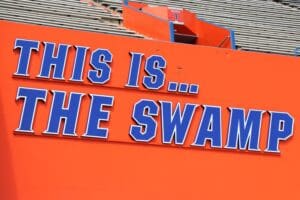
The University Athletic Association (UAA) handles almost everything related to the University of Florida’s sports program. This includes intellectual property disputes, and the organization appears to be in an emerging fight after denying a trademark license. Could the strength and potential ownership of the Florida Gators trademark be at risk?

At the moment, it’s unlikely. A trademark application filed with the U.S. Patent and Trademark Office (USPTO) seems like an attempt to circumvent trademark license requirements.

Trademark Opposition Filed on Behalf of the Florida Gators

On November 6, 2024, an individual named Lynnea Bamberg filed an application to register “Gator Done” with the USPTO. Bamberg sought to gain the exclusive right to use the term on a wide range of clothing items. On September 26, 2025, the University Athletic Association filed a trademark opposition to prevent the registration of the term.

In the opposition filing, the organization claims that the ‘Florida Gators’ trademark will suffer harm by the approval of the “Gator Done” registration. The filing states that consumers might mistake the source of products bearing the trademark. This could happen via a likelihood of confusion or a false suggestion of connection to the university.

Of course, countless brands share similar trademarks. Simply having the word “Gator” in a name doesn’t necessarily mean the applicant is trying to profit off the college’s name recognition. However, Bamberg may have difficulty proving this if the claims made by the UAA are true.

Accusations of a Denied Florida Gators Trademark License

Anyone who wants to use the Florida Gators trademark has to seek permission to do so. The Collegiate Licensing Company handles such requests. However, a trademark featuring the word “Gator” would only need to get permission if its use is somehow related to the sports team or could potentially confuse consumers.

Within the UAA’s filing is the following claim:

“Prior to the Application’s filing date, Applicant contacted Opposer requesting a license to use Applicant’s Mark, but Opposer declined the license request and did not otherwise authorize Applicant to use or apply to register Applicant’s Mark and/or any of Opposer’s Marks.”

If this is true, it would likely indicate that the applicant had every intention of suggesting a connection between their products and the University of Florida. The Trademark Trial and Appeal Board (TTAB) deals with disputes like these. If the University Athletic Association proves that the applicant requested a license, this case may go through the TTAB trial process quickly.

What Happens Now?

Once the UAA filed an opposition notice, this information was sent to the applicant.  The applicant seeking to trademark “Gator Done” must prove that registration wouldn’t infringe on the ‘Florida Gators’ trademark and other trademarks related to it. The UAA will instead seek to establish that such infringement would occur.

Applicant Lynnea Bamberg has until November 25, 2025, to file an answer with the USPTO. If she fails to do so, then this will result in trademark abandonment. This means she’ll have no rights over “Gator Done.” If she decides to fight back, the case will continue. However, this seems unlikely at the moment.


USPTO Sees Influx of Charlie Kirk Trademarks

Mandour USPTO

America was shocked on September 10, 2025, when a shooter took the life of Charlie Kirk. The young political activist spent years building a national brand. However, other brands surrounding the controversial figure suddenly popped up in the days after his death. The U.S. Patent and Trademark Office (USPTO) suddenly received an influx of Kirk-related trademark applications.

Interestingly, none of these applications were filed by Charlie Kirk’s political organization (e.g., Turning Point USA) or his estate.

USPTO Sees Influx of Charlie Kirk Trademark Applications

In the days after the Charlie Kirk assassination, there was a flood of tributes to the deceased activist. One particularly notable rallying cry was “Live Like Charlie.” The Heritage Foundation posted the quote the day after his death. The “spirit rock” in Charlotte, NC, was also vandalized with “Live Like Kirk” soon after.

As it turns out, the USPTO immediately received an application for “Live Like Charlie.” The filing came the day after Kirk’s death. If granted, this trademark registration would grant the applicant federal rights over the term. An e-commerce website also filed a trademark under the name. However, these were far from the only attempts to establish commercial rights after the assassination.

On September 13, 2025, an application seeking exclusive rights over “For Charlie” was filed. Just two days later, the use of Kirk’s name and organization in trademark applications became more blatant. Applicants sought registration for both “Turning Point USA Constitutional Churches of America” and “Charlie Kirk’s Life Matters.”

Can People Legally Profit Off Charlie Kirk’s Name?

There are a variety of considerations to account for when it comes to trademarks related to an actual person. When that person is living, the USPTO typically always refuses registration if the person does not consent. We’ve seen this repeatedly in prior months as people unrelated to President Trump unsuccessfully tried to file trademarks using his name.

In those instances, the applicants would have needed consent from Donald Trump to secure registration. However, things are more complicated when it comes to deceased figures. There are various legal mechanisms that are likely to prevent applicants from profiting from Kirk’s death.

For instance, the USPTO will reject an application if it believes there’s a false suggestion of connection to Kirk. Each of the aforementioned applications could run into this issue. Some states also provide protection via right of publicity – even after a person dies. Charlie Kirk’s estate could also file trademark oppositions to prevent registration.

Put simply, each of these applications will likely encounter hurdles.

What Happens Now?

A trademark attorney with the USPTO will review each of the applications that mention Charlie Kirk. However, this is likely to take months. The current wait time for a first review is about seven months. Unless the applicants have some connection to Charlie Kirk or his Turning Point USA organization, there’s a good chance that each will be denied.

The applications featuring the full name of Kirk or Turning Point may be rejected due to a false suggestion of connection or likelihood of confusion. The applications that only mention his first name (i.e., “Live Like Charlie” and “For Charlie”) are likely to face similar issues. Even though they only feature part of his name, the inference will likely be clear.

This is particularly true if the “Live Like Charlie” website is related to the trademark application of the same name. After all, the website specifically mentions the name Charlie Kirk – even if the “Buy Now” button doesn’t work as of this writing. Of course, it will be up to the USPTO to make these final decisions.

The USPTO Is Fending Off Unauthorized ‘Trump’ Trademarks

Unofficial Trump trademarks infiltrating the USPTO.

As President of the United States, Donald Trump is ever-present in the news. However, many people don’t see what goes on relative to the president in the background of government agencies. This is particularly true for the U.S. Patent and Trademark Office (USPTO). As the agency’s backlog continues to grow, it has found itself fighting off repeated unauthorized ‘Trump’ trademark applications.

Even though Trump filing lawsuits over intellectual property misuse is no rarity, there’s a constant barrage of applicants looking to build brands off his name.

USPTO Receives Influx of ‘Trump’ Trademark Applications

The backlog at the USPTO has ballooned in recent years. Filings that once flew through the agency in four months or less are now taking up to one year. Experts believe that certain Trump-era mandates have worsened this issue. That makes it all the more interesting that USPTO examining attorneys are having to spend time rejecting ‘Trump’ trademark applications.

Here are just some of the most recent filings that feature the president’s name:

  • Trump 2028
  • “THREE-PEAT Donald J Trump President of the United States 2016 2020 2024 BS”
  • “TGIF Thank God Its Trump” [sic] 
  • “Don’t Tread on Trump”
  • “F*ck Trump” (asterisk added)

While they all bear his name, none of these applications comes from the president or related entities. However, these trademark registration filings are submitted by both fans and opposers. Some hope for a legally dubious third term in office, while others hurl expletives at Trump himself. The one thing they share in common is that the USPTO is in no hurry to approve them.

Trademark Office Repeatedly Rejecting ‘Trump’ Trademarks

Each of the trademark applications mentioned above – along with many other Trump-focused filings – has received office actions. These are an integral part of the trademark process. They’re sent to applicants to officially notify them of issues with their application. Once received, filers typically have an opportunity to correct these issues.

However, any attempt to fix problems in these applications will likely be unsuccessful. The one term you’ll repeatedly see in these office actions is “consent refusal.” Some of these filings also cite a likelihood of confusion as a reason, which means consumers may confuse the source of a product or service. Still, consent refusal is the main issue with Trump related trademark applications.

To register a federal trademark that contains another person’s name, an applicant must have that person’s consent. If there’s no consent agreement on file, the USPTO will refuse the application. Since these individuals seem to have no affiliation with the president, their requests are unlikely to move forward.

What Happens Now?

Each of the trademark applications listed above has received a non-final office action from the USPTO. However, these will likely turn into final office actions or abandoned trademarks. In the former situation, the agency will formally reject the application. In the latter, the applicant will cease their efforts to secure a ‘Trump’ trademark. Put simply, the application will “die.”

However, the path forward for these individuals can look very different. One thing they have in common is that the USPTO refusal does not mean they can’t use these marks. It simply means they cannot secure federal registration and protection. For instance, provided there is no likelihood of confusion, the “F*ck Trump” applicant would likely be protected by free speech if they sold products featuring the phrase.

However, things may be more complex for the individual seeking a “Trump 2028” trademark. While the chief executive cannot run again in 2028, the name suggests an official campaign connection. The president is no stranger to suing over the use of his name – even targeting products that support him. Therefore, this applicant may be better off just giving up.

Either way, the influx of unofficial ‘Trump’ trademarks will likely continue to be an issue for the USPTO.

Beast Trademark Dispute: MrBeast Sued Over Basketball Branding

MrBeast vs The Beast trademark

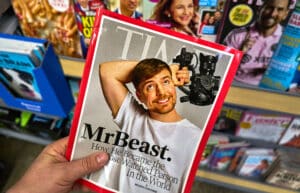
Even those who don’t watch MrBeast have heard of the YouTube star. As of August 2025, he had 422 million subscribers on the video platform. Unfortunately, such fame often brings additional scrutiny. That scrutiny has landed the popular influencer in hot water, as he now faces a lawsuit over The Beast trademark.

Russell Brands – the company that owns Spalding – filed a trademark lawsuit on August 12, 2025. However, this isn’t where the legal battle began. Apparently, this fight has been going on behind the scenes since last year. And while MrBeast may have hundreds of millions of adoring fans, that may not be enough to protect him.

MrBeast Sued Over The Beast Trademark

MrBeast is no rookie to the intellectual property world. He’s owned the trademark registration to his screen name since 2019. One might think this would protect him when manufacturing products featuring The Beast. However, it appears he may have infringed on a preexisting trademark when he released basketballs featuring the moniker.

In its filing, Russell Brands claims that its Spalding company has owned the trademark for The Beast since 2002. This didn’t stop MrBeast from selling a basketball with “BEAST” emblazoned across the front – a product similar to a Spalding release. Prior conversations between the two companies would indicate that the issue was resolved, but the lawsuit shows that problems persist.

In fact, Russell Brands claims that MrBeast promised to discontinue sales of the product in question after receiving two cease and desist letters. While the YouTuber’s brand does seem to have taken steps towards resolution, it does not appear to be enough for Spalding’s parent company.

Why Was the Issue Not Resolved?

Whether MrBeast infringed The Beast trademark may be a question for the courts to decide. While the influencer could claim that consumers are unlikely to be confused, his actions could be seen as an acknowledgement of infringement.

As of August 13, 2025, the MrBeast basketball is no longer for sale. However, the listing on both Amazon and his store’s non-indexed pages remained. This seems to be the crux of the lawsuit. Russell Brands claims that MrBeast representatives said the basketball and related sporting goods featuring “MrBeast,” “The Beast,” and “Beast” would no longer be sold by May.

However, the listings for the products remained – although apparently not for sale. The lawsuit further claims that no settlement has been reached between the two regarding prior sales of the products. Because of these issues, Russell Brands is seeking monetary damages in addition to a trademark injunction preventing further sales.

What Happens Next?

If Russell Brands owns The Beast trademark for basketballs, they have the exclusive right to use it or license its use. This doesn’t mean that Russell Brands owns the word “beast.” Rather, it means it’s the only business that can use “The Beast” in relation to certain products and services. Put simply, they have the right to prevent any likelihood of confusion.

If consumers could misidentify the source of a product, then potential confusion might exist. It’s easy to understand the underlying legal claim. After all, it wouldn’t be difficult to confuse sporting equipment featuring the word “Beast” with The Beast trademark – which is specifically categorized as being used for sports equipment.

Although MrBeast has taken actions to avoid legal issues, it will be interesting to see if the influencer is willing to roll over and pay damages. If he chooses to fight the lawsuit, we’ll have to await a judge’s decision. However, this could all be over relatively quickly if the two parties reach a settlement. Who knows? Maybe this will be the subject of MrBeast’s next viral video.


Nintendo Fights to Protect Iconic Pikachu Trademark

Is the Pikachu trademark in danger? Not likely.

Nintendo has been at the center of major intellectual property disputes lately. These have included Pokémon patent infringement claims and attempts to cancel existing trademarks. However, its latest battle — which also involves Pokémon — relates to its Pikachu character. It seems another company’s logo is a little too close for Nintendo’s comfort.

On July 29, 2025, the gaming giant filed a trademark opposition against an Illinois hobby store. If the filing is successful, the store will need to change its existing branding.

Protecting the Pikachu Trademark

Pokémon has long been a big money maker for Nintendo. From cartoons and trading cards to video games and feature-length films, the animated juggernaut seems unstoppable. One of the most popular Pokémon universe characters is Pikachu. In fact, the adorable electric creature has its own movie, Detective Pikachu. 

That’s why it caught Nintendo’s attention when TOBs Cards and Collectibles submitted a trademark application for a logo featuring a visually similar character. If the U.S. Patent and Trademark Office (USPTO) grants trademark registration, TOBs would secure exclusive rights over this character. A character that looks nearly identical to Pikachu, save for a human face.

Can You Trademark a Fictional Character?

Trademark law can be complicated when it comes to fictional characters. Typically, a random character or idea in a story cannot secure trademark protection. However, this changes if the character serves as a source identifier of specific goods and services. This means they must be recognizable and associated with a specific brand.

Pikachu clearly meets this threshold. It’s why the USPTO has granted several registrations for the character and related elements. Even Pikachu’s tail — which you’re unlikely to see detached from his body — enjoys trademark protection. That’s why the Pikachu trademark case against TOBs might just be open and shut.

What Are the Similarities in the Trademark?

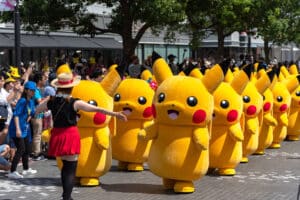
In its trademark filing, TOBs Cards and Collectibles sought protection for the letter “T” and a design element. That design appears to be a Pikachu character holding cards – just with a human face and hood added (the “T” is on the hood). The iconic Pikachu ears stretch out above the hood, and the lightning bolt tail peeks out from behind the character.

While the design submitted to the USPTO states that color is not part of the logo, a visit to the TOBs website shows that the Pikachu-like character is emblazoned in yellow. It even has Pokémon’s black ear tips. And since Pikachu is occasionally featured sporting headgear, the sole difference in the designs is the human face.

Essentially, the logo appears to be a child wearing a trademarked costume, which Nintendo claims could create a likelihood of confusion among consumers.

What Happens Now?

The next step in the Pikachu trademark ordeal rests with TOBs Cards and Collectibles. The company – which does sell Pokémon merchandise – has a deadline of September 7, 2025, to respond to Nintendo’s filing. If they choose to fight back, the case could technically carry on into February 2027. Of course, that’s only if they choose to fight back.

The elements of Nintendo’s Pikachu trademark are well-known. More importantly, TOBs logo clearly mimics these elements. Nintendo certainly has the capital to push around smaller companies, but in this case, they may not need much. If TOBs does not choose to withdraw its application or abandon the trademark, the USPTO will be the final decision maker.

It’s hard to envision a scenario where Nintendo does not come out on top. Put simply, this is one Pokémon that TOBs is unlikely to catch.