California Intellectual Property Blog

Background image

The Battle Over the Smashburger Trademark Is Escalating

The Battle Over the Smashburger Trademark Is Escalating

Anyone who loves a good meat patty has undoubtedly tried a smash burger in recent years. These flattened culinary delights provide a crispy form of hamburger that traps juices within the meat. What many people may not realize is that one company actually owns the Smashburger trademark. However, challenges over this brand’s intellectual property rights are increasing.

Smash burgers are not a recent food evolution. In fact, some historians believe the first hamburger in America was likely a smash burger. However, the term exploded in popularity after the restaurant chain Smashburger IP Holder LLC (i.e., Smashburger) opened in 2007. This helped the company secure various trademark registrations at the time.

The brand has faced several intellectual property issues over the years. However, a recent trademark filing could mean additional trouble for the Smashburger trademark.

The Fight Over the Smashburger Trademark

Considering the long history of smash burgers in America, it’s no surprise that the Smashburger fast food giant has run into problems. The European Union Intellectual Property Office (EUIPO) recently denied registration for “Smashburger,” saying it merely described a cooking technique. The company also faced pushback over a recent logo rebrand.

Still, Smashburger IP Holder LLC has managed to secure various trademarks from the U.S. Patent and Trademark Office (USPTO). Some of these have even become incontestable trademarks – which grants the company heightened protection from challenges to their rights. Still, this did not stop another brand from attempting to trademark a similar term.

On October 24, 2025, Bam Holding submitted an application to trademark their “Junk Smash Burger” logo. In the logo, the word “burger” is not capitalized, and “smash burger” is presented as two words rather than one. This could potentially be an effort to distinguish the brand from the more popular Smashburger business. However, it seems this effort was not enough.

Smashburger Brand Files Opposition

On May 12, 2026, Smashburger IP Holder LLC filed a trademark opposition against the Junk Smash Burger trademark application. In the filing, the brand claims that registering the term would cause consumer confusion and dilute its brand. Since Bam Holding plans to use the name for its own burger brand, it seems obvious how such confusion could arise.

Between a likelihood of confusion and trademark dilution claims, Bam Holding could have an uphill battle ahead of it. The dispute seemingly stems from the brand’s desired logo, which features the words “smash burger” – just like the various logos used by Smashburger IP Holder LLC. However, it’s also easy to envision a scenario where Smashburger could lose its rights.

Put simply, trademarks cannot be merely descriptive. This is why the EUIPO rejected the application from Smashburger IP Holder LLC. At a minimum, the smash burger cooking technique has been around for decades. So, how can one company claim ownership over such a popular cooking method?

Smashburger: The Right Place at the Right Time

In most cases, well-known culinary techniques cannot simply be trademarked. However, one must look at the context surrounding the Smashburger trademark. Back when the popular company opened in 2007, the term “smash burger” as a cooking method was not nearly as mainstream as it is today.

While these burgers are nothing new, the name Smashburger for a brand certainly was. When most consumers heard the words “smash burger” back in 2007, they immediately thought of the Smashburger fast food brand. This alone could make the term a distinctive trademark. The increased use of this terminology happened only after the fact.

However, the Smashburger trademark could possibly become generic. “Genericide” has occurred to many popular trademarks – ranging from Aspirin to Escalator. Smashburger IP Holder must continue to fight to prevent their trademark from becoming generic. Filing trademark oppositions is one way that companies do this.

Could the Smashburger brand one day lose its intellectual property rights? Possibly. Still, it seems the brand is ready to fight tooth and nail to stop this from happening.

Battle for Middle-Earth Trademark: LOTR Brand Targets LGBTQ Agency

Battle for Middle Earth: Lord of the Rings trademark fight is unfolding

In the decades since J.R.R. Tolkien created the fable of Middle Earth, the fantasy world has enjoyed a consistent place in pop culture. Even now, The Hunt for Gollum film is in production for a 2027 release. The series features epic imaginary battles, but a real-world fight is currently emerging over a popular Lord of the Rings trademark.

The current intellectual property dispute involves the fictional land of Rivendell from the Middle Earth saga. The National Gay Marketing Corporation submitted an application to trademark the term “Rivendell Media.” Many consumers might immediately think of Tolkien’s work when they hear “Rivendell,” but due to how long the LGBTQ agency has operated, this case could get very interesting.

The Fight Over a Lord of the Rings Trademark

The National Gay Marketing Corporation filed its trademark application on December 10, 2024. From the start, the organization ran into several issues that interfered with its potential trademark registration. However, these problems all appeared to be technicalities. Examining attorneys at the U.S. Patent and Trademark Office (USPTO) did not mention Middle Earth at all in their correspondence.

In October 2025, the group overcame all these issues and had “Rivendell Media” published in the Trademark Official Gazette. At that point, Middle-earth Enterprises, LLC, began pushing back against the application. The company submitted a trademark opposition to block registration, claiming that consumers might think the LGBTQ brand was somehow linked to Middle Earth.

While this might otherwise be a solid argument, the first use of “Rivendell Media” could raise issues for the Tolkien-linked brand.

Issues of Priority

There’s no debate that Middle-earth Enterprises owns rights to the term “Rivendell.” The company has several valid trademarks, some registered back in 2008. And even if there were no likelihood of confusion between the brands, it would be easy to see how “Rivendell Media” could potentially dilute the branding power of the popular Lord of the Rings trademark.

However, things get interesting when you realize that Rivendell Media is an established brand that’s been around for decades. The company was founded in 1979. Since then, it has offered advertising services for local and regional LGBTQ publications. While the “Rivendell” of Middle Earth was contrived long before 1979, it seems to have only recently been used in commerce.

That’s a defining characteristic of U.S. trademark law. The USPTO will not register a trademark unless commercial use has occurred. None of the several registrations mentioned in the filing by Middle-earth Enterprises mentions commercial use anywhere near as early as 1979. This could pose unique challenges when going up against a brand with a nearly half-century history.

What Happens Next?

The dispute between Middle-earth Enterprises and the National Gay Marketing Corporation may prove extremely complicated. Rivendell was linked to The Lord of the Rings long before Rivendell Media began offering services to LGBTQ brands. However, Rivendell Media clearly began providing commercial services under the name decades before Middle Earth did, and the use has now gone on for years.

Since an opposition was filed, the National Gay Marketing Corporation must submit an answer to the USPTO. Failure to do so by June 12, 2026, will result in trademark abandonment.  Unfortunately, it’s difficult to predict what may happen next.

The two parties may reach an agreement that allows mutual use. The effort to trademark Rivendell Media may also cease, but this seems unlikely since the brand has existed since 1979. Even if the Trademark Trial and Appeal Board (TTAB) makes a decision in the case, either party may file federal litigation if they don’t like the outcome.

Put simply, this Lord of the Rings trademark dispute could make the Battle for Middle Earth look like a playground skirmish.

Popeye Enters Public Domain, But a Trademark Fight Is Brewing

Popeye trademark issues arise after character enters public domain.

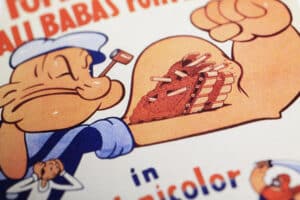
Generations of children grew up enjoying Popeye the Sailor Man. That’s why it was big news when the character’s copyright registration expired in January 2025. At that point, the original incarnation of the quasi-superhero could be used by anyone in the public domain. However, a recent filing shows that the Popeye trademark may still offer some protection.

A trademark opposition filed by the character’s owner, Hearst Holdings, Inc., alleges that a wrestling company is trying to misuse its intellectual property. Freedom Pro Wrestling filed an application to register the term “Popeye” just nine days after the Popeye copyright expired. The U.S. Patent and Trademark Office (USPTO) published the application after an initial denial.

At that point, it seems the owners of the Popeye trademark ate their spinach and got ready for a fight.

Does the Popeye Trademark Still Have Protection?

It’s important to note that the expiration of a brand’s copyright does not affect its trademark rights. This became abundantly clear during Disney’s effort to protect Mickey Mouse, even after the character’s copyright expired. While there’s nothing to stop anyone from using the original Mickey Mouse – or Popeye, for that matter – trademark rights do still provide some protections.

For instance, the Popeye trademark prevents anyone from using the term “Popeye” in a way that might confuse consumers. Hearst Holdings does not own the word “Popeye.” This means other brands may be able to use the character’s name and likeness in a variety of ways. The only issue arises if such use could create a likelihood of confusion or trademark dilution.

That’s precisely what Hearst Holdings claims will happen if the wrestling organization receives the Popeye trademark.

Is This a Valid Trademark Opposition?

When the USPTO initially received Freedom Pro Wrestling’s trademark application, an examining attorney refused the application with a non-final action. This refusal was related to the existing rights of Hearst Holdings. However, the wrestling company altered its application to specify specific venues where it would use the Popeye trademark.

This was apparently enough to assuage the concerns of the USPTO. The application was published in the Official Gazette for an opposition period. This is an important part of the trademark timeline, and it’s where Hearst Holdings took note. In its opposition filing, the company claims that registration would confuse consumers.

The owner of Popeye claims that consumers may believe the services offered by Freedom Pro Wrestling are somehow related to the existing Popeye trademark. The holding company also claims that registration of the name will result in trademark dilution. Put simply, this means the strength of the existing trademark would be diminished in consumers’ minds.

So, what can we expect next?

The Road Ahead

Now that Hearst Holdings filed an opposition notice, Freedom Pro Wrestling has until April 13, 2026, to submit a response. If they do so, this will begin a process with the Trademark Trial and Appeal Board (TTAB). Both sides will have an opportunity to argue its case. The case could extend far into 2027, and if one side doesn’t accept the conclusion, a lawsuit could be filed.

However, it’s possible that Freedom Pro Wrestling will not submit a response. In this situation, they will have abandoned their application and secured no rights over the Popeye trademark. This is a common outcome, particularly when smaller organizations face off against massive corporations. However, the wrestling group may have a case if they move forward.

In its filing, Hearst Holdings makes a broad claim about confusion. It says confusion would exist because wrestling involves fighting – and Popeye is “at least after eating spinach, good at” fighting. The result of this case will rely on whether the company can prove that consumers might confuse wrestling services with its existing Popeye trademark.

In light of their considerable resources, it’s a fair assumption that Hearst Holdings will be “strong to the finish” in this case.

Is Using the Word Emoji Illegal? The Emoji Trademark Saga Continues

Owner of emoji trademark targets another brand.

Very few symbols have established themselves across the entire cultural consciousness. Emoticons are arguably one of them. Using typeset symbols to create emotions [e.g., 🙂 for a smiley face], could date to 1648. Emojis are the clear successor to basic punctuation-based representations. This is why most people are surprised to learn that someone owns the emoji trademark.

Even more surprising, many brands have gotten into big trouble for using the word to advertise their emoji-related products. The company that owns the term – Emoji Co. GmbH – has filed various trademark infringement claims against those who use the word. In fact, they submitted a new filing to the U.S. Patent and Trademark Office (USPTO) just before Thanksgiving Day 2025.

Bicycle Company Targeted With Emoji Trademark Claim

On February 23, 2020, Movingetc, LLC submitted a trademark application for the term “iMoji.” The company sought exclusive use of the word for electrical adapters, cables, plugs, and headphones. While the terms “iMoji” and “emoji” might be spelled differently, they sound the same when spoken aloud. This would open the door for trademark litigation.

Because of this potential issue, Emoji Co. GmbH filed a trademark opposition on November 26, 2025. However, there are many questions related to this case. For instance, most trademark infringement claims must show that consumers are likely to confuse the source of products or services.

One must question whether a likelihood of confusion would truly exist between small characters conveying emotions and a line of headphones or electric cables. However, the opposition filing also claims that the famous emoji trademark may become less distinctive if the USPTO grants the iMoji application. Interestingly, this case raises even more intriguing issues than these.

A History of Litigation

You may be asking why the brand that owns the word “emoji” would target a company that doesn’t even appear to use the small pictograms. The reasoning becomes more obvious once you know that – in addition to licensing their intellectual property to Sony Pictures and Nestlé – Emoji Co. GmbH also has its name on medical foot cushions and patient safety restraints.

Put simply, the brand has built an empire across many industries – and it has the backing of major corporations. However, it’s interesting to see how the brand pulled this off. It’s reported that they’ve sued at least 10,000 defendants over simply using the word “emoji” in product titles and descriptions. In many cases, these claims targeted Amazon sellers who were merely describing a trait of their product.

While Emoji Co. GmbH owns several unique emojis, it can’t claim ownership over all emotion-based pictographs. Courts ruled in many cases that infringement was not willful, and they seem to indicate that the word was merely descriptive in its use. Still, the defendants often didn’t respond to court filings – meaning Emoji Co. received default judgments in their favor.

What Happens Now?

There are many unanswered questions involved in this case. Several exist because defendants have rarely chosen to fight the global Emoji Co. GmbH brand. However, this time may be different. Movingetc, LLC spent more than five years trying to get its application approved.  They seem unlikely to just give up.

If Movingetc, LLC decides to fight back, they have until January 25, 2026, to file an answer with the Trademark Trial and Appeal Board (TTAB). The brand might claim that the emoji trademark is generic, and thus not eligible for protection. They could also argue that no confusion or loss of distinctiveness would occur if registration were granted.


Nintendo Loses ‘Super Mario’ Trademark Fight With Grocery Store

Nintendo Loses 'Super Mario' Trademark Fight With Grocery Store

Super Mario is one of the most iconic and beloved releases in video game history. Over 200 games have been created in the franchise, and it would be difficult to argue that people don’t immediately think of Nintendo when they hear the word Mario. However, this didn’t stop Nintendo from losing a recent Super Mario trademark battle with a small grocery store.

This surprising situation is unfolding in Costa Rica — a jurisdiction whose trademark infringement laws vary from those in America. Still, the country does not allow brands to use trademarks that might create confusion among consumers regarding the source of products or services. However, there’s a small nuance that may have brought down the video game giant.

Nintendo Unable to Stop Super Mario Trademark

Back in 2013, Don José Mario Alfaro González opened up a supermarket and named it “Super Mario.” He wasn’t shy about seeking trademark registration over the name, and at the time, Nintendo filed no opposition. However, this all changed in March 2024 when Don Jose Mario attempted to renew his filing. This is when Nintendo took note.

In its trademark opposition, Nintendo claimes that the grocery store owner was purposefully trying to evoke its famous plumber in the minds of consumers. The inherent problem Nintendo faced came down to trademark classes. While the gaming behemoth has various Super Mario trademarks, none of them cover supermarket or grocery store services.

This simple distinction allowed the grocer to do something many others have failed at: defeat Nintendo in an intellectual property claim.

Nintendo Facing Onslaught of Intellectual Property Issues

There are important facts to note regarding Nintendo’s current Mario battle. For one, the grocery store owner’s name is Mario, so this undoubtedly gave him a bit of leeway. However, the company’s Facebook page clearly features Nintendo properties — many of which are bootleg. Still, this battle in Costa Rica is far from the biggest issue Nintendo has had recently.

Recently, the company targeted Palworld with claims of patent infringement due to a video game clearly based on the Pokemon franchise. Nintendo has also been in a constant battle with parties that facilitate the emulation of the brand’s video games. In most cases, Nintendo has done well at protecting its properties — and had the Costa Rican trademark dispute occurred in America, they may have won.

Unfortunately for the company, international trademark law isn’t quite standard.

Would Nintendo Have Won in America?

The U.S. Patent and Trademark Office (USPTO) does not allow trademark registrations that would create a likelihood of confusion among consumers. Some may argue that the Super Mario trademark on a grocery store wouldn’t create confusion. The question really comes down to whether consumers might believe the supermarket was run by Nintendo.

Regardless of whether confusion exists, though, the video game giant may have still emerged victorious in America due to trademark dilution laws. They could have argued that — even in the absence of consumer confusion — the registration of “Super Mario” by another brand could weaken the connection between Super Mario and Nintendo in consumer’s minds.

Unfortunately for the popular gaming company, international trademark law does not conform to American standards. And while Nintendo has the option to appeal the decision of the Costa Rica Registro Nacional, there’s no guarantee that the supermarket will be stripped of the Super Mario trademark. Perhaps Bowser should’ve taken Peach down to Central America.

From Bud Light to Ultra Right: Trademark Showdown Brewing

From Bud Light to Ultra Right: Trademark Showdown Brewing

Even infrequent news viewers likely took note of the major tension that occurred when Bud Light chose a transgender influencer to be part of a marketing campaign. The backlash was immediate among the political right, and activists even started their own alcohol brands as an alternative to the popular Bud Light beer. That simple act has now led to an Ultra Right trademark battle.

Anheuser-Busch is the owner of Bud Light, and on December 23, 2024, the company filed a trademark opposition against Ultra Right Beer, LLC. In the fallout of the Bud Light marketing decision — which led to a massively successful boycott against Anheuser-Busch — Ultra Right Beer jumped into the vacuum left by Bud Light drinkers upset about the company’s decision.

While Anheuser-Busch’s revenue finally began stabilizing in November 2024, it seems the company isn’t quite done with this fight.

Ultra Right Beer Seeks Trademark Protection

As Bud Light and its parent company’s revenue significantly decreased, Ultra Right Beer received substantial attention in the American media. Only one month after the boycott against Bud Light commenced, a trademark application was filed seeking protection for the “Ultra Right” moniker. The company – founded by Seth Weathers – seemed poised for success.

However, its journey towards trademark registration encountered significant hurdles. It was over a year before the publication of the application in the Official Gazette actually occurred. The company sought protection under various trademark classes, covering drinkware, clothing, and beer. Reaching this milestone is clearly what got Anheuser-Busch involved.

Less than one month after Ultra Right was published for opposition, the Bud Light manufacturer filed a notice of opposition. While it’s unlikely Anheuser-Busch was unaware of Ultra Right’s existence, apparently the trademark application was enough to risk another culture war fiasco.

Bud Light vs Ultra Right

In its filing with the U.S. Patent and Trademark Office (USPTO), Anheuser-Busch claims that registering the Ultra Right trademark would create a likelihood of confusion with its Michelob Ultra brand.  While some beer lovers might not realize it, “Ultra” is a protected trademark owned by Michelob’s parent company.

The filing states that a likelihood of confusion would exist since “Ultra Right” is so similar to “Ultra,” “Ultra Superior Light,” and similar existing trademarks. This essentially means that consumers might think that Anheuser-Busch was releasing Ultra Right Beer. While this may seem unlikely since the right-wing beer brand was created as an alternative to Bud Light, the similarities are unmistakable.

Anheuser-Busch also claimed that approving the Ultra Right filing could result in dilution of its brand. This means that the connection between “Ultra,” “Michelob Ultra,” and similar trademarks would become less connected to Anheuser-Busch in the minds of consumers. Such trademark dilution would create sufficient grounds to not approve Ultra Right’s registration.

What Happens Next?

The opposition filing with the USPTO means that the Trademark Trial and Appeal Board (TTAB) is now overseeing the case. As of now, the ball is in the court of Ultra Right Beer, LLC. Now that the opposition has been filed, the company has until February 1, 2025 to submit an answer to the TTAB. If they do so, legal proceedings will continue.

However, there’s no guarantee that this will happen. During the early months of seeking success with his “100% woke free” beer brand, Seth Weathers encountered issues. It’s hard to guess where the company is now in terms of success, but the idea of getting in a legal fight with an international beer company may not be appealing.

Customers complained about never receiving their orders from Ultra Right Beer, and within a year of launching the venture, the company had an F rating from the Better Business Bureau. Of course, these problems may not be enough for the company to give up its fight. If this case moves forward, we might not have a resolution until 2026.

Until that time, the Ultra Right trademark will be in limbo as another phase in the culture wars begins.


NCAA Takes on the Marines Over March Madness Trademark

March Madness trademark fight. NCAA vs Marines

The National Collegiate Athletic Association (NCAA) is one of the most well-known organizations in America. The same can obviously be said about the U.S. Marine Corps. While these two groups don’t typically intersect, they have now found themselves at odds over a trademark application filed by the Marines that may infringe on the March Madness trademark.

On November 22, 2024, the NCAA filed a trademark opposition against an application submitted by the Marine Corps. The Marines sought trademark rights over the term “March Mania” in relation to a tournament focused on marching bands. While this Marine Corps competition has existed for years, their attempt at trademark registration has pushed the NCAA into action.

U.S. Marine Corps vs NCAA

Most people are familiar with the March Madness basketball tournament hosted by the NCAA. In fact, the brackets showing teams facing off against each other are easily identifiable even among those who don’t enjoy sports. Fewer people have heard of March Mania, the yearly competition hosted by the Marine Corps where marching bands advance to championship rounds.

At first glance, March Mania and March Madness share definite similarities. In fact, the primary difference is the type of competition involved (e.g., basketball vs. marching bands). The similarities that exist are the basis of the NCAA filing a trademark opposition related to their March Madness trademark and other “March-formative” properties.

While the Marine Corps claims their March Mania trademark has been used commercially since at least March 2014, they did not file a trademark application until April 2024. However, the timing seems to matter less than the perceived likelihood of confusion that the NCAA believes would exist among consumers if the trademark is granted to the Marines.

Would Consumers Really Confuse the Tournaments?

The U.S. Patent and Trademark Office (USPTO) is tasked with granting trademark registrations. However, they have to make sure that approving a registration would not confuse consumers about the source of a product or service. Such a likelihood of confusion could negatively affect brands with an established following if consumers equate other products to their company.

The NCAA claims that the March Mania trademark sought by the Marines “is similar in appearance, sound, meaning, and commercial impression to the March Madness [trademarks].” The sports organization also points out that the dictionary lists “madness” and “mania” as synonyms, further arguing their point of potential consumer confusion.

Finally, the NCAA says that registering March Mania would create trademark dilution for the March Madness trademark. Its claim is that March Mania would weaken the connection between March Madness and the NCAA in the minds of consumers. It’s easy to see how such confusion may exist, but it will be up to the USPTO to make a decision.

What Happens Next?

The NCAA is no stranger to trademark infringement issues. The organization has gone after brands using “Markdown Madness,” “April Madness,” “March Modness,” “Marsh Madness,” and even “Vasectomy Madness.” Clearly, the NCAA is no stranger to trademark disputes. However, very few brands have the same level of resources as the U.S. Marine Corps.  With the force of the U.S. Government behind it, this case seems destined for trademark litigation if the Marines decide to press the issue.

In the notice sent to the U.S. Marine Corps, the USPTO states that the Marines have until New Year’s Day, 2025, to file an answer to the charges levied by the NCAA. At this point, the case will proceed before the Trademark Trial and Appeal Board (TTAB) — but if either side doesn’t like the resolution, they can file a complaint in federal court.

The Marines could drop its application, but if they choose not to, a fight between the U.S. Military and collegiate sports could make March Madness look like a scrimmage.

Can Facebook Own the Word “Book”? MemoryBook Needs to Know

Facebook vs MemoryBook: Battle of the Social Media Books

Meta Platforms – the company formerly known as Facebook – has had its hands full in the intellectual property world recently. When the company first changed its name to Meta, several brands sought to stop the rebranding with the U.S. Patent and Trademark Office (USPTO). However, now it’s Meta that’s targeting the trademark usage of other companies — this time going after MemoryBook.

Even though the social media giant has rebranded, its Facebook trademark is still highly protected. Of course, the question sometimes arises of how far this protection goes. With a new trademark opposition notice filed on October 10, 2024, Meta Platforms seems poised to argue that certain companies cannot even use the word “book” in their names. And it’s not the first time.

The case that follows will no doubt be interesting.

MemoryBook vs Facebook: Battle of the Books

On December 29, 2023, the USPTO received an application from MemoryLane seeking trademark registration for the word “MemoryBook.” The company claimed it had a bona fide intent to use the trademark in commerce, and although it took several months, the application was eventually published in the Official Gazette for an opposition period.

Just one month after MemoryBook was published for opposition, Meta Platforms filed an opposition to prevent registration. In its filing, Meta claims that “MemoryBook” is too similar to the “Facebook” trademark.  Meta argues that registration would dilute their trademark and create a likelihood of confusion among consumers.

To the untrained eye, it may seem as if Meta Platforms is claiming ownership over the word “book.” In a certain way, they are – but as with most issues in intellectual property law, the reality is much more complex and nuanced than it appears.

Can Facebook Really Trademark the Word “Book”?

To be clear, Facebook doesn’t actually have a trademark over the word “book.” They have numerous trademarks for “Facebook” in a variety of trademark classes, but none of the registrations grant them exclusive usage of the word “book.” The issue at hand seems to arise from the fact that MemoryBook looks poised to enter the social media world.

MemoryLane filed its registration as an intent-to-use trademark for a social media platform. Since this would put it in the same channels of trade as Facebook, there’s an argument to be made that consumers might believe the website is run by Meta Platforms and related to Facebook. The question is whether consumers would actually confuse the two brands.

This isn’t the first time Facebook has aimed to prevent other companies from using the word “book.” In August 2010, the social media platform filed a lawsuit against the Teachbook website, claiming they were trying to be the “Facebook of teachers.” They also sought to bring down the website known as Lamebook – a parody site targeting Zuckerberg’s creation.

What Happens Now?

The Facebook trademark clearly enjoys broad protections under domestic and international trademark law. It would be great if we could look at former cases to see how successful Meta Platforms might be in its case, but it seems that each time Facebook has targeted another company, the case has ended in settlement.

In the case of Teachbook, the smaller brand eventually changed its name to TeachQuest. When looking at the Lamebook platform, the brand only had to add a disclaimer to its website. It seems that few companies want to “go the distance” in a trademark fight with Meta Platforms. This may be partially explained by the fact that – as of October 2024 – Facebook is estimated to have a market capitalization of around $1.5 trillion dollars.

Very few companies on this earth have the necessary resources to take on Facebook in court, which may end up being the case in MemoryLane’s attempt to trademark MemoryBook. However, the opposition filing shows that the fledgling social media brand has until November 19, 2024 to file an answer with the USPTO.

If they plan on fighting back, this indeed will be an instance of David versus Goliath – just with Instagrammable rather than biblical repercussions.

McDonald’s Targets Household Goods Firm After Trademark Loss Abroad

McDonald's trademarks experience problems back home.

Major news outlets have reported extensively on the major intellectual property loss recently experienced by McDonald’s. Within the European Union (EU), the American restaurant chain no longer owns the “Big Mac” trademark in relation to certain goods and services. However, it turns out McDonald’s has additional trademark issues back at home.

Mere days after the company’s loss in the EU General Court, McDonald’s filed a notice of opposition against entrepreneur Jacob McVay. McVay sought to trademark the word “McVaze” for razor holders, cooking utensils, laundry drying racks, and a variety of other household goods. With its trademark opposition filed on June 4, McDonald’s decided to push back.

Big Mac Trademark Troubles Come Home

Trademark litigation did not go well for McDonald’s overseas. They argued that the restaurant chain Supermac’s should not be able to register its trademark in the European Union. The courts found that McDonald’s had not used the term “Big Mac” enough in relation to its restaurant or chicken sandwich offerings, so Supermac’s won the case.

What’s going on in America is a little different. In their filing, McDonald’s claims that registration of the McVaze trademark would confuse consumers and cause trademark dilution. Although any potential McVaze brand would not seem to be a direct competitor of McDonald’s, it could be argued that their trademark would diminish the distinctive quality of the McDonald’s trademarks.

However, the Trademark Trial and Appeal Board (TTAB) will have to make a decision on this issue — and the fast-food giant could potentially face a defeat on this side of the Atlantic.

Would McVaze Truly Create Consumer Confusion?

In the trademark opposition filing, McDonald’s points out that the U.S. Patent and Trademark Office (USPTO), along with its TTAB courts, have repeatedly sided with them over its “Mc” marks. They explain that “the public has come to recognize marks combining ‘Mc’ with a common word for a wide variety of goods and services as being uniquely associated with (Mcdonald’s).”

Clearly, they’re right on this front. We’ve seen this with popular items such as the McRib, McMuffin, McChicken, McFlurry, and the recent door-service option of McDelivery. However, each of these terms takes a common word and places “Mc” in front of it. If one were to look at the McVaze trademark, you may have to wonder if this is the same issue at all.

Put simply, “Vaze” is not a common word. It seems clear that McVaze is a play on the trademark applicant’s name (i.e., McVay) — and it could likely be argued that it is not an attempt to capitalize on McDonald’s trademarks. In fact, it could be a strong fanciful trademark. And considering the fact that McDonald’s doesn’t sell the products listed in the McVaze trademark application, one might wonder if this case has validity.

What Happens Now?

Everything from former TTAB cases to its own corporate materials shows that McDonald’s takes its trademark rights very seriously. The restaurant chain will clearly fight battles — even losing battles — that take place far and away, across entire oceans. However, what comes next could depend upon the decision of the Trademark Trial and Appeal Board. Barring any delays, Jacob McVay has until July 14, 2024 to file an answer with the TTAB.

If he chooses to go this route, he’ll need to argue that registration of “McVaze” with the USPTO will not infringe on the McDonald’s trademarks. If he does not file an answer — a common outcome when individuals and small brands face pushback from major corporations — then his filing will essentially become an abandoned trademark.

After the overseas case concluded, the managing director of Supermac’s said that McDonald’s was “trademark bullying to stifle competition.” Back home, McVaze doesn’t appear to even be competition — so one has to wonder if bullying is actually occurring or if a likelihood of confusion truly would exist. For now, we’ll have to wait to see how TTAB proceedings play out.

ChatGPT Trademark: OpenAI Contests Trademarks It Doesn’t Own

ChatGPT Trademark: OpenAI Contests Trademarks It Doesn't Own

OpenAI has had a difficult time securing intellectual property rights as of late. While the U.S. Patent and Trademark Office (USPTO) has granted OpenAI registrations for GPT-3 and GPT-4, it refuses to grant registrations for GPT or ChatGPT. Even without federal registrations over these terms, though, OpenAI is trying to stop others from using them.

As of early May 2024, OpenAI was still trying to reverse the USPTO’s decisions to deny trademark registration for ChatGPT and GPT. It’s unclear how successful these attempts will be, but in February 2023, two other parties sought trademark rights for similar terms. Judging from OpenAI’s response — filing a trademark opposition against both — they have high hopes that their efforts will not be in vain.

Other Parties Seek ChatGPT Trademarks

On February 23, 2023, State Bull Company Limited filed an application seeking the “ChatGPT” trademark for tobacco-related products. Just one day later, a man named Robert Cachro similarly sought rights over the term “dirtyGPT.” On May 1, 2024, OpenAI filed a trademark opposition against both. And while these may seem like blatant ripoffs of OpenAI’s artificial intelligence software, the USPTO may not see it this way.

While any company would want to trademark a product name that became famous, both the components of this name are descriptive in nature. “Chat” means to exchange remarks over a computer network, and “GPT” means “generative pre-trained transformers.”

Since both terms are widely used in other contexts, the USPTO believes the “GPT” and “ChatGPT” trademarks are merely descriptive. What about the other two companies seeking trademarks over similar terms? As it turns out, their efforts have the potential to be more successful than those of OpenAI.

Could Other Companies Have More Success Trademarking GPT?

While it might sound strange, the non-OpenAI applicants could potentially have better luck with ChatGPT trademarks at the trademark office. This is because the rights they’re seeking are different trademark types. For instance, while “ChatGPT” is just the combination of two terms that describe the tool that OpenAI offers, the rights sought by State Bull Company would use the ChatGPT trademark on tobacco products where it is not descriptive.

Clearly, neither “chat” nor “GPT” has anything to do with the tobacco industry. This means the sought-after trademark would be arbitrary in nature. Arbitrary trademarks are among the strongest trademarks available. For instance, think of the “Apple” trademark. Since apples have nothing to do with computers, “Apple” is an arbitrary trademark. Any other computer company attempting to use the word would be blatantly infringing. And since it would be descriptive, an apple juice company could not register the same word.

When it comes to the dirtyGPT application, the applicant may encounter issues similar to ChatGPT. After all, both components of its name — “dirty” and “GPT” — are descriptive as well. They’re essentially wanting to offer an AI tool similar to ChatGPT that can give “dirty” answers. However, that trademark could potentially be seen as a suggestive trademark — but a trademark examiner would need to review this.

What Happens Now?

If OpenAI owned the GPT or ChatGPT trademarks, each trademark opposition it filed would likely be successful. When it comes to dirtyGPT, they could clearly point to the GPT in the name as trademark infringement. Similarly, they could claim that approval of the State Bull Company Limited application would create trademark dilution — essentially weakening the link between “ChatGPT” and OpenAI in the minds of consumers.

Of course, OpenAI doesn’t own federal registrations for the GPT or ChatGPT trademarks. In the opposition notices, OpenAI makes it clear that the company believes they have rights over these terms. They even go as far as to say that they have common law trademark rights over them. However, the USPTO hasn’t shown any indication that their decisions will be reversed.

Of course, it’s hard to argue against the points that OpenAI is trying to make. If you asked 99% of consumers about “ChatGPT,” they’d likely believe you were referring to OpenAI’s artificial intelligence software. Therefore, it’s possible that the USPTO decisions may be overturned. However, watching OpenAI strive to protect a ChatGPT trademark that it does not own will remain an interesting activity until that time.