
California Intellectual Property Blog

Background image

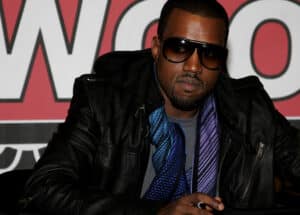
The U.S. Government Has a Kanye West Trademark Problem

The U.S. Government Has a Kanye West Trademark Problem

The U.S. Patent and Trademark Office (USPTO) receives hundreds of thousands of trademark applications yearly. Each of these filings goes through a rigorous process. Only about half of these submissions receive trademark registrations. However, you’d expect this number to be much lower by looking at the success rate of Kanye West trademark applications.

In fact, around 350 applications filed by the singer’s trademark firm have failed in the last 12 months. However, these rejections were not related to the underlying validity of the trademarks in question. After all, “Yews” as a news service – one of the rapper’s applications – would’ve likely met the distinctiveness and commercial requirements of the USPTO.

As many might expect from the notorious celebrity, these rejections seem to stem exclusively from Kanye’s disorganized approach to… well, everything.

Hundreds of Kanye West Trademarks Denied

When Kanye West launched his “Yews” platform, many worried the name was an antisemitic bash on Jewish people. In reality, it was the hip hop star’s attempt at building his own news platform. The website didn’t last long, shutting down after less than a year. However, Kanye used his Ox Paha trademark company to file dozens of “Yews” applications during that time.

As of this writing, 20 of the 26 applications submitted to trademark the name have been rejected. Many of these seem nonsensical in nature, including attempts to register “Yews” for both agricultural and surgical supplies. However, this is only the tip of the iceberg. The USPTO has rejected at least 350 applications from Ox Paha Inc. over the last year.

In the majority of these cases, the filings became abandoned trademarks due to the applicant failing to submit the appropriate filings.

Kanye’s Abandoned Trademarks

One of the most important aspects of trademark law in America is commercial use. These brand identifiers must be distinctive, but brands must also use them commercially prior to registration. Applicants need to file a trademark Statement of Use (SOU) showing that this has occurred. In the majority of Kanye’s rejections, this basic requirement was not met.

In other instances, Kanye West trademarks became abandoned when communications from the USPTO were ignored. This seems to be the case with the attempt to trademark “Yews” for beverage services, among others. All told, the 350 rejected Ox Paha applications from the last 12 months were almost all due to abandonment – not any underlying issue with the trademarks themselves.

Unfortunately for Kanye, this seems par for the course with his company.

A Brand Hanging On for Dear Life

A cursory trademark search shows that Ox Paha hasn’t had a single successful trademark application in the past five years. However, the hundreds of failures from the last year don’t point towards an entrepreneur who has given up. Some of the applications to register “Yews” are still live in the USPTO system.

In these applications – such as the attempt to trademark “Yews” for legal services – the USPTO has not granted registration. Rather, they approved requests for extensions. Ox Paha asked for more time to submit a Statement of Use for the six applications that are still live. In addition to legal services, these applications cover Christmas decorations, electronic equipment, medical services, music streaming, and product design services.

Who knows? We might be able to sit around our Kanye West trademarked Christmas trees after visiting a “Yews” medical clinic in the near future. Assuming the necessary filings get submitted on time.
 

USPTO Denies Meghan Markle Trademark Application for ‘Archetypes’

Meghan Markle trademark drama: Who owns "Archetypes"?

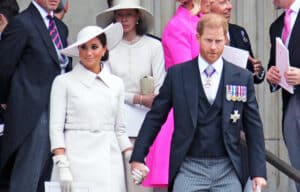
When Meghan Markle sought to trademark the word “Archetypes” back in 2022, it caused a bit of drama in the international press. In many cases, this was due to a fundamental misunderstanding of American trademark law. However, a bigger problem has now come up: the USPTO denied Meghan Markle’s trademark application based on a likelihood of confusion.

Can Meghan Markle Trademark the Word “Archetypes”?

When the Duchess of Sussex sought trademark registration for the word “Archetypes,” there was some pushback among certain media outlets. For instance, the Daily Mail discussed how Markle was trying to trademark a word that first appeared in the English language over 470 years ago. This article seemed to imply that the Duchess was trying to own the word, but a basic understanding of U.S. trademark law shows this is baseless.

Put simply, most trademark owners don’t “own” a specific word. However, they do have exclusive rights over some words when used in certain circumstances. For instance, the restaurant Subway does not own the word “subway,” but it can exclude other restaurants from using the term in a way that might confuse consumers about the source of goods. So when someone asks, “Can Meghan Markle trademark ‘Archetypes,’” the answer is yes.

Unfortunately for the Duchess, it seems someone beat her to it.

“Archetypes” Is Already Trademarked

On January 18, the USPTO sent a non-final office action to the production firm Archewell Audio, the company owned by Meghan Markle and Prince Harry. It’s linked directly to their Archewell organization — which is a charitable organization that’s been around since 2020. The audio production company helms the Archetypes podcast. If Meghan Markle trademarks “archetypes” successfully, her trademark application indicates that it will be used primarily for that podcast.

The application also requests protection for various other products and services. However, it seems to be the very nature of their podcast that has created a potential likelihood of confusion. That’s because a company known as Project Miracle IP Holdings owns a trademark over the term “archetypes” already. Of course, this would only prevent a Meghan Markle trademark from being registered if consumer confusion were likely. 

As it turns out, this might be the case. The Archetypes trademark used by Project Miracle IP Holdings is used for blogs, online publications, books and articles. On their trademark registration, it’s clear that most of their services take a self-help approach. Unfortunately for the Duchess of Sussex, that also seems to be the focus of her Archetypes podcast. Because of this similarity, the USPTO has issued an initial refusal of registration.

What Happens Now?

Anyone learning how to trademark something will quickly realize that a non-final office action is not the end of the world. It’s still possible to respond to this office action and argue that a likelihood of confusion would not occur. If this response isn’t made in a timely manner, however, Markle will have an abandoned trademark on her hands. However, if she can convince a USPTO examiner, she may be able to secure her registration.

Unfortunately, this could be a challenging mountain to climb. Significant similarities exist between the term used by Project Miracle IP Holdings and that used in the Meghan Markle trademark application. Of course, it’s also possible that Markle’s production company could seek to create an agreement with the other trademark owner, but this will most likely take place away from the public eye at first.

Put simply, we’ll just have to wait and see. Historically speaking, the British monarchy hasn’t always fared well in America. Perhaps Markle will be the one to change that.

Elon Musk’s ‘The Boring Company’ Facing Trademark Infringement Lawsuit

The Boring Company trademark infringement lawsuit.

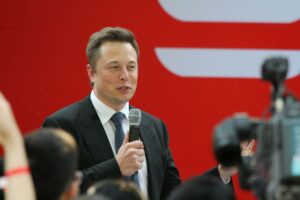
Elon Musk and Tesla have been sued over 1,000 times, but it’s Musk’s newer venture that’s now facing legal issues. The Boring Company started out as a subsidiary of SpaceX in 2016, but it became independent in 2018. A Nevada firm with the same name, however, has claimed that the use of this name constitutes trademark infringement against their intellectual property.

The Boring Company Lawsuit

On January 19, 2021 a Nevada LLC known as The Boring Company filed a trademark infringement lawsuit against Musk’s Delaware corporation with the same name. Elon Musk’s business and has recently made headlines by securing major infrastructure and tunnel construction contracts. The plaintiff in the case, however, says the Boring name belongs to them.

In the lawsuit, the smaller Nevada company claims they have been using the name ‘The Boring Company’ for over 15 years. Additionally, they state that they’ve used the trademark in commerce since 2008. And while it’s possible for two companies to have the same name without trademark issues, the same services are offered by both firms in this instance so there does appear to be issues.

The filing doesn’t mention that the Plaintiff has a trademark registration with the U.S. Patent and Trademark Office (USPTO). This creates hurdles for a firm trying to protect their trademark, but it doesn’t mean they’re without rights. The real question here is whether their underlying claim has merit.

Intentional Trademark Infringement?

There are many complex factors with this lawsuit. One of these – the possibility that intentional infringement occurred – is mentioned in the filing. The plaintiff claims that they were contacted via Facebook by Musk’s company in May 2017. This would seem to imply that the defendant knew of the plaintiff’s use, and this could cause issues for Musk.

Even though the plaintiff’s trademark is only registered in Nevada, it would still have priority if the lawsuit’s claims are accurate. Musk’s company would be expected to perform a trademark search prior to using the name. One of the big questions at hand, though, is why there was such a delay. If the plaintiff knew of the defendant’s use in May 2017, why wasn’t a lawsuit filed earlier?

In the court filing, the plaintiff says they were “informed and believed that Defendant’s activities were very limited in scope” and would only equate to the drilling of a test tunnel. The current lawsuit claims that a likelihood of confusion exists, but it seems as if this would’ve been the case in 2017 as well. This could make the case particularly tricky in that Musk’s company can potentially use a laches defense by claiming that the plaintiff waited too long to take action.

What Comes Next?

Elon Musk is no stranger to lawsuits, and he along with his companies have emerged victorious from many. The plaintiff has asked for several measures of relief – including an injunction, monetary damages and attorneys’ fees.

The plaintiff’s claims of trademark infringement, unfair competition, state infringement, common law infringement and deceptive trade practices on their face appear to many to have merit.  As such, a settlement of the claims is possible considering that the lawsuit states that the parties engaged in settlement negotiations over the last few years.
