
California Intellectual Property Blog

Background image

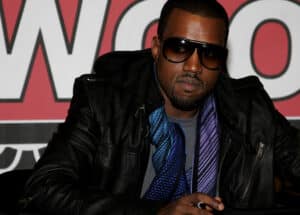
The U.S. Government Has a Kanye West Trademark Problem

The U.S. Government Has a Kanye West Trademark Problem

The U.S. Patent and Trademark Office (USPTO) receives hundreds of thousands of trademark applications yearly. Each of these filings goes through a rigorous process. Only about half of these submissions receive trademark registrations. However, you’d expect this number to be much lower by looking at the success rate of Kanye West trademark applications.

In fact, around 350 applications filed by the singer’s trademark firm have failed in the last 12 months. However, these rejections were not related to the underlying validity of the trademarks in question. After all, “Yews” as a news service – one of the rapper’s applications – would’ve likely met the distinctiveness and commercial requirements of the USPTO.

As many might expect from the notorious celebrity, these rejections seem to stem exclusively from Kanye’s disorganized approach to… well, everything.

Hundreds of Kanye West Trademarks Denied

When Kanye West launched his “Yews” platform, many worried the name was an antisemitic bash on Jewish people. In reality, it was the hip hop star’s attempt at building his own news platform. The website didn’t last long, shutting down after less than a year. However, Kanye used his Ox Paha trademark company to file dozens of “Yews” applications during that time.

As of this writing, 20 of the 26 applications submitted to trademark the name have been rejected. Many of these seem nonsensical in nature, including attempts to register “Yews” for both agricultural and surgical supplies. However, this is only the tip of the iceberg. The USPTO has rejected at least 350 applications from Ox Paha Inc. over the last year.

In the majority of these cases, the filings became abandoned trademarks due to the applicant failing to submit the appropriate filings.

Kanye’s Abandoned Trademarks

One of the most important aspects of trademark law in America is commercial use. These brand identifiers must be distinctive, but brands must also use them commercially prior to registration. Applicants need to file a trademark Statement of Use (SOU) showing that this has occurred. In the majority of Kanye’s rejections, this basic requirement was not met.

In other instances, Kanye West trademarks became abandoned when communications from the USPTO were ignored. This seems to be the case with the attempt to trademark “Yews” for beverage services, among others. All told, the 350 rejected Ox Paha applications from the last 12 months were almost all due to abandonment – not any underlying issue with the trademarks themselves.

Unfortunately for Kanye, this seems par for the course with his company.

A Brand Hanging On for Dear Life

A cursory trademark search shows that Ox Paha hasn’t had a single successful trademark application in the past five years. However, the hundreds of failures from the last year don’t point towards an entrepreneur who has given up. Some of the applications to register “Yews” are still live in the USPTO system.

In these applications – such as the attempt to trademark “Yews” for legal services – the USPTO has not granted registration. Rather, they approved requests for extensions. Ox Paha asked for more time to submit a Statement of Use for the six applications that are still live. In addition to legal services, these applications cover Christmas decorations, electronic equipment, medical services, music streaming, and product design services.

Who knows? We might be able to sit around our Kanye West trademarked Christmas trees after visiting a “Yews” medical clinic in the near future. Assuming the necessary filings get submitted on time.

 

Trump Wanted to Trademark “Rigged Election.” Why It Didn’t Work

Trump's attempts to trademark 'rigged election'

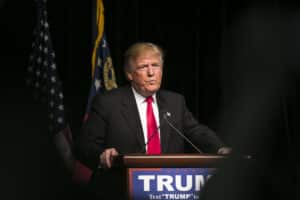
In the final days of their work, the House select committee investigating the January 6 attack on the Capitol released a trove of documents. Among them were records showing that Donald Trump sought to have the term “Rigged Election!” trademarked after his loss to Joe Biden. With the leader of the Free World spearheading the endeavor, why exactly is rigged election not the property of the former president?

January 6 Committee and Trademark Interest

In an email sent to Jared Kushner just days after Joe Biden was declared the winner of the presidential election, former Trump aide Dan Scavino told Kushner that Trump wanted to “own rights” to “Save America PAC!” and “Rigged Election!” Kushner forwarded the message to Eric Trump, attorneys for the campaign, and the former president’s chief financial officer. The January 6 House committee obtained these messages.

A reply to Kushner discussed the registration of the Save America PAC web address — which would not automatically create a trademarked domain name — but less discussion centered around the idea of registering “Rigged Election!” with the U.S. Patent and Trademark Office (USPTO). Still, Donald Trump posted “more [and] more people will not accept this Rigged Election!” to Twitter just one day after Scavino sent Kushner the email.

Over two years later, however, the term is not found through a trademark search on the Trademark Electronic Search System (TESS). So, what happened? How could arguably the most powerful man on Earth not be able to secure trademark rights over a term he used hundreds of times in 2020 and beyond? It likely comes down to basic trademark law.

Registration Problems With “Rigged Election”

Judging from a search on the USPTO website, there was never a legitimate attempt to register the term “Rigged Election!” There are many reasons this may be the case. It’s very possible that the idea could’ve simply been lost in the shuffle of the mayhem that unfolded after the 2020 election. However, the likelihood that trademark registration would’ve been granted — even if applied for — is very much in question.

The biggest problem for the former president is that trademarks are meant to identify the source of goods and services. For instance, the golden arches of McDonald’s immediately tell people where they’re eating. Conversely, “rigged election” merely describes what some people believe happened in 2020. It was widely used among the conservative movement, and a Google search of the exact term returns over 370,000 results.

Thus, it’s hard to envision a scenario where Donald Trump could claim sole rights to the term. Of course, it really all comes down to distinctiveness. If the campaign could’ve shown that “Rigged Election!” had acquired distinctiveness in the minds of consumers related to some good or service, it’s possible that the term could be a trademark. However, commercial use or a bonafide intent to use must also be present, and there’s little evidence that this was the case.

What If Rigged Election Was Trademarked?

There’s often confusion over what owning a trademark actually means. Had the USPTO issued a registration to Donald Trump, it would not have prevented others from using the term. A great example of this in action is the fact that “Santa Claus” is actually trademarked. In reality, a trademark only prevents others from using the trademark in a way that may confuse consumers or damage a brand.

This is how multiple companies can share the same name. After all, no one will confuse the source of Delta Faucets and Delta Airlines. Had Donald Trump been able to register “Rigged Election!”, he likely could not have stopped others from using the term in a manner unrelated to whatever product or service he listed in a hypothetical application.