California Intellectual Property Blog

Background image

Disney Trademark Fight: Can Disney Claim Ownership of “Mouse”?

Disney Trademark Fight: Can Disney Claim Ownership of "Mouse"?

The Disney trademark is one of the most valuable pieces of intellectual property in existence. Even before the company purchased Marvel Entertainment and Star Wars, it was already seen as a global powerhouse. A key component to maintaining such value is protecting the brand’s intellectual property. In fact, it’s currently targeting a company for using the word “mouse.”

If you think this sounds strange, you’re not alone. To be clear, Disney does not own a trademark for the word “mouse.” However, it does have trademark registrations for “Mickey Mouse,” “Minnie Mouse,” and similar terms. Still, many other companies – from Apple to Hasbro – offer products with the word “mouse” in the name. So, what makes this situation different?

It’s complicated.

Do Disney Trademarks Include the Word “Mouse”?

When it comes to trademark law, companies typically do not “own” a word. They can secure exclusive use in commerce of certain terms, but even then, they can’t typically restrict unrelated companies from using similar words. For instance, Delta Airlines and Delta Faucet Company can simultaneously exist because they offer very different products.

In a recent filing with the U.S. Patent and Trademark Office (USPTO), Disney submitted a trademark opposition against ClickTheMouse Inc. for their attempt to register “Click the Mouse.” While neither “click the mouse” nor “mouse” are registered Disney trademarks, the global brand claims registration of the term will create consumer confusion and dilute their brand.

While such arguments have successfully been made before, Disney’s filing is unique in several ways.

Indirect Consumer Confusion?

When looking at the basic claims of Disney’s opposition filing, one might think the filing was frivolous. They say “Click the Mouse” and “Mickey Mouse” are phonetically similar. The filing claims consumers may confuse the two brands because they both offer travel services. However, the question arises of whether using the word “mouse” is enough to create confusion.

For many consumers, the answer would be “no.” No one thinks “Burger King” and “Smoothie King” are related just because they share one word. However, a glance at the website of ClickTheMouse Inc. reveals where the problem may lie. As indicated in the opposition filing, Disney images and references are present throughout the travel company’s website.

In fact, the brand seems to focus entirely on planning Disney vacations for its customers.  On paper, trademark dilution and consumer confusion between the two brands might seem unlikely. However, intellectual property law does not exist within a vacuum. Even if consumers wouldn’t confuse “click the mouse” with “Mickey Mouse,” the blatant presence of other Disney trademarks on the applicant’s website could easily conflate the two brands in people’s minds to at least think the companies are related.

What Happens Next?

By filing an opposition against the ClickTheMouse application, Disney has initiated a countdown. The applicant now has until February 27, 2026, to submit an answer to the USPTO. If they fail to do so – which is quite common in these situations – they’ll essentially have an abandoned trademark. The brand’s attempt at registration will go no further.

If the travel brand does choose to fight back, both parties will have to present evidence to the Trademark Trial and Appeal Board (TTAB). ClickTheMouse will need to prove that its registration wouldn’t create confusion or dilute Disney trademarks. With all the imagery featured on the brand’s website, though, this could be an uphill battle.

Disney is no stranger to intellectual property disputes, so there’s little doubt that they’re ready for a long fight. Whether ClickTheMouse Inc. is prepared to take on a company with a market capitalization of over $200 billion is another matter entirely.
 

After ‘Bad Mormon’ Win, LDS Targets “Mormons for the Devils” Trademark

From Bad Mormon to Mormons for the Devils, the LDS takes IP rights seriously.

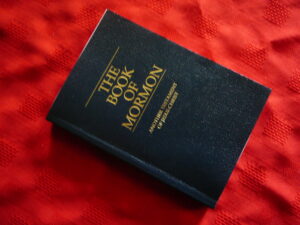
The Church of Jesus Christ of Latter-day Saints (LDS) is a well-known religion in America. What many people don’t know is that it’s also a corporation, and that corporation has a trademark registration for the word “Mormon.” The LDS has never been shy about asserting its rights, and now they’re doing so by going after the “Mormons for the Devils” trademark.

Filed by Destroyer Promotional Products, LLC, the Mormons for the Devils term seems to identify Mormon individuals who support Arizona State University in its football rivalry against Brigham Young University – a school operated by the LDS church. The ASU mascot is a devil. It’s common to see Mormons for the Devils t-shirts at ASU and BYU games.

A History of Protecting the Mormon Trademark

ABC News once asked, Is the Word ‘Mormon’ Really Trademarked? The answer is an unequivocal “yes.” The LDS owns the trademark for this religious descriptor, and they frequently fight back against the unlicensed use of the term. In fact, they recently went after Real Housewives star Heather Gay when she tried to trademark the title of her book, Bad Mormon.

While there hasn’t been much media coverage of this dispute since it initially started, a trademark search shows that the Bad Mormon application has been abandoned. No specific information was provided, but it appears as though the LDS Church and Gay reached an agreement outside of official proceedings. In this situation, it seems like the Bad Mormon trademark is not meant to be.

The same outcome potentially awaits Destroyer Promotional Products in its effort to trademark “Mormons for the Devils.” The Mormon church’s trademark opposition means that the promotional company — which appears to be based in Florida — will have to argue its case before the Trademark Trial and Appeal Board (TTAB).

Can a Company Trademark Mormons for the Devils?

It’s easy to question why a company shouldn’t be able to trademark a term like “Mormons for the Devils.” After all, it’s merely a descriptor that applies to Mormon fans who support a football team outside of Brigham Young University. While it may fall under fair use rules, one could argue that the term is parody. In such a case, it may be allowed under trademark law.

However, it’s worth noting that this is the exact argument that Heather Gay used when trying to trademark her book title. The attempt does not appear to have worked. The LDS church currently claims that granting the Mormons for the Devils trademark would create a likelihood of confusion and trademark dilution by blurring.

The claim of confusion simply means that consumers might believe items coming from Destroyer Promotional Products are directly associated with the church. The LDS believes that such an outcome would negatively affect its corporation. Alternatively, claims of trademark dilution by blurring indicate that the famous Mormon trademark may be disassociated from the church in the minds of consumers.

What Happens Next?

Clearly, the Church of Jesus Christ of Latter-day Saints is serious about its intellectual property. They even created a document detailing when it’s appropriate for third parties to use their trademark. The document specifically says, “Requests to use Church trademarks in a primary branding capacity by outside individuals or organizations are rarely approved.”

However, this doesn’t necessarily mean that “Mormons for the Devils” will not be approved as a trademark. If Destroyer Promotional Products can overcome the opposition from the LDS church, they may be granted trademark rights. If history is any indicator, though, this may be a difficult effort. The Mormon Church has extensive resources at its disposal.

Destroyer Promotional Products has until February 22, 2025 to file an answer.  While some companies reach licensing agreements, it seems unlikely that the LDS would approve the use of their name alongside “devils.” If the Mormons for the Devils application isn’t abandoned, this could be an interesting case.

From Bud Light to Ultra Right: Trademark Showdown Brewing

From Bud Light to Ultra Right: Trademark Showdown Brewing

Even infrequent news viewers likely took note of the major tension that occurred when Bud Light chose a transgender influencer to be part of a marketing campaign. The backlash was immediate among the political right, and activists even started their own alcohol brands as an alternative to the popular Bud Light beer. That simple act has now led to an Ultra Right trademark battle.

Anheuser-Busch is the owner of Bud Light, and on December 23, 2024, the company filed a trademark opposition against Ultra Right Beer, LLC. In the fallout of the Bud Light marketing decision — which led to a massively successful boycott against Anheuser-Busch — Ultra Right Beer jumped into the vacuum left by Bud Light drinkers upset about the company’s decision.

While Anheuser-Busch’s revenue finally began stabilizing in November 2024, it seems the company isn’t quite done with this fight.

Ultra Right Beer Seeks Trademark Protection

As Bud Light and its parent company’s revenue significantly decreased, Ultra Right Beer received substantial attention in the American media. Only one month after the boycott against Bud Light commenced, a trademark application was filed seeking protection for the “Ultra Right” moniker. The company – founded by Seth Weathers – seemed poised for success.

However, its journey towards trademark registration encountered significant hurdles. It was over a year before the publication of the application in the Official Gazette actually occurred. The company sought protection under various trademark classes, covering drinkware, clothing, and beer. Reaching this milestone is clearly what got Anheuser-Busch involved.

Less than one month after Ultra Right was published for opposition, the Bud Light manufacturer filed a notice of opposition. While it’s unlikely Anheuser-Busch was unaware of Ultra Right’s existence, apparently the trademark application was enough to risk another culture war fiasco.

Bud Light vs Ultra Right

In its filing with the U.S. Patent and Trademark Office (USPTO), Anheuser-Busch claims that registering the Ultra Right trademark would create a likelihood of confusion with its Michelob Ultra brand.  While some beer lovers might not realize it, “Ultra” is a protected trademark owned by Michelob’s parent company.

The filing states that a likelihood of confusion would exist since “Ultra Right” is so similar to “Ultra,” “Ultra Superior Light,” and similar existing trademarks. This essentially means that consumers might think that Anheuser-Busch was releasing Ultra Right Beer. While this may seem unlikely since the right-wing beer brand was created as an alternative to Bud Light, the similarities are unmistakable.

Anheuser-Busch also claimed that approving the Ultra Right filing could result in dilution of its brand. This means that the connection between “Ultra,” “Michelob Ultra,” and similar trademarks would become less connected to Anheuser-Busch in the minds of consumers. Such trademark dilution would create sufficient grounds to not approve Ultra Right’s registration.

What Happens Next?

The opposition filing with the USPTO means that the Trademark Trial and Appeal Board (TTAB) is now overseeing the case. As of now, the ball is in the court of Ultra Right Beer, LLC. Now that the opposition has been filed, the company has until February 1, 2025 to submit an answer to the TTAB. If they do so, legal proceedings will continue.

However, there’s no guarantee that this will happen. During the early months of seeking success with his “100% woke free” beer brand, Seth Weathers encountered issues. It’s hard to guess where the company is now in terms of success, but the idea of getting in a legal fight with an international beer company may not be appealing.

Customers complained about never receiving their orders from Ultra Right Beer, and within a year of launching the venture, the company had an F rating from the Better Business Bureau. Of course, these problems may not be enough for the company to give up its fight. If this case moves forward, we might not have a resolution until 2026.

Until that time, the Ultra Right trademark will be in limbo as another phase in the culture wars begins.


Muhammad Ali Brand Targets G.O.A.T. Trademark Applicant

Muhammad Ali Brand Targets G.O.A.T. Trademark Applicant

If you’ve heard the word “goat” in recent years, there’s a good chance it wasn’t referring to the gruff farm animal. Rather, people have taken to using the word — an acronym for “Greatest of All Time” — to describe individuals who excel at their craft. With the acronym in such wide use, it may surprise some to know that Muhammad Ali Enterprises owns the G.O.A.T. trademark. In fact, they’re currently in an increasingly complicated fight over the trademark.

On January 23, 2024, the company filed a trademark opposition against Be the GOAT Games, LLC. The latter company had filed an application to trademark the term “G.O.A.T. Greatest of All Time.” In the opposition filing, the owner of Muhammad Ali’s intellectual property claimed that granting registration to the game company would harm their own brand. However, Muhammad Ali Enterprises’ attempt to corner the G.O.A.T. trademark may end up stinging like a bee.

Can Muhammad Ali Brand Own the G.O.A.T. Trademark?

When Be the GOAT Games filed a trademark registration in September 2022, they were seeking protection for using the name of their card game on clothing. The creators of the card game claim that “it answers the age-old question: Who is the G.O.A.T.?” The game is fairly simple to play, but securing trademark rights over the G.O.A.T. trademark may prove to be a bit more difficult.

That’s because Muhammad Ali Enterprises owns trademarks for similar terms. In fact, the company has registrations for “Greatest of All Time” and “The Greatest of All Time” across multiple trademark classes. To put it simply, the owner of the late boxer’s intellectual property certainly can own the G.O.A.T. trademark. However, this doesn’t necessarily mean that they can claim complete ownership over it regardless of the type of use.

This dispute may come down to whether consumers are likely to confuse the card game company with Muhammad Ali Enterprises. Unfortunately, this seemingly simple question has gotten more complex in recent days.

A True Likelihood of Confusion?

In their opposition filing, Muhammad Ali Enterprises claims that granting registration to Be the GOAT Games will confuse consumers, dilute their brand, and imply a false connection to the superstar boxing champ. However, some may question these claims. The company states that a likelihood of confusion would exist because consumers will “immediately think of Muhammad Ali” when hearing the term.

However, there’s no argument that G.O.A.T. has gained widespread use as a term in countless other areas. Everyone from sports starts like Tom Brady, Lebron James and wrestler Chris Jericho to celebrities like Beyonce and Taylor Swift have had the label applied to them. Additionally, the first online use of the term “G.O.A.T.” occurred in 1996 — a full year before the G.O.A.T. trademarks owned by Muhammad Ali Enterprises were registered with the USPTO.

From the opposition submitted, there’s no doubt that Muhammad Ali Enterprises has some rights over the term “Greatest of All Time,” but one has to question whether consumers would truly confuse the world-renowned boxer’s use with a card game. And due to another opposition submitted against Be the GOAT Games almost immediately after the first, one might wonder who really owns rights over the G.O.A.T. trademark.

Another G.O.A.T. Trademark Contender Emerges

On January 24, 2024 — just one day after Muhammad Ali Enterprises filed their opposition — GOAT USA Inc. filed an opposition against Be the GOAT Games. Like Muhammad Ali Enterprises, GOAT USA has federal trademarks featuring some variation of “GOAT” and “Greatest of All Time.” Its registrations are under Trademark Class 25 for apparel — as are some owned by Muhammad Ali Enterprises.

Since Be the GOAT Games is also filing under Trademark Class 25, one might assume that a clear conflict would exist over the G.O.A.T. trademark. However, the trademarks owned by Muhammad Ali Enterprises and GOAT USA have simultaneously existed for years. In fact, the latter of these companies specifically lists “athletic apparel” in their registrations — which some may argue is closer to trademark infringement against Ali than any card game would be.

Two companies with multiple trademark registrations for the same terms — in the same trademark classes — are asserting their exclusive rights over their intellectual property. This is fully within their rights, but considering the fact that these companies own similar trademarks — and the decades-long widespread use of the term “Greatest of All Time” — one has to wonder whether anyone can fully own the G.O.A.T. trademark.

We’ll simply have to keep an eye on how these trademark disputes play out.

Apple One Trademark Challenged by Bible Sales Company

Apple One Trademark Challenged by Bible Sales Company

When trademark disputes occur over intellectual property, such disputes typically involve companies in similar industries. Delta Faucets and Delta Airlines can co-exist because they’re in different industries. Their products and services are so different that a likelihood of confusion probably would not occur. However, things are getting strange with the Apple One trademark.

The Apple One service — a subscription bundle — has been around since October 2020. It primarily offers music and multimedia entertainment (e.g., movies, television shows). It took over three years for Apple’s trademark application to be approved for publication in the Official Gazette, and almost immediately, a Bible sales company contested the application.

Things seem set to only get stranger.

Apple One vs. Bible Producers

When Apple’s trademark application for One (+Design) was finally published, it had already gone through a long battle. Due to a variety of office actions and refusals, the application was not published for opposition until November 2023. This is a lengthy trademark timeline considering the application was filed in October 2020. Clearly, this gave potential opposers plenty of time to prepare.

This is where Entrepreneurial Ventures Capital Co., L.L.C. comes into the picture. Mere days after the Apple One trademark application was published for opposition, the company filed a trademark opposition against Apple. In the opposition, the company claims that registering Apple One with the USPTO would infringe upon their intellectual property rights.

Entrepreneurial Ventures Capital claims that its rights would be infringed due to a likelihood of confusion, false connection, and dilution. However, this may be a difficult argument to uphold.

Can a Company Claim Broad Ownership of “One”?

Just about any word can be trademarked in the right context — including “one.” In fact, Entrepreneurial Ventures Capital has had trademark rights over the term since at least 2006. However, this doesn’t mean they actually own the word. Instead, they have exclusive rights to use “One” within their area of commerce. Other brands could easily use the term within other non-related industries.

In the company’s opposition, they state that their trademark is used for selling bibles. If another company came along and tried to sell bibles — or potentially even related items — Entrepreneurial Ventures Capital would have a legitimate claim of trademark infringement. After all, it’s easy to see how a consumer could confuse two companies that are selling bibles under the same trademark.

However, Apple One isn’t a biblical product or service. It’s a service that offers music, iCloud storage, fitness apps, movies, news, and more. How would consumers possibly confuse two companies offering such different products and services? Within their opposition, Entrepreneurial Ventures Capital makes a significant claim to back up their argument — including claims that Apple is trying to take advantage of the smaller company’s reputation.

Could Apple One Limit Their Claim?

In the opposition notice, Entrepreneurial Ventures Capital says that a likelihood of confusion, trademark dilution, and a false connection would exist if the Apple One trademark were registered. The claim focuses on the fact that Apple “has not and refuses to limit the claim for registration to exclude any content regarding bibles, religion and/or spirituality, irrespective of the acceptability of such a limitation to Opposer or the USPTO.”

Essentially, the company seems to oppose Apple’s trademark because the technology behemoth may include religious or spiritual services under the name. At this point, the USPTO Trademark Trial and Appeal Board (TTAB) will take over the case. While it may seem far-fetched that consumers would confuse an Apple subscription service with a bible sales company, a TTAB judge will need to review all relevant facts to make a decision.

If the Apple One trademark is blocked, it could bring up new problems for the larger company. After all, they’ve been using the trademark for over three years. An inability to gain a federal trademark registration could be detrimental. Apple has until December 17 to submit an answer to the TTAB. Considering what they’ve gone through thus far to trademark “One,” it would be a complete surprise if they chose not to fight back.

Alcohol Trademark Battle: Toys ‘R’ Us Goes After Booze ‘R’ Us

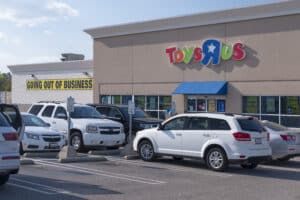
Toys 'R' Us takes on alcohol trademark application of Booze 'R' Us

Not too long ago, many people thought Toys ‘R’ Us was a brand dead in the water. This was an easy assumption since its last U.S. stores closed down in 2021. However, a recent revival has seen the nostalgic retailer re-emerge within Macy’s stores. And just a few months later, the brand is already going after the alcohol trademark “Booze ‘R’ Us” for infringement.

Toys ‘R’ Us Opposes Alcohol Trademark Application

The parent company of Toys ‘R’ Us, TRU Kids, Inc., watched as its toy brand floundered when online shopping grew in popularity. By 2017, Toys ‘R’ Us had filed for bankruptcy. However, the brand had re-established itself in nine states by August 2022. Before this ever happened, though, a brand known as Booze ‘R’ Us was already establishing itself.

In fact, the company sought trademark registration for its name in December 2021. This was less than a year after the last Toys ‘R’ Us locations had closed. However, it wasn’t until April 2023 that the U.S. Patent and Trademark Office finally published the application in the Official Gazette for opposition. Not long after, the reinvigorated toy brand targeted the alcohol trademark.

Will Consumers Really Confuse Toys With Alcohol?

In its trademark opposition, TRU Kids claims that consumers will likely confuse the Booze ‘R’ Us brand with their toy retailer. This might seem illogical to some — particularly since Booze ‘R’ Us only sells alcohol and related products. However, the Toys ‘R’ Us owner makes the following argument in its opposition:

“[T]he parties’ respective marks are closely similar, they both provide identical retail store services, and the parties’ remaining goods and services are related and complementary… [the] Applicant’s Mark so resembles the TRU Marks as to be likely to cause confusion, to cause mistake, or to deceive.”

The main argument presented by the toy brand against the alcohol trademark seems to be that they’re both retailers. Whether an actual likelihood of confusion would exist will be up to the Trademark Trial and Appeal Board — and potentially the courts — to decide. Although, proving that consumers would mistake an alcohol company for a toy brand might be a bit difficult.

However, TRU Kids did have one extra strategy included in their filing.

Possible Trademark Dilution as Toys ‘R’ Us Reopens?

While most allegations of trademark infringement rely on claims of consumer confusion, this is not always the case. Dilution of a trademark occurs when a famous trademark would lose its uniqueness if another trademark were registered. Within its filing, TRU Kids states that the brand connection of Toys ‘R’ Us in consumer minds would be lessened by the registration of Booze ‘R’ Us.

In fact, the filing states that the registration would cause trademark dilution “regardless of the presence or absence of actual or likely confusion, competition, or of actual economic injury.” By including such a claim, it will no longer be necessary to prove potential consumer confusion to block the registration of the Georgia company’s alcohol trademark.

However, this doesn’t necessarily guarantee Toys ‘R’ Us a win.

What Now?

Now that TRU Kids has filed an opposition notice, Booze ‘R’ Us has until June 14, 2023 to answer. Failing to do so could result in a default judgment for the Toys ‘R’ Us owner. However, the case could drag on into the end of 2024 if they decide to push back. Even if there is no likelihood of confusion, it may be hard to argue against claims of potential dilution.

For now, we’ll have to wait to see if this alcohol trademark gets any further in the registration process.

Eminem Takes on Two ‘Real Housewives’ Over Slim Shady Trademark

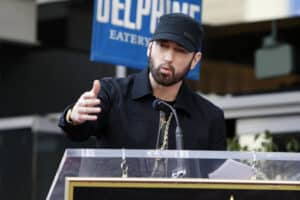
Slim Shady trademark at odds with Relatively Shady podcast?

Since hitting the scene back in the late ‘90s, the rapper Eminem (i.e. Slim Shady) has consistently found his way into the news. In many instances, this has been related to beefs and newly released diss tracks. It seems the rapper has a new beef, though, and it comes in the form of two Real Housewives stars and whether their Reasonably Shady podcast is infringing on the Slim Shady trademark.

Are the Housewives Infringing on the Slim Shady Trademark?

In February 2022, Robyn Dixon and Gizelle Bryant filed a trademark application for the term “Reasonably Shady.” While the application sought federal protection over a wide variety of products — including makeup, candles, apparel, water bottles and paddle boards — most people would recognize the term as the name of Bryant’s and Dixon’s relationship advice podcast.

If those names sound familiar to you, it’s because the podcast hosts are stars of the hit show The Real Housewives of Potomac. They sought registration of the term Reasonably Shady months before their first podcast episode, but it was only in February 2023 that Eminem filed a trademark opposition against the two reality stars.

The reason for the opposition is clearly related to the similarities between “Slim Shady” — a trademark registered by Eminem under his real name Marshall Mathers III — and “Reasonably Shady.” However, are these similarities really enough to support an opposition? The answer could get a bit murky.

Is There an Actual Likelihood of Confusion?

In most cases of trademark infringement, an trademark owner must show that a likelihood of comsumer confusion exists. This means that consumers would likely be confused about the source of products or services. For instance, a small company that sells hot dogs would be unable to file a trademark for “McDonald’s Hot Dogs” — as consumers are likely to think the product comes from the fast food giant.

Within his opposition request, Eminem directly states that a likelihood of confusion would exist if “Reasonably Shady” was trademarked. One has to question, however, the accuracy of this statement. Typically, products and services would have to be similar for consumer confusion to occur. While there is certainly some overlap (e.g., clothing), would people really believe a dating podcast came from Eminem?

Since the only similarity between the two trademarks is the word “Shady,” it’s uncertain whether a claim of consumer confusion could possibly be upheld. Especially since a quick trademark search shows active registrations for terms like Super Shady, Shady Baby, Stay Shady, and dozens of other registrations for clothing, toys, beer and more.

What Happens Next?

To be clear, a likelihood of confusion is not the only basis listed by Eminem to oppose the Reasonably Shady trademark. In the opposition, the megastar also claims that trademark dilution would occur if the Real Housewives stars are able to register their podcast name. This claim states that registration would impair “the distinctive quality” of the “Slim Shady” trademark since the name would inevitably call to mind the trademark held by Mr. Mathers.

However, we may have to wait and see how this beef plays out. The Robyn Dixon and Gizelle Bryant podcast has amassed nearly 2,000 reviews on Apple Podcasts and over 43,000 followers on Instagram. There’s no doubt that these Real Housewives have built a following, but thanks to the Slim Shady trademark dispute currently unfolding, they’ll have to answer to the opposition before March 26, 2023. Failing to do so could end their quest for trademark registration.

If Dixon and Gizelle choose to fight back, though, the case will proceed before the Trademark Trial and Appeal Board. As for now, we’ll just have to wait and see if The Real Slim Shady please stands up — and whether the Real Housewives can distinguish themselves from the rap superstar.

Rock Band Guns N’ Roses Sues Gun Store for Trademark Infringement

Guns N' Roses trademark lawsuit

Members of the rock band Guns N’ Roses have been open about their aversion to perceived lax gun laws in the past. This makes the band’s trademark infringement lawsuit all the more interesting. The music group claims that the Guns N’ Roses trademark is being misused by an online firearms store that calls itself “Texas Guns and Roses.” The legal dispute will no doubt shine a light on one of the most outlandish “one-stop shops” in history.

Guns N’ Roses Trademark Case Filed in Court

In a lawsuit filed in federal court, Guns N’ Roses accused Texas Guns and Roses of the “wholesale appropriation” of the band’s trademark. It’s obvious to see where this claim comes from. Separate from the addition of a descriptive state name, the two terms are essentially identical. Because of this, the band believes that the store’s name will create a likelihood of confusion among consumers.

The term “Guns N’ Roses” is no doubt synonymous with the rock band. As one of the most famous music groups in history, even those who aren’t fans of the genre would know the band at first mention. This raises the question of how an online gun shop could justifiably utilize such a similar name. The answer to this rests in a small link that says “Roses” buried under the list of gun products on the website.

Upon clicking that link, you’re taken to a page where the gun shop sells four different types of flower bouquets. Every other item on the site relates to firearms and accessories, but the one page with a minimal flower selection appears to be the retailer’s justification for their name. In fact, their attorney says, “Our client sells metal safes for guns and flowers, and have a one-stop website and absolutely no one is confused.” 

Has Texas Guns and Roses Already Won?

To some, it may seem clear that the Guns N’ Roses trademark is being misappropriated. However, the issue may not be as clear-cut as the band hopes for. That’s because this isn’t their first attempt to end the gun shop’s use of their name. In addition to sending trademark cease and desist letters — which were ignored — the band also filed a trademark cancellation back in 2021. This is only surprising because it means Texas Guns and Roses was already granted a trademark.

In fact, the U.S. Patent and Trademark Office registered the retailer’s log0 — which features the name — back in 2016. However, the cancellation request filed by the band could cancel the registration. The attorney for Texas Guns and Roses, though, doesn’t believe this will happen. In fact, he states that the band has filed a lawsuit simply because they believe the cancellation request is likely to fail.

Whether this is true or not remains to be seen. Still, with a TTAB proceeding and a federal lawsuit pending regarding the Guns N’ Roses trademark, there will undoubtedly be plenty of legal maneuvering on both sides. Assuming the gun retailer can convince a judge there will be no consumer confusion, though, is it possible that the rock band could still prevail? Potentially.

What Happens Next?

It’s possible that the gun retailer Texas Guns and Roses may convince a judge and the TTAB that no likelihood of confusion exists. However, this is not the only way to prove trademark infringement. In their cancellation request, the band also claims that the use of the similar name will create trademark dilution. With this claim, the band is saying that their connection to the name “Guns N’ Roses” could be weakened in consumer minds — or that the gun store’s use of the name could tarnish the band’s intellectual property.

They further assert this belief in their lawsuit by stating that the retailer is in a business that causes great divisiveness in America. This is no doubt true, and members of the band have voiced their support for stricter gun laws in the past. However, it’s now up to the Trademark Trial and Appeal Board — along with a federal court — to decide whether the Guns N’ Roses trademark is protected from the similar descriptive use undertaken by the firearms store. With a battle unfolding on multiple legal fronts, Texas Guns and Roses better be locked and loaded.

The LDS Church Is Trying to Block Another Mormon Trademark

Another day, another Mormon trademark dispute. This time with 'Real Housewives' star Heather Gay, over her book 'Bad Mormon'

Another day, another trademark opposition filed by The Church of Jesus Christ of Latter-Day Saints (LDS). The term “Mormon” has long been used to describe members of the LDS religious community — which is logical since its religious text is called The Book of Mormon. However, the intellectual property arm of the church has rushed headlong into another dispute over the Mormon trademark.

The LDS Opposes ‘Bad Mormon’ Trademark

Back in August 2021, the brand Heathertainment, Inc. filed an intent to use trademark application for the term “Bad Mormon.” Although the application focused on trademarking the name for use on beverage containers, clothing, and podcasts, most people now link the name to Real Housewives star Heather Gay’s upcoming book, Bad Mormon — set for release in February 2023.

In the notice of opposition, the LDS claims that registration of the “Bad Mormon” trademark would create a likelihood of confusion, trademark dilution, falsely suggest a connection to the church, and be otherwise deceptive. The church also provided its extensive list of registered marks — which includes “Mormon” and several variations — in their request to prevent registration.

This is far from the first time the LDS has gone after smaller organizations that attempted to trademark terms containing the word “Mormon.” The intellectual property arm of the church — Intellectual Reserve, Inc (IRI) — tried to block a dating app from using the name “Mormon Match” in 2014. It did the same against the Mormon Mental Health Association.

Can a Religion Really Be Trademarked?

The big question surrounding the Mormon trademark is whether the trademarking of a religious label can prevent others from using the term. While the LDS does own rights over several variations of “Mormon,” this wouldn’t necessarily stop others from also using the term. Particularly when their use wouldn’t occur in such a way that may create a likelihood of confusion among consumers. There are some other grounds the church could use, but would they really apply?

After all, could the Vatican interfere with someone using “Catholic” as a descriptive term in a trademark registration? Could leaders of the Muslim faith or Buddhism do the same? Most would assume this answer is “no,” but to be fair, these belief systems are thousands of years old. However, the Church of Jesus Christ of Latter-Day Saints came about less than 200 years ago — just decades before America’s first trademark registration.

Could this convey additional rights to the church? That is something that may need to be established under the law. Many believe that the LDS is simply using its massive resources and the threat of litigation to prevent others from using any Mormon trademark. However, it’s worth noting that the issue with Mormon Match was settled outside of court. Could the result be the same in the case of the “Bad Mormon” label?

What Happens Next?

There’s little doubt that the LDS church will continue its fight against “Bad Mormon.” They’ve gone as far as to take on a tiny coffee shop that dared to use the likeness of the angel Moroni in its advertisements. However, the trademark opposition filed by the church seems to take on a more personal undertone. This is evidenced by their claim that:

“Applicant’s use of the generic word ‘bad’ is deceptive in that it falsely represents that Opposer, the Church or its members are bad or otherwise behaving immorally… with an intent to advance its false suggestion of connection or by conveying stories of alleged former or existing members of the Church behaving immorally…”

And while the church cannot prevent the publication of the Bad Mormon book, it likely has issues with the release. After all, the book promises to expose secrets that Heather Gay “once held sacred” and to provide “an unfiltered look at the religion that broke her heart.” In other words, the LDS might not back down from this fight. However, they’re not up against a small coffee shop or app startup this time.

They’re going up against a celebrity with a major book deal. Heathertainment, Inc. and Heather Gay have until November 21, 2022 to file their answer to the opposition. If no settlement is reached between the two parties, the case will go before the Trademark Trial and Appeal Board, and even if they choose to not take the dispute to court, the TTAB hearing could last well into 2024.

It’s difficult to predict what will happen next, but we may finally get to the bottom of whether a Mormon trademark can exist outside of the LDS.

Muhammad Ali Trademark Owners Oppose His Daughter Using Her Own Name

Muhammad Ali Trademark vs Laila Ali Trademark

Muhammad Ali may have been a professional boxer, but his recognition extends far beyond the sporting world. Almost as recognizable is Laila Ali, Muhammad’s daughter who built her own legacy by becoming a titan in the women’s boxing world. Thanks to an opposition filed by the ‘Muhammad Ali’ trademark owners, however, Laili may be unable to trademark her own name.

Muhammad Ali Trademark Owners Push Back

Muhammad Ali started boxing at the age of 12, and over the next few decades, he became a global icon. His daughter Laila was born in 1977, and 18 years later, she decided to step into the ring herself. While Muhammad Ali is widely regarded as the best boxer in history, even he was unable to accomplish the undefeated record that his daughter Laila boasts. However, Muhammad Ali Enterprises seems poised to stop her from using her own name in commerce.

That’s because the company — which owns the rights to all Muhammad Ali intellectual property and publicity rights — has filed a trademark opposition against the iconic boxer’s daughter. In its opposition, the company claims that Laila’s use of her name on certain goods and services would damage the company’s own trademark rights. In fact, the company states that allowing such use would create a likelihood of confusion, trademark dilution and a false suggestion of connection.

What’s the Basis for Blocking the Laila Ali Trademark?

The primary focus of the opposition filed by Muhammad Ali Enterprises seems to be that the trademark registration of “Laila Ali” would create confusion in consumers’ minds. It claims that the public would likely confuse Laila’s products and services with those provided by the company. The complaint also states that Laila’s use of her name could diminish the value of the “Muhammad Ali” trademark. These are obviously significant claims against the legendary boxer’s daughter.

It’s worth noting that — throughout the entirety of the opposition — the fact that Laila is the daughter of the celebrity boxer is never mentioned. In fact, Laila’s name appears to only be mentioned twice in the 14-page document — even though she’s the CEO of the company that filed the application (i.e., She Bee Stingin) and the name bearer of the sought-after trademark. This might be coincidental, but some may see it as Muhammad Ali Enterprises trying to downplay the familial relation.

What Happens Now?

Now that an opposition has been filed, it’s up to the Trademark Trial and Appeal Board to make a decision. It’s possible that Laila Ali’s company and Muhammad Ali Enterprises could reach an agreement on their own, but it’s unclear whether either of the parties is willing to engage in such talks. Judging from major trademark litigation we’ve seen filed by the company, however, it’s clear that they’re not afraid to step into the judicial ring.

If the two parties cannot reach an agreement, Laila’s company She Bee Stingin currently has until November 7, 2022 to file an answer with the TTAB. There likely aren’t many people who expected to see Ali vs Ali within their lifetimes, but if the ‘Laila Ali’ trademark isn’t settled, this bout could go the distance.