California Intellectual Property Blog

Background image

Meta Trademark Dispute Could Upend Facebook Parent Company

Meta Trademark Dispute Could Upend Facebook Parent Company

It’s been nearly half a decade since Facebook rebranded to Meta. The brand is now so well-known that it’s easy to assume the social media giant owns its name in the intellectual property world. However, securing the Meta trademark hasn’t been a straightforward effort. In fact, a new administrative filing could upend the entire process.

Just under five years ago – around the same time Facebook rebranded to Meta – the company filed a trademark application for “Meta.” Almost immediately, the company faced lawsuits and pushback over its attempt. News about these issues somewhat died down after Mark Zuckerberg’s company purchased other brands featuring the name.

However, a new trademark opposition has shown that one company is still not giving in.

Meta Platforms vs Metaformers

The brand formerly known as Facebook – Meta Platforms – filed multiple applications to register the Meta trademark with the U.S. Patent and Trademark Office (USPTO). After some administrative issues, one of the company’s applications was published in the Official Gazette. That’s when Metaformers showed up on the scene.

The smaller Virginia company submitted an opposition in early 2024. This case is still pending, but Metaformers apparently did not want to wait for the outcome. On April 22, 2026, the brand filed another opposition against a separate trademark application filed by Meta Platforms. This means the social media juggernaut is currently facing multiple hurdles from a company that’s a fraction of its size.

This certainly has all the elements of a David versus Goliath story, and while it has far fewer resources, Metaformers may have the upper hand.

A Meta Trademark Battle on Multiple Fronts

Facebook’s rebrand to Meta has been – in a word – turbulent for the company. The entire purpose of the rebrand was to push Zuckerberg’s virtual metaverse focus. The legal issues that arose, which included lawsuits from MetaX, were the least of the brand’s problems. Nearly five years and $70-80 billion in losses later, the metaverse is effectively dead.

Unfortunately for Zuckerberg, ending support for his metaverse endeavor doesn’t reverse the rebrand. With the company now facing multiple trademark oppositions from Metaformers, it has found itself in the unenviable position of protecting a moniker that represents the brand’s biggest and most embarrassing failure.

Worse yet, the platform could be in a losing battle. While Metaformers didn’t immediately seek trademark rights over the Meta trademark and related terms, it has seemingly used the name in commerce since 2001. Moreover, the USPTO approved the “Meta” trademark for the brand just three months after Meta Platforms first sought to register its new name.

What Happens Now?

The problem for Meta Platforms isn’t that it shares a name with another company. This happens all the time. For instance, there’s a Delta brand that sells faucets and another that offers airline travel. The two companies can coexist – each with trademark rights over their respective names – because there’s no likelihood of confusion between them.

No one will look at a Delta faucet and think the airline manufactures it. Unfortunately for the Zuckerberg empire, Metaformers offers software solutions, data storage, cloud modernization, IT consulting, data mining, and computer services. Clearly, the services offered by one company are at least tangentially related to those provided by the other.

This case now stands before the Trademark Trial and Appeal Board (TTAB). Even as the 2024 opposition makes its way through the process, Meta Platforms has to now respond to the new opposition before June 21, 2026. There’s no way to predict how these cases will end with 100% certainty, but there’s no denying that Zuckerberg’s Meta trademark could be in danger.

It seems the failed metaverse is a gift that keeps on giving.
A Social Media Trademark Dispute Just Turned Ugly

A Social Media Trademark Dispute Just Turned Ugly

Trademark law can be complex, and in many instances, digital companies simply prefer to stay out of disputes between users. Because of this, owners of Facebook groups, Instagram profiles, and other properties on similar platforms sometimes find their pages removed due to social media trademark takedown requests. However, one dispute seems poised to get very ugly.

While most people were preparing for the upcoming Thanksgiving holiday, The American Dream U.S. Green Card Service was filing a trademark cancellation with the U.S. Patent and Trademark Office (USPTO). The target was the American Dream Law Office. Such petitions are somewhat common, but the preceding events certainly stand out.

An Unfolding Social Media Trademark Dispute

In March 2021, the USPTO granted a trademark registration to the American Dream Law Office for the term “American Dream.” This was granted after the law firm claimed they used the trademark in commerce beginning in 2020. Fast forward to September 2023, and the law firm files a trademark infringement claim with Meta, Inc. — formerly known as Facebook.

The target in the Meta complaint? A Facebook page run by The American Dream U.S. Green Card Service — which apparently had accumulated over 122,000 followers. After the trademark infringement complaint, Facebook shut down the page. Just a few months later, the American Dream Law Office filed similar complaints with YouTube, Instagram, and even the domain registrar for The American Dream U.S. Green Card Service website.

As the registered owner of “American Dream” with the USPTO, it’s not surprising that the law firm sought the removal of these pages. Social media trademark disputes often play out right before our eyes on popular platforms. However, the cancellation filing submitted by The American Dream U.S. Green Card Service throws an interesting twist into the mix.

Who Has Rightful Ownership?

Since March 2021, the American Dream Law Office has been recognized as the rightful owner of “American Dream” by the USPTO. However, trademark law in America is typically governed by who uses a particular trademark first. This is known as trademark priority. In the filing submitted by The American Dream U.S. Green Card Service, there seems to be some question over who can claim prior use.

In the Cancellation, the green card service claims they have used “The American Dream” as a trademark since at least 1996. They provided evidence that they have even had a trademark registration in Germany since 1998. They also provided multiple examples of websites that continue to advertise their services under the trademark — websites that existed long before the American Dream Law Office claimed first use.

Due to this use, the company states that they’ve secured common law trademark rights over “The American Dream.” However, even all this evidence is unlikely to sway platforms that are thrust into the middle of social media trademark disputes. These companies typically defer to USPTO registrations or courts of law, and since the American Dream Law Office has a registration, The American Dream U.S. Green Card Service was undoubtedly at a disadvantage when takedown requests were submitted.

What Happens Now?

Most social media trademark disputes never go much further than a takedown request. In many cases, these requests are submitted properly and linked to actual misuse of intellectual property. However, lawsuits regarding branding on social media are nothing new. While the dispute between the American Dream Law Office and The American Dream U.S. Green Card Service is not currently in court, it might end up in there.

At this point there’s no way to predict the decision of the USPTO. The law firm that engaged in the social media trademark takedown campaign certainly has rights over the disputed term, but it would also seem like the legal service that has used the term for decades has rights as well. The important thing to remember is that the property owned by the American Dream Law Office is not an incontestable trademark, so it could be canceled.

Of course, the law might view the petitioner’s lack of protection of their own intellectual property rights negatively. After all, the company doesn’t seem to have filed a trademark opposition when the law firm — which offers similar services — sought registration of the term three years ago. The law firm also appears to have used the trademark unimpeded for three years. Put simply, this will be an interesting case to see play out — even if not as exciting as the initial social media trademark brawl.

Schrute Farms Trademark Offers Hope for Potential Spinoff

Schrute Farms trademark in process.

The Office remains one of the most popular shows in recent memory. Fans seemingly could not get enough of Michael Scott and the other characters from the successful sitcom. However, Dwight Schrute always stood out on the show. While we were deprived of a potential spinoff featuring the character, a Schrute Farms trademark application could give fans a bit of hope.

Schrute Farms Trademark Filed

On July 6, 2023, NBC Universal filed four separate trademarks with the U.S. Patent and Trademark Office (USPTO). This is not uncommon, as these filings are a common practice when new shows are on the horizon. However, these particular filings will undoubtedly catch the attention of The Office fans since they’re all related to Dwight Schrute’s fictional farm.

NBC Universal sought trademark registration of  “Schrute Farms” for use on blankets, tote bags, and a variety of beverageware items. Additionally, they’ve requested trademark protection for “Schrute Farms Beets” to be used on stickers. While this could be indicative of nothing more than expanded merchandising, there’s also the possibility that a spinoff could be on the horizon.

What Happened to the Schrute Farms Spinoff?

When The Office was nearing the end of its run, there was a lot of talk about a potential spinoff centering on Dwight Schrute and his farm. In fact, executive producer Paul Lieberstein even took time off to work on the show — and a pilot for The Farm was actually filmed. Unfortunately for fans of Dwight, NBC Universal passed on the show.

The reason behind this decision is still largely a mystery. However, the episode of The Office meant to serve as a “backdoor pilot” received mostly negative reviews. Some critics even stated that the show would’ve “wrecked Dwight and Angela’s ending.” Of course, nothing is permanent in Hollywood. There’s always the possibility that a popular idea could be revived.

If fans of The Office are lucky, this foray into Schrute Farms trademark merchandising could be a sign of things to come. And if not, they’ll at least get some cool products out of it.

Prior Attempts to Trademark Schrute Farms

While they went largely unnoticed by the general public, there have been prior attempts to trademark  Schrute Farms.  In 2018, multiple applications were filed for “Schrute Farms Bed & Breakfast.” The same year, we also saw an application submitted for “Schrute Farms Beets.” However, none of these applications made it far — and none were filed by NBC.

Perusing the Trademark Electronic Search System (TESS), you’ll find that each of these applications is marked as “Dead.” The information on file shows that the registration process was abandoned in all instances. However, this doesn’t mean the filers simply decided not to move forward with their plans.

In fact, it appears as if there was significant pushback. Everything from Trademark Letters of Protest to Notices of Opposition were filed to prevent registration. Clearly, they worked. The applicants eventually stopped responding in some cases, leaving the Schrute Farms trademark — and all iterations — in limbo for years.

What Comes Next?

There’s a solid chance that NBC Universal will secure trademark rights over Schrute Farms and Schrute Farms Beets. After all, the fictional farm and produce come directly from their insanely popular media property. They’ll have to go through the typical process, but if everything goes smoothly, they should secure exclusive rights over the terms soon.

Even if no spinoff is on the way, fans will finally get to sport official “swag” from their favorite show that never was.

Company Says DoorDash Trademark Infringed by Cannabis Service

Is the DoorDash trademark in danger from Door Dabz?

Since its founding in 2013, DoorDash has become America’s most successful online food delivery service. With 65% market share in the industry, no other company comes close. With such success, one would expect occasional claims that the DoorDash trademark is being misused. However, few might suspect that such claims might involve a cannabis delivery service.

Thanks to an intent to use trademark application for “Door Dabz,” though, that’s exactly the scenario we’re seeing unfold.

DoorDash vs Door Dabz Cannabis Delivery Service

On June 17, 2021, Greenerside Holdings, LLC filed an application to secure trademark rights to a logo featuring the words “Door Dabz.” The company stated the trademark would be used in connection with the “delivery of medical cannabis solely derived from hemp with a delta-9 tetrahydrocannabinol THC concentration… using car service.”

We’ve all heard of similar services used for food delivery. Clearly, DoorDash is the leader in that industry. While the Door Dabz application was filed nearly two years ago, DoorDash hasn’t said much. That’s because the application wasn’t published in the Official Gazette until January 24, 2023. After that, it wasn’t long before DoorDash submitted a notice of opposition.

Does “Door Dabz” Violate the Door Dash Trademark?

Most trademark infringement cases rely on a claim that a likelihood of confusion exists. This means that registration of a certain trademark would confuse consumers about the source of a product or service. Clearly, the delivery of food and the delivery of cannabis are two significantly different services. However, DoorDash still claims that confusion may exist.

Reviewing the company’s opposition filed with the TTAB, it may have a strong case. The DoorDash trademark is certainly well-known. Additionally, there’s no denying the similarity between the two trademarks. DoorDash also points out that the two companies offer related goods and services (e.g., on-demand apps, car delivery), and the Door Dabz and DoorDash trademarks would have similar commercial impressions.

One point that the company really focuses on is that any defect in the services provided by Door Dabz may be attributed to DoorDash. If this were to happen, the company could suffer reputational harm. While it’s certainly been a long road for the potential Door Dabz moniker, the Trademark Trial and Appeal Board (TTAB) may stop the journey in its tracks.

What Happens Now?

It took nearly two years for the Door Dabz application to land on the Official Gazette. However, the trademark opposition filed by DoorDash will no doubt slow down the cannabis delivery company’s dream of trademark ownership even further. In fact, it could outright derail the process. Now that a formal opposition has been filed, Greenerside Holdings has until July 3, 2023 to respond.

If they fail to do so, a victory for the DoorDash trademark may be a foregone conclusion.  For now, we’ll have to wait to see how Greenerside Holdings responds — and lament over the many jokes linking marijuana and junk food delivery that may never be.

Alcohol Trademark Battle: Toys ‘R’ Us Goes After Booze ‘R’ Us

Toys 'R' Us takes on alcohol trademark application of Booze 'R' Us

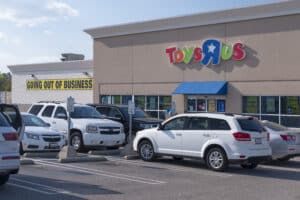
Not too long ago, many people thought Toys ‘R’ Us was a brand dead in the water. This was an easy assumption since its last U.S. stores closed down in 2021. However, a recent revival has seen the nostalgic retailer re-emerge within Macy’s stores. And just a few months later, the brand is already going after the alcohol trademark “Booze ‘R’ Us” for infringement.

Toys ‘R’ Us Opposes Alcohol Trademark Application

The parent company of Toys ‘R’ Us, TRU Kids, Inc., watched as its toy brand floundered when online shopping grew in popularity. By 2017, Toys ‘R’ Us had filed for bankruptcy. However, the brand had re-established itself in nine states by August 2022. Before this ever happened, though, a brand known as Booze ‘R’ Us was already establishing itself.

In fact, the company sought trademark registration for its name in December 2021. This was less than a year after the last Toys ‘R’ Us locations had closed. However, it wasn’t until April 2023 that the U.S. Patent and Trademark Office finally published the application in the Official Gazette for opposition. Not long after, the reinvigorated toy brand targeted the alcohol trademark.

Will Consumers Really Confuse Toys With Alcohol?

In its trademark opposition, TRU Kids claims that consumers will likely confuse the Booze ‘R’ Us brand with their toy retailer. This might seem illogical to some — particularly since Booze ‘R’ Us only sells alcohol and related products. However, the Toys ‘R’ Us owner makes the following argument in its opposition:

“[T]he parties’ respective marks are closely similar, they both provide identical retail store services, and the parties’ remaining goods and services are related and complementary… [the] Applicant’s Mark so resembles the TRU Marks as to be likely to cause confusion, to cause mistake, or to deceive.”

The main argument presented by the toy brand against the alcohol trademark seems to be that they’re both retailers. Whether an actual likelihood of confusion would exist will be up to the Trademark Trial and Appeal Board — and potentially the courts — to decide. Although, proving that consumers would mistake an alcohol company for a toy brand might be a bit difficult.

However, TRU Kids did have one extra strategy included in their filing.

Possible Trademark Dilution as Toys ‘R’ Us Reopens?

While most allegations of trademark infringement rely on claims of consumer confusion, this is not always the case. Dilution of a trademark occurs when a famous trademark would lose its uniqueness if another trademark were registered. Within its filing, TRU Kids states that the brand connection of Toys ‘R’ Us in consumer minds would be lessened by the registration of Booze ‘R’ Us.

In fact, the filing states that the registration would cause trademark dilution “regardless of the presence or absence of actual or likely confusion, competition, or of actual economic injury.” By including such a claim, it will no longer be necessary to prove potential consumer confusion to block the registration of the Georgia company’s alcohol trademark.

However, this doesn’t necessarily guarantee Toys ‘R’ Us a win.

What Now?

Now that TRU Kids has filed an opposition notice, Booze ‘R’ Us has until June 14, 2023 to answer. Failing to do so could result in a default judgment for the Toys ‘R’ Us owner. However, the case could drag on into the end of 2024 if they decide to push back. Even if there is no likelihood of confusion, it may be hard to argue against claims of potential dilution.

For now, we’ll have to wait to see if this alcohol trademark gets any further in the registration process.

Kobe Bryant’s Dream Lives On With New Mamba Cup Trademark

Kobe Bryant and the Mamba Cup live on.

It’s been over three years since the tragic helicopter crash that took the lives of Kobe Bryant, his young daughter and seven others. The athlete was on the way to his daughter’s basketball game in the inaugural Mamba Cup, a youth tournament created by Bryant and Sports Academy. The tournament was canceled after the accident, but a new Mamba Cup trademark application seems poised to help the dream live on.

A Dream Revived: The Mamba Cup

During his life, Kobe Bryant recognized a need for league play among younger basketball players. He joined forces with Mamba Sports Academy — a callout to Kobe’s “Black Mamba” nickname — to help meet this need. The partnership resulted in the creation of the very first Mamba Cup, which was supposed to culminate with a Championship Tournament on March 21-22, 2020. Unfortunately, Bryant died just two months before this date.

After the tragedy that took the basketball star, his daughter and several others was reported in the media, the remainder of the inaugural Mamba Cup was canceled. A few months later, the Mamba Sports Academy simplified its name to “Sports Academy” out of respect for Bryant’s family. It seemed like the dream had died along with Kobe, but a new “Mamba Cup” trademark application seems poised to revive it.

Mamba Cup Trademark Filed by Kobe Bryant, LLC

While Bryant may be gone, the business empire he created during his lifetime is still active. In fact, Kobe Bryant, LLC filed over a dozen trademark applications in just the first 15 months following the athlete’s death. Many of these applications were related to Bryant’s daughter (e.g., Play Gigi’s Way) and the league he helped create (e.g., Mamba League). However, it was in April 2023 that the application for a Mamba Cup trademark was finally filed.

The new application seeks protection under a variety of trademark classes. These classes cover items and services that include clothing, sports bags, wristbands and basketball tournaments. Each of these was filed on an intent-to-use basis. An intent to use trademark signifies that the applicant has a bona fide intention to use the term “Mamba Cup” in commerce or in connection with the goods and services identified in the application.

While it would not be surprising if the trademark were filed to merely protect products created by Kobe Bryant, LLC, it seems as if the goal may be a bit loftier than mere merchandising opportunities. As the application included Trademark Class 41, it would appear as if there’s an intent to restart the Mamba Cup league in its entirety. While there’s no way to predict how this will culminate, it’s undoubtedly significant news for Kobe fans and the basketball world as a whole.

What Happens Now?

While there’s no arguing that the “Black Mamba” nickname and Mamba Cup are inextricably linked to Kobe Bryant, the trademark application will have to go through the traditional process. This means that an examining attorney will have to review the application. If the application is approved, it will be published in the Official Gazette so that any interested parties can file a Notice of Opposition if they so choose.

It’s impossible to predict whether there will be any hurdles during this process. After all, one might think that Sports Academy would have some claim to the Mamba Cup trademark. However, we cannot overlook their willingness to drop “Mamba” from their name out of respect for Bryant’s family. This action would make any attempt to interfere with the registration of the trademark a surprising turn of events.

For now, we can only wait to see if Kobe Bryant’s dream for the Mamba Cup will finally come to fruition.

Eminem Takes on Two ‘Real Housewives’ Over Slim Shady Trademark

Slim Shady trademark at odds with Relatively Shady podcast?

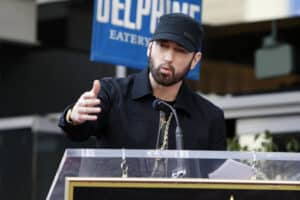
Since hitting the scene back in the late ‘90s, the rapper Eminem (i.e. Slim Shady) has consistently found his way into the news. In many instances, this has been related to beefs and newly released diss tracks. It seems the rapper has a new beef, though, and it comes in the form of two Real Housewives stars and whether their Reasonably Shady podcast is infringing on the Slim Shady trademark.

Are the Housewives Infringing on the Slim Shady Trademark?

In February 2022, Robyn Dixon and Gizelle Bryant filed a trademark application for the term “Reasonably Shady.” While the application sought federal protection over a wide variety of products — including makeup, candles, apparel, water bottles and paddle boards — most people would recognize the term as the name of Bryant’s and Dixon’s relationship advice podcast.

If those names sound familiar to you, it’s because the podcast hosts are stars of the hit show The Real Housewives of Potomac. They sought registration of the term Reasonably Shady months before their first podcast episode, but it was only in February 2023 that Eminem filed a trademark opposition against the two reality stars.

The reason for the opposition is clearly related to the similarities between “Slim Shady” — a trademark registered by Eminem under his real name Marshall Mathers III — and “Reasonably Shady.” However, are these similarities really enough to support an opposition? The answer could get a bit murky.

Is There an Actual Likelihood of Confusion?

In most cases of trademark infringement, an trademark owner must show that a likelihood of comsumer confusion exists. This means that consumers would likely be confused about the source of products or services. For instance, a small company that sells hot dogs would be unable to file a trademark for “McDonald’s Hot Dogs” — as consumers are likely to think the product comes from the fast food giant.

Within his opposition request, Eminem directly states that a likelihood of confusion would exist if “Reasonably Shady” was trademarked. One has to question, however, the accuracy of this statement. Typically, products and services would have to be similar for consumer confusion to occur. While there is certainly some overlap (e.g., clothing), would people really believe a dating podcast came from Eminem?

Since the only similarity between the two trademarks is the word “Shady,” it’s uncertain whether a claim of consumer confusion could possibly be upheld. Especially since a quick trademark search shows active registrations for terms like Super Shady, Shady Baby, Stay Shady, and dozens of other registrations for clothing, toys, beer and more.

What Happens Next?

To be clear, a likelihood of confusion is not the only basis listed by Eminem to oppose the Reasonably Shady trademark. In the opposition, the megastar also claims that trademark dilution would occur if the Real Housewives stars are able to register their podcast name. This claim states that registration would impair “the distinctive quality” of the “Slim Shady” trademark since the name would inevitably call to mind the trademark held by Mr. Mathers.

However, we may have to wait and see how this beef plays out. The Robyn Dixon and Gizelle Bryant podcast has amassed nearly 2,000 reviews on Apple Podcasts and over 43,000 followers on Instagram. There’s no doubt that these Real Housewives have built a following, but thanks to the Slim Shady trademark dispute currently unfolding, they’ll have to answer to the opposition before March 26, 2023. Failing to do so could end their quest for trademark registration.

If Dixon and Gizelle choose to fight back, though, the case will proceed before the Trademark Trial and Appeal Board. As for now, we’ll just have to wait and see if The Real Slim Shady please stands up — and whether the Real Housewives can distinguish themselves from the rap superstar.

There’s a Zelda Trademark Dispute Months Before Game’s New Release

Legend of Zelda trademark dispute

It’s been over 35 years since The Legend of Zelda originally hit store shelves. Since that time, the game has become a powerhouse in the video game world — with several titles from the franchise earning the label of “best game ever.” We’re now only months away from the much-anticipated sequel to the franchise-favorite Breath of the Wild, but it seems as if Nintendo has a Zelda trademark dispute it will have to handle in the meantime.

Zelda Trademark Infringement Claim

On August 5, 2022, Nintendo filed a trademark opposition against the Brooklyn-based company ZeldaVision Media Inc. In its opposition, the video game giant claimed that registration of the trademark would result in a likelihood of confusion and damage to the Nintendo brand. Both of these grounds could result in a registration being denied for ZeldaVision Media.  ZeldaVision attempted to register “ZeldaVision” under trademark classes 38, 41 and 42.

Upon the company’s first attempt to seek trademark registration for ZeldaVision, the United States Patent and Trademark Office (USPTO) refused registration and sent an Office Action based on the potential for consumer confusion with The Legend of Zelda trademark. In response, ZeldaVision Media terminated its attempt to file under trademark class 42 and amended the descriptions for classes 38 and 41.

While it seems the applicant is trying to avoid potential confusion, the opposition notice filed by Nintendo shows that they have no plans to allow the registration to move forward. The initial application states that the use of the trademark would be for streaming services and video production/distribution. This intent is also clear on the company’s website. Still, the fact that they aren’t producing video games doesn’t mean such use wouldn’t constitute infringement.

Is It Really Infringement?

In many cases, trademark infringement cannot exist unless two brands offer similar or related products or services. The application submitted by ZeldaVision Media — along with the company website — seems to indicate the brand and Nintendo are in very different industries. ZeldaVision Media doesn’t seem to produce video games. In fact, they appear to be a marketing company that provides content creation for other brands.

In the opposition submitted by Nintendo, however, the video game brand states that the services offered by both companies are similar. They also assert that both brands operate in the same commercial channels. If the USPTO agrees with these assertions, they will likely refuse to register “ZeldaVision”. Of course, it may not even be necessary to show that these claims are true.

That’s because The Legend of Zelda has established itself as a widely recognized brand over the years. The game’s title was first used in commerce in 1987, and it’s been in continuous use since that time. If you type “Zelda” into a search engine, you’ll be hard-pressed to find any result that’s not directly related to the video game franchise. In such a situation — even though the opposition notice doesn’t directly state so — trademark dilution could occur.

What Happens Next?

Nintendo is very serious about its intellectual property. The company’s fanbase has seen many instances where the brand shut down projects created by fans. While this is a very different situation, there’s a reasonable chance that the outcome could be the same. Save for any extensions, ZeldaVision Media has until September 14, 2022 to file an answer with the USPTO. Failure to do so will result in the loss of any rights they were hoping to garner.

Even if they do push back against Nintendo, however, there’s no guarantee that they’ll succeed.  This battle certainly won’t be as epic as that between Link and Ganon, but depending on how committed the two brands are to winning, the dispute might seem to last just as long.

Owners of the Elvis Trademark Have Jumped Into Another Fight

New Elvis trademark fight kicks off after Las Vegas fiasco

Elvis Presley has found his way into the headlines again over four decades after his death. Many fans are excited about the icon’s new biopic — directed by Baz Luhrmann — set to release on June 24. Unfortunately, that’s not what has driven much of the current publicity. Just months after the film’s trailer release, the owner of the Elvis trademark and other intellectual property has gone on a legal frenzy.

It’s only been a few weeks since that owner — Authentic Brands Group (ABG) — sent trademark cease and desist letters to various Las Vegas wedding chapels demanding they end their Elvis-themed weddings. ABG has also filed a Notice of Opposition against WBM, LLC this week.

Elvis Trademark Opposition Filed a Week Before New Biopic

WBM filed a trademark application for “Elvis Smart” back in December 2020. It normally wouldn’t take so long for an application to publish in the Official Gazette, but there was a lot of back and forth between the U.S. Patent and Trademark Office (USPTO) and the company. In fact, the trademark was considered abandoned at the beginning of 2022 before being revived.

After requesting an extension to file, ABG finally submitted a Notice of Opposition on June 14. This was a mere 10 days prior to the release of the new biopic film Elvis. ABG claims that use of “Elvis Smart” — which WBM said would be used on a variety of toilet paper and paper towel products — would violate their intellectual property rights.

To be more specific, ABG states that use of “Elvis Smart” by WBM would cause a likelihood of confusion, trademark dilution, and create a false suggestion of connection to the King himself. If WBM decides to fight this opposition — which may be likely considering they’ve sought the trademark for nearly two years at this point — it will only add to ABG’s legal fights.

ABG Already Putting Pressure on Elvis Wedding Venues

When Authentic Brands Group filed their opposition notice against WBM, it had been less than a month since they sent cease and desist orders to several Las Vegas chapels. In letters dated May 19, the company demanded that Elvis-themed wedding chapels across the city cease their services. Having to end the use of Elvis impersonators in weddings could destroy several businesses.

The lawyers representing some of these chapels told the owners to simply continue business as usual. They don’t seem very concerned about the demand from ABG, and this could be for several reasons. For one, the company has owned the rights to Elvis intellectual property since 2013. This means they waited nearly a decade to claim any rights against Las Vegas chapels using the King’s likeness.  So this sets up a potential laches defense.

This might also be due to the iconic status Elvis has attained. Courts could very well see use of his likeness as a protected form of artistic expression. This has led many to claim that the actions of ABG are little more than “trademark trolling” in an attempt to have chapels pay a licensing fee rather than actually shut down. With several chapels choosing to continue operation, though, the next part of this saga depends on ABG’s response.

What Happens Next?

There’s little denying that Authentic Brands Group currently has a full plate. Getting Las Vegas chapels to cease Elvis-themed weddings will certainly be a tall order. Due to the King of Rock’s iconic status, use of his likeness as a form of artistic expression might just be protected under the First Amendment. And due to the publicity of ABG’s actions, even small chapels may understand this and refuse to pay a licensing fee.

As to the trademark opposition filed against WBM, the owner of Elvis intellectual property may have an easier task ahead. The Trademark Trial and Appeal Board could choose to accept their claims that using “Elvis Smart” on a product constitutes trademark infringement. As for now, we’ll have to wait to see how WBM responds. Barring any extensions, the company has until July 24 to file an answer.

With legal battles emerging on numerous fronts, though, it may be Authentic Brands Group that ends up “all shook up.” 

Zion Williamson Seeks to Stop Use of ‘Zion’ in New Trademarks

Zion Williamson trademark dispute

Zion Williamson is a hot commodity in the sports world these days. The basketball player has been garnering national attention since his time in high school and the USPTO granted ‘Zion’ and ‘Zion Williamson’ trademarks to the athlete.

In a new trademark opposition, Williamson appears ready to assert rights over those trademarks. Whether or not the USPTO agrees with his claim, however, could depend heavily on just how established the player’s name is in the eye of the public. The decision may also have major ramifications for current and future brands with “Zion” in their names.

Is the Zion Williamson Trademark in Danger?

The USPTO granted the athlete’s trademark registrations over these terms less than one year ago — in July and August 2021. Just months before these were approved, however, an application for “Zion Influencers” was filed at the Trademark Office.

The Zion and Zion Williamson trademarks each predate this filing — both in submission to the USPTO and in their date of first commercial use. This makes it highly unlikely that the athlete’s trademark is in danger, but the question is whether he can block the registration of “Zion Influencers.”

In his opposition filing, Williamson claims that registration of the opposed trademark will result in a likelihood of confusion. He also states that registration of the term would create a false suggestion in the public’s mind that he is connected to the brand.

Can Zion Claim Absolute Rights Over Zion?

Traditionally, an entity cannot claim trademark rights outside of its industry and natural zone of expansion. It appears that the basketball player — even with recognized rights over the Zion and Zion Williamson trademarks — may be attempting to do this. The trademark classes listed on Williamson’s filings protect his brand in the following areas:

  • Endorsement services
  • Autographed goods
  • Sports memorabilia
  • Digital sports memorabilia
  • Clothing
  • Entertainment and education services
  • Providing information via print publications

On the other hand, the filing for “Zion Influencers” states the trademark will be used for marketing services. While “endorsement services” and “marketing services” seem somewhat linked, the question is whether they’re close enough to confuse consumers. For instance, might a normal consumer think “Zion Influencers” is somehow linked to Zion Williamson?

In his opposition, Williamson also points out that he’s an influencer in the sports world. This claim could make or break his case. There are over 150 live trademarks with the label “Zion” in the Trademark Electronic Search System. This could interfere with the player’s one-name recognition aspirations, but the marketing services in question may still be seen as related.

Now What Happens to the Zion Williamson Trademark

Zion Williamson has undeniable rights over his name with the U.S. Patent and Trademark Office. Whether these rights extend beyond the sporting world, however, is a different issue altogether. If the applicant for Zion Influencers wishes to garner trademark protection, an answer must be filed by May 24, 2022 with the Trademark Trial and Appeal Board.

If no answer is filed, Zion Williamson will prevail and the Zion Influencers will abandon.  If the two parties do end up before the TTAB, it will be interesting to see how the case unfolds.