California Intellectual Property Blog

Background image

Donald Trump Has Had a Busy Week at the U.S. Trademark Office

Donald Trump trademark issues

It’s no surprise for the President of the United States to find himself in the news. It’s part of the job. However, Donald Trump has had a particularly newsworthy week in an area that often goes unnoticed: American trademark law. The president’s lawyers have been busy submitting requests for new intellectual property (IP) rights and fending off potential trademark infringement.

While the president certainly isn’t dealing with these problems himself, the increasing number of IP issues might soon catch his attention.

Donald Trump Seeking New Trademarks, Defending Old Ones

It made international news when Florida lawmakers voted to rename Palm Beach airport after President Donald Trump. However, eyebrows quickly shot up when the president’s intellectual property company filed to trademark his name for use on airports. This essentially opened the door for Trump to profit from what’s typically considered an honorary naming.

The president also pressured New York to rename an airport after him, offering to unfreeze billions in infrastructure funding if they did so. While it’s unclear how any of this will play out, the president is also facing intellectual property issues that seem more straightforward. Case in point, the “Trump Burger” saga seems to be reaching an inflection point.

People took note when a Texas restaurant chain branded itself as “Trump Burger.” The restaurant was overtly pro-Trump, but it wasn’t linked to the president. Ownership disputes eventually led to a company fracture. Two separate parties claim ownership over the franchise, and one sought to register “MAGA Burger” with the U.S. Trademark Office.

Trump’s people quickly filed a trademark opposition.

Additional Attempts to Profit From the MAGA Movement

Watching the “Trump Burger” fiasco unfold has been interesting. It involved ownership disputes, allegations of sham marriages and visa overstays, lawsuits, and even deportation proceedings. Now that Trump’s lawyers have officially become involved to stop the “MAGA Burger” trademark from going through, the end of this story is likely within sight.

However, it appears the president now has intellectual property disputes on other fronts. Two trademark cancellation filings were filed with the Trademark Office on February 26, 2026, by businesses related to the Trump Organization. These filings targeted existing registrations for “MAGA Rats” and “MAGA Grace.”

The MAGA Rats trademark appears to belong to a Florida company that produces pro-Trump clothing. On the other hand, MAGA Grace is linked to a Chinese company that sells bags and accessories. Considering the president’s hardline stance on intellectual property rights, it’s interesting that these companies were able to secure trademark registration in the first place.

However, this appears to be an oversight that the Trump Organization is ready to correct.

David and David and David Versus Goliath

Some organizations might buckle under the weight of so many simultaneous legal issues. However, the Trump Organization has the resources of a billionaire and the President of the United States at its disposal. There’s little doubt that it will be able to handle new registrations, old fights, and new battles simultaneously.

The U.S. Patent and Trademark Office (USPTO) has consistently upheld the trademark rights of Donald Trump. With the president’s handpicked director at the helm of the agency, it would be unsurprising if his winning streak were to continue. However, it’s hard to deny that mentions of “MAGA” would likely always bring the president to mind. Essentially, the president has a point.

The USPTO will need to decide whether the companies facing opposition and cancellation from the Trump Organization could create consumer confusion by merely existing. If recent history has taught us anything, though, there’s a high likelihood that the POTUS will walk away from these fights with more than he started with.
Disney Trademark Fight: Can Disney Claim Ownership of “Mouse”?

Disney Trademark Fight: Can Disney Claim Ownership of "Mouse"?

The Disney trademark is one of the most valuable pieces of intellectual property in existence. Even before the company purchased Marvel Entertainment and Star Wars, it was already seen as a global powerhouse. A key component to maintaining such value is protecting the brand’s intellectual property. In fact, it’s currently targeting a company for using the word “mouse.”

If you think this sounds strange, you’re not alone. To be clear, Disney does not own a trademark for the word “mouse.” However, it does have trademark registrations for “Mickey Mouse,” “Minnie Mouse,” and similar terms. Still, many other companies – from Apple to Hasbro – offer products with the word “mouse” in the name. So, what makes this situation different?

It’s complicated.

Do Disney Trademarks Include the Word “Mouse”?

When it comes to trademark law, companies typically do not “own” a word. They can secure exclusive use in commerce of certain terms, but even then, they can’t typically restrict unrelated companies from using similar words. For instance, Delta Airlines and Delta Faucet Company can simultaneously exist because they offer very different products.

In a recent filing with the U.S. Patent and Trademark Office (USPTO), Disney submitted a trademark opposition against ClickTheMouse Inc. for their attempt to register “Click the Mouse.” While neither “click the mouse” nor “mouse” are registered Disney trademarks, the global brand claims registration of the term will create consumer confusion and dilute their brand.

While such arguments have successfully been made before, Disney’s filing is unique in several ways.

Indirect Consumer Confusion?

When looking at the basic claims of Disney’s opposition filing, one might think the filing was frivolous. They say “Click the Mouse” and “Mickey Mouse” are phonetically similar. The filing claims consumers may confuse the two brands because they both offer travel services. However, the question arises of whether using the word “mouse” is enough to create confusion.

For many consumers, the answer would be “no.” No one thinks “Burger King” and “Smoothie King” are related just because they share one word. However, a glance at the website of ClickTheMouse Inc. reveals where the problem may lie. As indicated in the opposition filing, Disney images and references are present throughout the travel company’s website.

In fact, the brand seems to focus entirely on planning Disney vacations for its customers.  On paper, trademark dilution and consumer confusion between the two brands might seem unlikely. However, intellectual property law does not exist within a vacuum. Even if consumers wouldn’t confuse “click the mouse” with “Mickey Mouse,” the blatant presence of other Disney trademarks on the applicant’s website could easily conflate the two brands in people’s minds to at least think the companies are related.

What Happens Next?

By filing an opposition against the ClickTheMouse application, Disney has initiated a countdown. The applicant now has until February 27, 2026, to submit an answer to the USPTO. If they fail to do so – which is quite common in these situations – they’ll essentially have an abandoned trademark. The brand’s attempt at registration will go no further.

If the travel brand does choose to fight back, both parties will have to present evidence to the Trademark Trial and Appeal Board (TTAB). ClickTheMouse will need to prove that its registration wouldn’t create confusion or dilute Disney trademarks. With all the imagery featured on the brand’s website, though, this could be an uphill battle.

Disney is no stranger to intellectual property disputes, so there’s little doubt that they’re ready for a long fight. Whether ClickTheMouse Inc. is prepared to take on a company with a market capitalization of over $200 billion is another matter entirely.


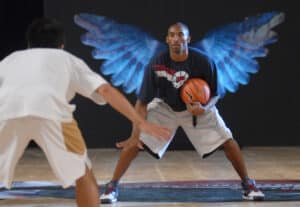
Kobe Bryant’s Dream Lives On With New Mamba Cup Trademark

Kobe Bryant and the Mamba Cup live on.

It’s been over three years since the tragic helicopter crash that took the lives of Kobe Bryant, his young daughter and seven others. The athlete was on the way to his daughter’s basketball game in the inaugural Mamba Cup, a youth tournament created by Bryant and Sports Academy. The tournament was canceled after the accident, but a new Mamba Cup trademark application seems poised to help the dream live on.

A Dream Revived: The Mamba Cup

During his life, Kobe Bryant recognized a need for league play among younger basketball players. He joined forces with Mamba Sports Academy — a callout to Kobe’s “Black Mamba” nickname — to help meet this need. The partnership resulted in the creation of the very first Mamba Cup, which was supposed to culminate with a Championship Tournament on March 21-22, 2020. Unfortunately, Bryant died just two months before this date.

After the tragedy that took the basketball star, his daughter and several others was reported in the media, the remainder of the inaugural Mamba Cup was canceled. A few months later, the Mamba Sports Academy simplified its name to “Sports Academy” out of respect for Bryant’s family. It seemed like the dream had died along with Kobe, but a new “Mamba Cup” trademark application seems poised to revive it.

Mamba Cup Trademark Filed by Kobe Bryant, LLC

While Bryant may be gone, the business empire he created during his lifetime is still active. In fact, Kobe Bryant, LLC filed over a dozen trademark applications in just the first 15 months following the athlete’s death. Many of these applications were related to Bryant’s daughter (e.g., Play Gigi’s Way) and the league he helped create (e.g., Mamba League). However, it was in April 2023 that the application for a Mamba Cup trademark was finally filed.

The new application seeks protection under a variety of trademark classes. These classes cover items and services that include clothing, sports bags, wristbands and basketball tournaments. Each of these was filed on an intent-to-use basis. An intent to use trademark signifies that the applicant has a bona fide intention to use the term “Mamba Cup” in commerce or in connection with the goods and services identified in the application.

While it would not be surprising if the trademark were filed to merely protect products created by Kobe Bryant, LLC, it seems as if the goal may be a bit loftier than mere merchandising opportunities. As the application included Trademark Class 41, it would appear as if there’s an intent to restart the Mamba Cup league in its entirety. While there’s no way to predict how this will culminate, it’s undoubtedly significant news for Kobe fans and the basketball world as a whole.

What Happens Now?

While there’s no arguing that the “Black Mamba” nickname and Mamba Cup are inextricably linked to Kobe Bryant, the trademark application will have to go through the traditional process. This means that an examining attorney will have to review the application. If the application is approved, it will be published in the Official Gazette so that any interested parties can file a Notice of Opposition if they so choose.

It’s impossible to predict whether there will be any hurdles during this process. After all, one might think that Sports Academy would have some claim to the Mamba Cup trademark. However, we cannot overlook their willingness to drop “Mamba” from their name out of respect for Bryant’s family. This action would make any attempt to interfere with the registration of the trademark a surprising turn of events.

For now, we can only wait to see if Kobe Bryant’s dream for the Mamba Cup will finally come to fruition.

Elon Musk Has Landed In a Trademark Dispute Over Snack Foods

The Boring Company snack food trademark

Just days after the SpaceX Inspiration4 mission returned to Earth, another Elon Musk corporate venture found itself in a trademark dispute. The Boring Company (TBC) — an infrastructure firm founded by Musk — filed a trademark opposition against a similarly named snack food company. The case involves several aspects of trademark law, so it will be interesting to see how it plays out.

The Boring Company Versus The Boring Company

Elon Musk’s The Boring Company has quickly become a pioneer in the area of infrastructure. By September 2021, the firm had already constructed two loop travel tunnels in Las Vegas and had several others in the planning stage. All signs point toward a profitable future for TBC, but a potential hurdle popped up near the end of 2020 in the form of a snack food company.

The Boring Company LLC — a separate corporation from the one founded by Musk — filed a trademark application on November 12, 2020 for “The Boring Snack Company.” As the name implies, the business revolves around a variety of snack foods.

This raises questions related to trademark law. A likelihood of confusion can often only exist among similar products or services. Delta Airlines and Delta Faucets, for instance, do not create confusion since their products are so dissimilar. This would seem to be the case with an infrastructure company and snack food company as well, but the matter at hand is more complex.

Can Infrastructure and Snack Foods Be Confused?

In the filed opposition notice, Musk’s The Boring Company claims that registration of “The Boring Snack Company” would create confusion among consumers. They also posit that the company filing for registration has not used the trademark in commerce — even though they claim a date of first use just two days before the application’s filing.

Whether or not commercial use existed is its own issue, but the big question is how a consumer could confuse a snack company with an infrastructure company. The opposition notice actually goes into detail regarding how this could happen. Their biggest point is that the trade name of the firm filing for protection is the exact same as Musk’s company.

What’s In A Name?

Of course, this is not an uncommon occurrence. TBC points out another important issue, though:

“The goods identified in the Subject Application are related to the goods offered or intended to be offered by The Boring Company… The Boring Company has enjoyed enormous success selling everything from hats to “not-a-flamethrowers.” Applicant’s foodstuffs offered under a virtually identical trademark are thus likely to be perceived as promotional or novelty items.”

Nowhere in the opposition notice does TBC The Boring Company claim that trademark dilution would occur if a registration is granted. This is often what we see when a company selling an unrelated product seeks registration of a name used by a famous brand. Instead, the opposition claims TBC might intend to offer similar products — and even if they don’t, consumers may think snack foods are a novelty from the company.

That’s what makes this case such an interesting one. Musk’s The Boring Company has certainly released products far removed from their infrastructural focus. Does this simple fact, however, mean they have widespread protection regardless of industry? Particularly considering the fact that they haven’t claimed dilution or protection based on a famous trademark?

These are just a few of the issues the Trademark Trial and Appeal Board (TTAB) will need to consider.

What Happens Next?

The next step in this trademark dispute will depend heavily on the response of The Boring Company snack establishment. While their website features no products to support their claim of commercial use, they still have until October 31, 2021 to file an answer with the TTAB. Failure to do so would likely result in a win for Musk’s The Boring Company.

Even without potential extensions, though, this case could extend into April 2023. This would be a long fight that Elon Musk certainly has the capital for, but the big question is whether The Boring Company snack enterprise could remain in this fight.

After Recent Filings, Jay-Z is Ready for a Trademark Fight

Jay-Z in trademark infringement battle.

Few musical artists have found the success achieved by rapper-turned-entrepreneur Jay-Z. While the celebrity was born Shawn Corey Carter, it is his ‘Jay-Z’ moniker that has established itself as a valuable trademark. And on May 12, 2021, a company representing the star – SC Branding LLC – filed a notice of opposition to protect ‘Jay-Z’ from what they claim is trademark infringement.

Jay-Z vs JZYZ

Near the end of 2021, Guangdong Jiezi Technology Group Co. filed various trademark applications for a logo featuring a butterfly and the letters “JZYZ.” This design is printed on their extensive line of digital cameras. These include baby monitors, webcams, security cameras and more. The logo was first used in commerce in October 16, 2020.

Just two weeks after the logo was published in the Official Gazette, SC Branding LLC filed a Trademark Opposition against the application. The filing details how well-known Jay-Z has become among the general public – once even referring to him as an “icon” – and how this name is in use on a range of products stretching back to 1995.

While the opposition notice lists various trademark classes which “Jay-Z” is protected under, Class 9 is the primary focus. Due to the many categories of products under this class – including Jay-Z’s musical recordings and JZYZ’s cameras – both trademarks fall into this class. And while the “JZ” in the company’s new product line certainly sounds like “Jay-Z,” does the use constitute trademark infringement?

Likelihood of Confusion and Natural Zone of Expansion

There are a few major issues that may be considered in the case currently before the Trademark Trial and Appeal Board. The opposition notice filed by Jay-Z’s branding company claims that consumers are likely to become confused about the source of JZYZ’s products. The notice states:

“When seeing products bearing Applicant’s Infringing Mark, consumers will reasonably and easily assume that Opposer has started a secondary line of goods under Class 9.” 

While there’s no doubt that the use of “Jay-Z” long predates “JZYZ” – especially since the latter’s Facebook page was only created in January 2021 – the real question is whether consumers will become confused by the use of JZYZ on cameras. While the rap superstar doesn’t have his own line of cameras, the Natural Zone of Expansion Doctrine may protect him.

If the TTAB feels that cameras are a natural extension of the products and services covered under the Jay-Z trademark, they may bar applicant Guangdong Jiezi Technology Group from registering it. And while the notice of opposition doesn’t directly mention it, SC Branding LLC could argue that registration of the JZYZ trademark might result in trademark dilution.

What Happens Now?

The notice sent to Guangdong Jiezi Technology Group states that they have until June 21, 2021 to file a response with the TTAB. If they don’t file an answer within this time frame, Jay-Z may win his opposition by default. If the owners of JZYZ decide to fight the issue, recent trademark filings by Jay-Z seem to indicate that he’s ready for a long battle.

The real question will come down to whether consumers could logically believe a line of mostly security cameras featuring the letters “JZYZ” came from a world famous rap superstar. The cameras are mostly plain white – save for the butterfly and “JZYZ” logo – so it will be contingent on SC Branding LLC to prove consumers would mistake this for a Jay-Z product.

While one could make assumptions to this case’s outcome, there’s no way to predict the arguments the TTAB will hear from both parties. And though the JZYZ brand may only have recently come into use, Guangdong Jiezi Technology Group is an established company founded in 2005. This means both parties in this trial could have the capital for a battle.

HBO Max Facing Claims of Trademark Infringement of Its Own Name

HBO Max Trademark Infringement Case

Home Box Office made waves over the past year with its launch of HBO Max and the decision to release new Warner Bros. films directly to the service. The streaming offering is so popular that it hit its two-year subscriber goal over a year ahead of schedule. It may not all be smooth sailing, though, as the service now faces a claim of trademark infringement over the HBO Max name.

Trademark Infringement Claim Against HBO Max

HBO was launched nearly 50 years ago, and they’ve no doubt established distinctiveness in the minds of consumers. With a Trademark Opposition filed on February 2, though, a company is claiming the name “HBO Max” infringes upon their rights. In a filing to the U.S. Patent and Trademark Office, Traxxas, L.P. states that registration of the name would create a likelihood of confusion.

The trademark dispute stems from a family of trademarks used by Traxxas. The trademarks include MAXX, T-MAXX, X-MAXX, E-MAXX and others. While these spellings obviously differ from HBO Max, this doesn’t mean that infringement hasn’t occurred. The plaintiff feels that the similarity will result in a likelihood of confusion.

Of course, companies with similar names may be able to simultaneously exist. The real issue arises if their products, services or even avenues of trade share similarities. What does Traxxas provide to consumers? “Radio-controlled model vehicles and parts therefore.” This raises the question of how a remote control car company could possibly be confused with an online streaming service.

Likelihood of Expansion with HBO Max

HBO Max applied for and received trademark protection back in 2017. There was no opposition from Traxxas at that time. When Home Box Office applied for the same trademark in International Class 28, though, the plaintiff felt that confusion may arise. This class includes toys and sporting goods, so it’s obvious that Home Box Office hopes to expand into new areas.

The filing for HBO Max includes:

  • Board games.
  • Card games.
  • Playing Cards.
  • Puzzle games.
  • Action figures.
  • Collectible modeled plastic and resin toy figurines.
  • Arcade-type electronic video games.
  • Coin-operated video games.
  • Slot machines.

Some may argue that – even with the new trademark application falling under a class reserved for toys – confusion is an unlikely outcome. HBO Max is a famous brand identifier, and a slot machine or card game featuring the word mark wouldn’t likely be confused with a T-MAXX radio-controlled model car. In the filing from Traxxas, though, the following point is made:

“The identification for Applicant’s Goods under the HBO MAX Mark is without any restriction as to channels of trade or classes of purchasers. The identification for Applicant’s Goods is therefore presumed to encompass and travel in the same channels of trade to the same class of purchasers as those of Opposer’s Goods…”

It’s difficult to envision a situation where HBO Max and the family of Traxxas trademarks won’t travel in the same channels of trade. The question is whether this is enough to support a claim of trademark infringement.

What Happens Next

Regardless of whether the opposer’s notice of opposition is a winning claim, Home Box Office must provide an answer to the filing. They’ve been given until March 14 to file a response, and discovery in the case will start soon thereafter.

Home Box Office has never been afraid to take on a trademark fight – even famously calling out Donald Trump on Twitter for his misuse of a slogan from Game of Thrones. The company has no doubt invested significant capital into their future plans for HBO Max, so they’re unlikely to go away quietely.

It is very possible that the two parties could come to a settlement, but with the resources of what has become a major name in streaming, HBO Max might opt for litigation before retreating an inch. We’ll keep you updated!

Beloved ‘The Jetsons’ Dog Astro is Heading To Trademark Court

Astro Dog from Jetsons is Heading to Court

It’s been nearly 60 years since The Jetsons hit the airwaves, but thanks to a recent trademark application from Astro Biosciences, the cartoon family is back in the news. On Nov. 17, Hanna-Barbera Productions filed a Trademark Opposition against an application for the trademark “Astro Dog.” As Astro would say, “Ruh-roh, Reorge!”

Oppositions filed with the Trademark Trial and Appeal Board (TTAB) often focus on a likelihood of confusion. Upon first glance, it would be difficult to see how a company with “biosciences” in the name could possibly create confusion with a cartoon character. When diving deeper into the case, though, the issues cited by Hanna-Barbera are clear.

Astro Biosciences vs Hanna-Barbera Productions

Those who have never heard of Astro Biosciences will likely envision an institute performing important research into life sciences. This could leave them wondering how any issue could arise between the company and a cartoon dog. One need only look at the former’s other trademark applications, however, to see the issue:

  • Smart Treats for Smart Dogs
  • You Can Teach Old Dogs New Tricks
  • Smart Chews for a Smart Dog
  • Canine Cognitive Smart Chews

So while Astro Biosciences may sound like a scientific corporation at first, its main focus is actually dog treats. This makes Hanna-Barbera’s claims of likelihood of confusion and trademark dilution seem far more plausible. Even if confusion were to not occur, it’s easy to see why Hanna-Barbera wants to defend “Astro Dog.”

Arguments in the Case

There really is no debate over whether a trademark linked to The Jetsons would be famous. This is easy to see by the fact that the show’s theme song landed on the Top 10 Billboard charts more than 20 years after its initial run. What stands out about Hanna-Barbera’s opposition is that they never mention any sales of dog treats on their end.

What they do point out, however, is that products sold by Astro Biosciences are complementary to their own. The entertainment company provided several examples of pet toys, costumes and other products previously sold by them or licensed to others. Hanna-Barbera’s claim is that the applicant is engaged in willful trademark infringement due to the popularity of the Astro Dog trademark.

In addition to claims of potential confusion, Hanna-Barbera says the registration of “Astro Dog” would dilute their famous distinctive trademark. The opposition claims that Hanna-Barbera’s capacity to promote products could be hindered, and they could even be blamed for defects in unrelated goods. They may have to submit evidence showing this potential, but they no doubt have a strong motivation to move forward.

What Comes Next?

The first step after any opposition filing with the TTAB is for the respondent to file an answer. In the notice submitted by the USPTO, Astro Biosciences is given until Dec. 27 to file an answer. If the involved parties don’t reach an agreement, the case will proceed with discovery, motions and ultimately trial briefs and a decision.

The issues between Hanna-Barbera and Astro Biosciences are clear, but how far the parties are willing to take the case will dictate how long the beloved cartoon pup stays in the news cycle. Being six decades removed from Astro chasing cats on conveyor belts, though, it probably won’t hurt the pooch to get back in the limelight.