California Intellectual Property Blog

Background image

As Physical Media Resurges, Blockbuster Fights to Protect Trademark

One brand's attempt to trade on nostalgia has led to a Blockbuster trademark fight.

The last time most people heard about Blockbuster was during the “meme stock” craze of 2021. While GameStop led the way, plenty of people made and lost money on the outdated video store stock. However, a new trademark opposition filed with the U.S. Patent and Trademark Office (USPTO) shows that the Blockbuster trademark – and the brand itself – is far from dead.

While one franchised location of Blockbuster remains in Oregon, the company has essentially been defunct for a decade. This did not stop the brand – now operating as BB Liquidating, Inc. – from filing a trademark opposition notice on January 15, 2026. Their target? A farm supply company that apparently thought its deer food supplement could “Make it a Blockbuster Night.”

Blockbuster Trademark Opposition Filed

In July 2025, Southern Feed and Seed, LLC, submitted a trademark application for “Block Buster,” the name given to their deer feed supplement. Even though the video store rental company exists mainly in nostalgic memories, Blockbuster sought to prevent registration.

If Southern Feed and Seed merely named their supplement “Block Buster,” there would likely be no issue. After all, a primary purpose of trademark law is to prevent a likelihood of confusion. While the names “Blockbuster” and “Block Buster” certainly sound the same, it’s unlikely that any consumer would think a defunct video store released a deer feed supplement.

Unfortunately for Southern Feed and Seed, they may have taken it a step too far in an attempt to trade on Blockbuster’s nostalgic appeal.

Nostalgia: Bringing Back a Brand

Over the past few years, consumers have increasingly become disillusioned with streaming services. Oversaturation in the market and the realization that you don’t actually own digital purchases have not helped the industry. This change in circumstances has led to a huge resurgence in physical media ownership.

This, combined with today’s unparalleled popularity of nostalgia, has reminded people of what it was like to browse the aisles of their local Blockbuster store in the ’90s and early aughts. Perhaps this is why Southern Feed and Seed made the branding for their product look nearly identical to a longstanding Blockbuster trademark.

In the application, they included a trademark specimen showing their use of the term “Block Buster” in commerce. In the opposition filing, Blockbuster notes that the specimen uses the “famous torn ticket design mark, yellow and blue color scheme, and… similar font” made popular by the original Blockbuster Video logo.

This decision could derail the entire trademark application process.

What Happens Now?

In a situation where a seed and feed store simply sought to trademark “Block Buster,” it’s possible the application would have sailed through the process. Unfortunately, it appears the attempt to appeal to nostalgia may have violated several existing Blockbuster trademarks. As it turns out, it’s not just the remaining Blockbuster that could be affected.

Last year, the corporate brand garnered media attention when it began hosting pop-up events at fan conventions. Affectionately referred to as “The Blockbuster Experience,” fans can shop the aisles in a true-to-its-roots video store. Clearly, the company that quickly lost its footing when Netflix took over the world hasn’t quite given up yet.

For now, Southern Feed and Seed has until March 16, 2026, to file a response with the Trademark Trial and Appeal Board (TTAB). If they fail to do so, their application will become abandoned. If they choose to fight back, they may have an uphill battle thanks to their seemingly clear imitation of the Blockbuster trademark.

In the end, the feed brand may need to “Be Kind, Rewind” their marketing strategy.
Amid Trump’s Agency Upheaval, USPTO Threatens Staff Over Leaks

Amid Trump's Agency Upheaval, USPTO Threatens Staff Over Leaks

Federal agencies have experienced significant upheaval in recent weeks. As the Trump Administration demands cost cuts and staff reductions, these agencies have found themselves caught up in political crossfire. While the media has largely focused on the IRS and the Department of Justice, a series of USPTO leaks shows the intellectual property agency isn’t immune.

The U.S. Patent and Trademark Office (USPTO) is tasked with registering trademarks and granting patents. It might seem like this work would be above the political fray. Still, the agency has seen significant turmoil with leadership taking the “fork in the road” (i.e., resignations encouraged by the Trump Administration) and employees resigning over return-to-office mandates.

Now, the agency has taken steps to decrease public transparency.

USPTO Leaks Show Warning Over USPTO Leaks

Certain internal USPTO communications have recently gotten leaked to the media. We know this because the agency’s Chief Information Officer (CIO), Jamie Holcomb, emailed employees regarding the leaks. In his message, we see that the agency — which also plays a significant role in handling trademark disputes — has found itself dealing with its own internal disputes:

“Recently, public news sites published content from internal USPTO emails. As a strong reminder, all USPTO employees must not share internal information and communications externally without authorization… Violations of our Rules of the Road may be subject to disciplinary action.” 

The message did not specify which specific emails had been leaked, but as an internal communication, the revelation of this message was itself a leak. The USPTO employee who revealed the information said, “If they don’t want the public to know about suspect management decisions, then don’t make suspect decisions.”

Unfortunately, such leaks may only be the tip of the iceberg. While the USPTO may not get as much media coverage as the Department of Education, Internal Revenue Service, and other agencies, we’re possibly watching a critical government service fall into disarray.

What’s Going on at the USPTO?

One of President Trump’s early actions was to institute a federal hiring freeze and return-to-work mandate. These actions prompted concerns about operational continuity and employee morale. Leadership changes and alterations to remote work meant many people left the USPTO, but others have reported a flurry of significant issues affecting the agency:

  • Leadership exodus due to early retirement incentives
  • Billionaires gaining influence over internal operations
  • New productivity requirements and surveillance concerns
  • Uncertainty over leadership determination
  • Impacts of return-to-work mandates
  • The loss of workers and mandatory hiring freezes

Such issues could create significant problems for brands and businesses that operate in America. For instance, the USPTO plays a critical role in reducing the load on our country’s court system. While parties can file trademark litigation in court when others inappropriately use their intellectual property, their first step typically is to seek relief with the USPTO’s Trademark Trial and Appeal Board.

This is usually done by filing a trademark opposition – which the Trademark Trial and Appeal Board (TTAB) will handle. That approach is only one of the many services the agency offers, but as the USPTO leaks show, such services may experience delays if the workforce is in turmoil.

Will Changes at Federal Agencies Continue to Affect the USPTO?

Leadership vacuums, worker losses, internal leaks, and other issues currently have the USPTO on shaky ground. While the challenges at hand are similar to those faced by other federal agencies, few of these agencies have such a direct effect on American businesses and the overall economy.

However, we may soon be hearing less about problems in the USPTO. Unfortunately, this might not be because the problems have gone away. The USPTO leak, which featured a warning from the CIO, seems to indicate that employees could face termination if they reveal problems within the agency. With the Trump Administration’s intense hunt for leakers and attempts to disrupt America’s whistleblower agency, available information may become more scarce.

Put simply, anyone who needs trademark or patent registration may find themselves better served by submitting their filings sooner rather than later.


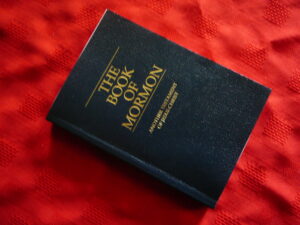
After ‘Bad Mormon’ Win, LDS Targets “Mormons for the Devils” Trademark

From Bad Mormon to Mormons for the Devils, the LDS takes IP rights seriously.

The Church of Jesus Christ of Latter-day Saints (LDS) is a well-known religion in America. What many people don’t know is that it’s also a corporation, and that corporation has a trademark registration for the word “Mormon.” The LDS has never been shy about asserting its rights, and now they’re doing so by going after the “Mormons for the Devils” trademark.

Filed by Destroyer Promotional Products, LLC, the Mormons for the Devils term seems to identify Mormon individuals who support Arizona State University in its football rivalry against Brigham Young University – a school operated by the LDS church. The ASU mascot is a devil. It’s common to see Mormons for the Devils t-shirts at ASU and BYU games.

A History of Protecting the Mormon Trademark

ABC News once asked, Is the Word ‘Mormon’ Really Trademarked? The answer is an unequivocal “yes.” The LDS owns the trademark for this religious descriptor, and they frequently fight back against the unlicensed use of the term. In fact, they recently went after Real Housewives star Heather Gay when she tried to trademark the title of her book, Bad Mormon.

While there hasn’t been much media coverage of this dispute since it initially started, a trademark search shows that the Bad Mormon application has been abandoned. No specific information was provided, but it appears as though the LDS Church and Gay reached an agreement outside of official proceedings. In this situation, it seems like the Bad Mormon trademark is not meant to be.

The same outcome potentially awaits Destroyer Promotional Products in its effort to trademark “Mormons for the Devils.” The Mormon church’s trademark opposition means that the promotional company — which appears to be based in Florida — will have to argue its case before the Trademark Trial and Appeal Board (TTAB).

Can a Company Trademark Mormons for the Devils?

It’s easy to question why a company shouldn’t be able to trademark a term like “Mormons for the Devils.” After all, it’s merely a descriptor that applies to Mormon fans who support a football team outside of Brigham Young University. While it may fall under fair use rules, one could argue that the term is parody. In such a case, it may be allowed under trademark law.

However, it’s worth noting that this is the exact argument that Heather Gay used when trying to trademark her book title. The attempt does not appear to have worked. The LDS church currently claims that granting the Mormons for the Devils trademark would create a likelihood of confusion and trademark dilution by blurring.

The claim of confusion simply means that consumers might believe items coming from Destroyer Promotional Products are directly associated with the church. The LDS believes that such an outcome would negatively affect its corporation. Alternatively, claims of trademark dilution by blurring indicate that the famous Mormon trademark may be disassociated from the church in the minds of consumers.

What Happens Next?

Clearly, the Church of Jesus Christ of Latter-day Saints is serious about its intellectual property. They even created a document detailing when it’s appropriate for third parties to use their trademark. The document specifically says, “Requests to use Church trademarks in a primary branding capacity by outside individuals or organizations are rarely approved.”

However, this doesn’t necessarily mean that “Mormons for the Devils” will not be approved as a trademark. If Destroyer Promotional Products can overcome the opposition from the LDS church, they may be granted trademark rights. If history is any indicator, though, this may be a difficult effort. The Mormon Church has extensive resources at its disposal.

Destroyer Promotional Products has until February 22, 2025 to file an answer.  While some companies reach licensing agreements, it seems unlikely that the LDS would approve the use of their name alongside “devils.” If the Mormons for the Devils application isn’t abandoned, this could be an interesting case.

From Bud Light to Ultra Right: Trademark Showdown Brewing

From Bud Light to Ultra Right: Trademark Showdown Brewing

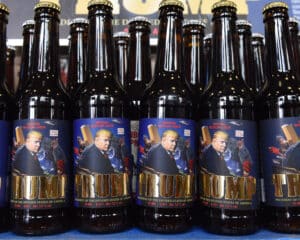
Even infrequent news viewers likely took note of the major tension that occurred when Bud Light chose a transgender influencer to be part of a marketing campaign. The backlash was immediate among the political right, and activists even started their own alcohol brands as an alternative to the popular Bud Light beer. That simple act has now led to an Ultra Right trademark battle.

Anheuser-Busch is the owner of Bud Light, and on December 23, 2024, the company filed a trademark opposition against Ultra Right Beer, LLC. In the fallout of the Bud Light marketing decision — which led to a massively successful boycott against Anheuser-Busch — Ultra Right Beer jumped into the vacuum left by Bud Light drinkers upset about the company’s decision.

While Anheuser-Busch’s revenue finally began stabilizing in November 2024, it seems the company isn’t quite done with this fight.

Ultra Right Beer Seeks Trademark Protection

As Bud Light and its parent company’s revenue significantly decreased, Ultra Right Beer received substantial attention in the American media. Only one month after the boycott against Bud Light commenced, a trademark application was filed seeking protection for the “Ultra Right” moniker. The company – founded by Seth Weathers – seemed poised for success.

However, its journey towards trademark registration encountered significant hurdles. It was over a year before the publication of the application in the Official Gazette actually occurred. The company sought protection under various trademark classes, covering drinkware, clothing, and beer. Reaching this milestone is clearly what got Anheuser-Busch involved.

Less than one month after Ultra Right was published for opposition, the Bud Light manufacturer filed a notice of opposition. While it’s unlikely Anheuser-Busch was unaware of Ultra Right’s existence, apparently the trademark application was enough to risk another culture war fiasco.

Bud Light vs Ultra Right

In its filing with the U.S. Patent and Trademark Office (USPTO), Anheuser-Busch claims that registering the Ultra Right trademark would create a likelihood of confusion with its Michelob Ultra brand.  While some beer lovers might not realize it, “Ultra” is a protected trademark owned by Michelob’s parent company.

The filing states that a likelihood of confusion would exist since “Ultra Right” is so similar to “Ultra,” “Ultra Superior Light,” and similar existing trademarks. This essentially means that consumers might think that Anheuser-Busch was releasing Ultra Right Beer. While this may seem unlikely since the right-wing beer brand was created as an alternative to Bud Light, the similarities are unmistakable.

Anheuser-Busch also claimed that approving the Ultra Right filing could result in dilution of its brand. This means that the connection between “Ultra,” “Michelob Ultra,” and similar trademarks would become less connected to Anheuser-Busch in the minds of consumers. Such trademark dilution would create sufficient grounds to not approve Ultra Right’s registration.

What Happens Next?

The opposition filing with the USPTO means that the Trademark Trial and Appeal Board (TTAB) is now overseeing the case. As of now, the ball is in the court of Ultra Right Beer, LLC. Now that the opposition has been filed, the company has until February 1, 2025 to submit an answer to the TTAB. If they do so, legal proceedings will continue.

However, there’s no guarantee that this will happen. During the early months of seeking success with his “100% woke free” beer brand, Seth Weathers encountered issues. It’s hard to guess where the company is now in terms of success, but the idea of getting in a legal fight with an international beer company may not be appealing.

Customers complained about never receiving their orders from Ultra Right Beer, and within a year of launching the venture, the company had an F rating from the Better Business Bureau. Of course, these problems may not be enough for the company to give up its fight. If this case moves forward, we might not have a resolution until 2026.

Until that time, the Ultra Right trademark will be in limbo as another phase in the culture wars begins.


Musk Still Defends Twitter Trademark After Aggressive Rebrand

Musk Still Defends Twitter Trademark After Aggressive Rebrand

Elon Musk acquired Twitter well over a year ago and in July 2023, the billionaire entrepreneur undertook an aggressive rebranding. The platform formerly known as Twitter is now called “X,” and Musk made great efforts to do away with the old blue-bird branding. However, a new USPTO filing shows the company is still defending the Twitter trademark.

In May 2022 — less than a month after Musk initiated the acquisition of Twitter — the United States Patent and Trademark Office received an application from a man named Robert Ward. This name likely doesn’t ring any bells, but the word “Tweet” was included in his trademark application. Suddenly, it seems like X isn’t quite done with Twitter.

X Tries to Prevent Violation of Twitter Trademark

On May 13, 2022, the USPTO received an application for the trademark “But His Tweets.” The phrase is a reference to former President Donald Trump. Its intent is to infer that people were only upset about Trump’s behavior on Twitter. Like the “But Her Emails” phrase used for Hillary Clinton, the phrase implies that voters should have worried about bigger issues on the other side of the political aisle.

Donald Trump and Elon Musk have been friendly — with Musk allowing Trump back onto Twitter and the former president recently meeting with the tech magnate for a cash infusion. However, Musk’s X Corp. still filed a Notice of Opposition against the “But His Tweets” application. Fortunately for the relationship between Musk and Trump, this filing likely won’t have a negative effect.

That’s because Trump doesn’t seem to be connected to the application. The filing was submitted as an intent to use trademark — meaning the applicant hasn’t used the phrase in commerce. Additionally, an internet search shows that “GOP Mall” — unaffiliated with the actual GOP — seems to be the only retail company that features the phrase on merchandise.

This likely means the trademark opposition won’t anger Republicans, but it raises interesting questions about the Twitter trademark.

Musk Simply Can’t Leave Twitter Behind

When Elon Musk rebranded Twitter as “X,” he made it clear that we wanted to leave the Twitter brand behind. He even went so far as to say that users should refer to a post on the platform as an “X” rather than a “tweet.” Interestingly, it’s the company’s prior terminology that led to their opposition filing based on the “But His Tweets” application.

In their opposition notice, X Corp. submitted 38 pages explaining why the trademark application should be denied. They make many valid legal points — explaining that “Tweet” has been trademarked by the company for over a decade. This is clearly long before any purported use of “But His Tweets” by the applicant — particularly since the filing specifies that they had not yet used the phrase commercially.

However, there’s no debate that Musk has made significant efforts to depart from his company’s original branding. While the Twitter trademark is still registered with the USPTO — along with trademarks for the word “Tweet” — one has to wonder if the rebrand will affect the company’s intellectual property rights related to outdated branding. Unfortunately, this is one of the risks of tossing out established branding.

What Happens Next?

The applicant seeking rights over “But His Tweets” has gone through a long process to secure trademark rights. While his application was filed in May 2022, the applicant didn’t receive a Notice of Publication until November 2023.

The applicant can now either respond to X Corp.’s opposition — or they can end their attempt at securing the trademark. Of course, there aren’t many who would covet a legal fight with Elon Musk that could eventually lead to intellectual property litigation. Therefore, it would be quite surprising if this case went any further.

Still, this trademark dispute shows that the aggressive rebranding to X may not have been as aggressive as originally thought. While Musk may be prepared to remove the blue bird from his branding materials, it doesn’t look like his company has any intent of abandoning its Twitter trademarks.

Eagles Get Blindsided by New Brotherly Shove Trademarks

Eagles Get Blindsided by New Brotherly Shove Trademarks

It’s been just a few weeks since the Philadelphia Eagles submitted a trademark application for “Brotherly Shove.” Garnering trademark rights over the term wouldn’t stop other football teams from using the formation, but it would give the Eagles exclusive rights over the trademark in the commercial world. However, it seems like Philly has some competition.

Fight Breaks Out Over Brotherly Shove Trademark

When the Eagles submitted the application for the Brotherly Shove trademark, they were the only entity to have done so. The application was filed on October 10, 2023. However, they weren’t the only ones who would attempt to make it past the metaphorical line of scrimmage with the U.S. Patent and Trademark Office (USPTO).

Just eight days after the Eagles filed their application for the Brotherly Shove trademark, Inspired Synergy — a company in New Jersey — filed its own application. They requested exclusive use of the trademark for selling baseball hats. This puts the company in direct competition with the Eagles — who also want to use the term on hats.

However, that’s not where the story ends. On November 7, 2023 — nearly an entire month after the Eagles submitted their request for trademark registration — a filing by Lawrence Caplan sought trademark rights over the term “City of Brotherly Shove.” While the term used is slightly different, it would also be used on clothing. This would no doubt create a likelihood of confusion.

Can All Three Entities Have Rights Over “Brotherly Shove”?

Trademark registration typically doesn’t grant absolute rights over anything. This is just as true for “Brotherly Shove” as anything else. After all, we see companies like Delta Airlines and Delta Faucets coexist all the time. However, it seems highly unlikely that the three applications filed with the USPTO will result in three approved trademarks.

That’s because it’s probable that all three applicants are referring to the same football maneuver. And since all three applications say that their use of the term will be on clothing and hats, there is an apparent conflict between the involved parties. Even the application for “City of Brotherly Shove” is likely to cause issues.

That’s because using the same term on the same products would likely confuse consumers. Trademark rights are meant to ensure that consumers know the origin of their products. If three different companies release the same product with the same language, how will Eagles fans know their shirt comes from their favorite football team rather than some guy from Boca Raton (i.e., Mr. Caplan).

What Happens Next?

It’s doubtful that these three trademarks can coexist.  The appears that the first application filed will be approved while the other two are likely to receive office actions.  If the other parties then continue creating products featuring the term, they’re likely to open themselves up to a claim of trademark infringement. Fortunately, the USPTO will likely soon make a definite decision.

With multiple applications before the USPTO, trademark examiners will focus on who filed first. Judging by the three applications, there’s very little in the way of a trademark dispute here. That’s because the Eagles listed their date of first commercial use as October 3, 2023.

Meanwhile, Inspired Synergy states that they used the term commercially on October 18, 2023. Lawrence Caplan — who’s seeking the “City of Brotherly Shove” trademark — had not even used the term commercially at the time of his filing. Instead, he submitted an intent to use trademark application.

While the play that the Eagles are now know for has been highly successful, it’s highly unlikely that the other two parties will ever get their trademark into the end zone.

Apple One Trademark Challenged by Bible Sales Company

Apple One Trademark Challenged by Bible Sales Company

When trademark disputes occur over intellectual property, such disputes typically involve companies in similar industries. Delta Faucets and Delta Airlines can co-exist because they’re in different industries. Their products and services are so different that a likelihood of confusion probably would not occur. However, things are getting strange with the Apple One trademark.

The Apple One service — a subscription bundle — has been around since October 2020. It primarily offers music and multimedia entertainment (e.g., movies, television shows). It took over three years for Apple’s trademark application to be approved for publication in the Official Gazette, and almost immediately, a Bible sales company contested the application.

Things seem set to only get stranger.

Apple One vs. Bible Producers

When Apple’s trademark application for One (+Design) was finally published, it had already gone through a long battle. Due to a variety of office actions and refusals, the application was not published for opposition until November 2023. This is a lengthy trademark timeline considering the application was filed in October 2020. Clearly, this gave potential opposers plenty of time to prepare.

This is where Entrepreneurial Ventures Capital Co., L.L.C. comes into the picture. Mere days after the Apple One trademark application was published for opposition, the company filed a trademark opposition against Apple. In the opposition, the company claims that registering Apple One with the USPTO would infringe upon their intellectual property rights.

Entrepreneurial Ventures Capital claims that its rights would be infringed due to a likelihood of confusion, false connection, and dilution. However, this may be a difficult argument to uphold.

Can a Company Claim Broad Ownership of “One”?

Just about any word can be trademarked in the right context — including “one.” In fact, Entrepreneurial Ventures Capital has had trademark rights over the term since at least 2006. However, this doesn’t mean they actually own the word. Instead, they have exclusive rights to use “One” within their area of commerce. Other brands could easily use the term within other non-related industries.

In the company’s opposition, they state that their trademark is used for selling bibles. If another company came along and tried to sell bibles — or potentially even related items — Entrepreneurial Ventures Capital would have a legitimate claim of trademark infringement. After all, it’s easy to see how a consumer could confuse two companies that are selling bibles under the same trademark.

However, Apple One isn’t a biblical product or service. It’s a service that offers music, iCloud storage, fitness apps, movies, news, and more. How would consumers possibly confuse two companies offering such different products and services? Within their opposition, Entrepreneurial Ventures Capital makes a significant claim to back up their argument — including claims that Apple is trying to take advantage of the smaller company’s reputation.

Could Apple One Limit Their Claim?

In the opposition notice, Entrepreneurial Ventures Capital says that a likelihood of confusion, trademark dilution, and a false connection would exist if the Apple One trademark were registered. The claim focuses on the fact that Apple “has not and refuses to limit the claim for registration to exclude any content regarding bibles, religion and/or spirituality, irrespective of the acceptability of such a limitation to Opposer or the USPTO.”

Essentially, the company seems to oppose Apple’s trademark because the technology behemoth may include religious or spiritual services under the name. At this point, the USPTO Trademark Trial and Appeal Board (TTAB) will take over the case. While it may seem far-fetched that consumers would confuse an Apple subscription service with a bible sales company, a TTAB judge will need to review all relevant facts to make a decision.

If the Apple One trademark is blocked, it could bring up new problems for the larger company. After all, they’ve been using the trademark for over three years. An inability to gain a federal trademark registration could be detrimental. Apple has until December 17 to submit an answer to the TTAB. Considering what they’ve gone through thus far to trademark “One,” it would be a complete surprise if they chose not to fight back.

“100% That Bitch” Lizzo Trademark Trounces USPTO Precedent

Lizzo trademarks '100% That Bitch' successfully.

The US Patent and Trademark Office (USPTO) long made a habit of rejecting applications seeking to federally register curse words.  That changed in the last few years as being unconstitutional.   The trademark office has also had a more recent habit of refusing to register phrases the served more to decorate apparel than to designate their source.  Lizzo’s recent favorable decision on her trademark application for “100% That Bitch” has bucked both the old and new trends and may land her a unique trademark registration.

Lizzo Trademarks “100% That Bitch” — With Some Pushback

Just a few short years ago, there would’ve been no major surprises if the USPTO denied an application featuring the word “bitch.” The Lanham Act — America’s primary trademark statute — allowed the government to reject trademark applications it deemed “scandalous” or “immoral.” However, the Supreme Court decided in 2019 that this violates free speech.

Fast forward a few years, and Lizzo’s trademark application for “100% That Bitch” was still denied. Feeling that this was done wrongfully, the singer appealed her case to the Trademark Trial and Appeal Board (TTAB). And in an opinion issued on February 2, 2023, the TTAB sided with Lizzo by reversing the initial examining attorney’s refusal of registration.

This may seem like a victory for free speech, but in reality, it focuses more on what constitutes ornamental trademark use and who can claim ownership over commonly used phrases.

When the Popularization of a Phrase Grants Rights

When the initial examining attorney refused Lizzo’s trademark registration, they pointed out how the phrase is commonly used to convey an ordinary sentiment. They also stated that usage was ornamental in nature and mentioned that Lizzo herself did not come up with the phrase. While these may have otherwise been strong arguments for refusal, the TTAB disagreed in this case.

The TTAB decided that — while the phrase “100% That Bitch” is commonly used — its use is typically referencing Lizzo. And while the singer did not create the phrase herself, it’s also true that many artists are not the original creators of every phrase they popularize. For these reasons, the TTAB felt that the phrase functioned as a trademark for the musician.

Since SCOTUS decided that curse words could not be arbitrarily denied as trademarks, the USPTO has still denied applications featuring these words. Their reasoning has been that the words fail to function as trademarks, and clearly, this was a driving factor in the initial refusal of Lizzo’s registration. Thanks to the TTAB decision, though, we now have more clarity on the issue.

What Happens Now?

Thanks to the decision of the TTAB, it appears that Lizzo will be able to enjoy the benefits of federal registration for the term “100% That Bitch.” Her application was filed for Trademark Class 25, and this means her use of the phrase on clothing items will be protected. However, it’s possible that she may be able to push back against other types of use as well.

If she ever decides to take this route, the success of Lizzo’s trademark defense will depend on the unique circumstances of the case. For instance, the singer may claim common law trademark protections based on public perception. The one thing that’s for certain is that Lizzo has emerged victorious in her first round with the USPTO.

It seems she might just be living up to her now federally protected catchphrase.

Rock Band Guns N’ Roses Sues Gun Store for Trademark Infringement

Guns N' Roses trademark lawsuit

Members of the rock band Guns N’ Roses have been open about their aversion to perceived lax gun laws in the past. This makes the band’s trademark infringement lawsuit all the more interesting. The music group claims that the Guns N’ Roses trademark is being misused by an online firearms store that calls itself “Texas Guns and Roses.” The legal dispute will no doubt shine a light on one of the most outlandish “one-stop shops” in history.

Guns N’ Roses Trademark Case Filed in Court

In a lawsuit filed in federal court, Guns N’ Roses accused Texas Guns and Roses of the “wholesale appropriation” of the band’s trademark. It’s obvious to see where this claim comes from. Separate from the addition of a descriptive state name, the two terms are essentially identical. Because of this, the band believes that the store’s name will create a likelihood of confusion among consumers.

The term “Guns N’ Roses” is no doubt synonymous with the rock band. As one of the most famous music groups in history, even those who aren’t fans of the genre would know the band at first mention. This raises the question of how an online gun shop could justifiably utilize such a similar name. The answer to this rests in a small link that says “Roses” buried under the list of gun products on the website.

Upon clicking that link, you’re taken to a page where the gun shop sells four different types of flower bouquets. Every other item on the site relates to firearms and accessories, but the one page with a minimal flower selection appears to be the retailer’s justification for their name. In fact, their attorney says, “Our client sells metal safes for guns and flowers, and have a one-stop website and absolutely no one is confused.” 

Has Texas Guns and Roses Already Won?

To some, it may seem clear that the Guns N’ Roses trademark is being misappropriated. However, the issue may not be as clear-cut as the band hopes for. That’s because this isn’t their first attempt to end the gun shop’s use of their name. In addition to sending trademark cease and desist letters — which were ignored — the band also filed a trademark cancellation back in 2021. This is only surprising because it means Texas Guns and Roses was already granted a trademark.

In fact, the U.S. Patent and Trademark Office registered the retailer’s log0 — which features the name — back in 2016. However, the cancellation request filed by the band could cancel the registration. The attorney for Texas Guns and Roses, though, doesn’t believe this will happen. In fact, he states that the band has filed a lawsuit simply because they believe the cancellation request is likely to fail.

Whether this is true or not remains to be seen. Still, with a TTAB proceeding and a federal lawsuit pending regarding the Guns N’ Roses trademark, there will undoubtedly be plenty of legal maneuvering on both sides. Assuming the gun retailer can convince a judge there will be no consumer confusion, though, is it possible that the rock band could still prevail? Potentially.

What Happens Next?

It’s possible that the gun retailer Texas Guns and Roses may convince a judge and the TTAB that no likelihood of confusion exists. However, this is not the only way to prove trademark infringement. In their cancellation request, the band also claims that the use of the similar name will create trademark dilution. With this claim, the band is saying that their connection to the name “Guns N’ Roses” could be weakened in consumer minds — or that the gun store’s use of the name could tarnish the band’s intellectual property.

They further assert this belief in their lawsuit by stating that the retailer is in a business that causes great divisiveness in America. This is no doubt true, and members of the band have voiced their support for stricter gun laws in the past. However, it’s now up to the Trademark Trial and Appeal Board — along with a federal court — to decide whether the Guns N’ Roses trademark is protected from the similar descriptive use undertaken by the firearms store. With a battle unfolding on multiple legal fronts, Texas Guns and Roses better be locked and loaded.

There’s a Zelda Trademark Dispute Months Before Game’s New Release

Legend of Zelda trademark dispute

It’s been over 35 years since The Legend of Zelda originally hit store shelves. Since that time, the game has become a powerhouse in the video game world — with several titles from the franchise earning the label of “best game ever.” We’re now only months away from the much-anticipated sequel to the franchise-favorite Breath of the Wild, but it seems as if Nintendo has a Zelda trademark dispute it will have to handle in the meantime.

Zelda Trademark Infringement Claim

On August 5, 2022, Nintendo filed a trademark opposition against the Brooklyn-based company ZeldaVision Media Inc. In its opposition, the video game giant claimed that registration of the trademark would result in a likelihood of confusion and damage to the Nintendo brand. Both of these grounds could result in a registration being denied for ZeldaVision Media.  ZeldaVision attempted to register “ZeldaVision” under trademark classes 38, 41 and 42.

Upon the company’s first attempt to seek trademark registration for ZeldaVision, the United States Patent and Trademark Office (USPTO) refused registration and sent an Office Action based on the potential for consumer confusion with The Legend of Zelda trademark. In response, ZeldaVision Media terminated its attempt to file under trademark class 42 and amended the descriptions for classes 38 and 41.

While it seems the applicant is trying to avoid potential confusion, the opposition notice filed by Nintendo shows that they have no plans to allow the registration to move forward. The initial application states that the use of the trademark would be for streaming services and video production/distribution. This intent is also clear on the company’s website. Still, the fact that they aren’t producing video games doesn’t mean such use wouldn’t constitute infringement.

Is It Really Infringement?

In many cases, trademark infringement cannot exist unless two brands offer similar or related products or services. The application submitted by ZeldaVision Media — along with the company website — seems to indicate the brand and Nintendo are in very different industries. ZeldaVision Media doesn’t seem to produce video games. In fact, they appear to be a marketing company that provides content creation for other brands.

In the opposition submitted by Nintendo, however, the video game brand states that the services offered by both companies are similar. They also assert that both brands operate in the same commercial channels. If the USPTO agrees with these assertions, they will likely refuse to register “ZeldaVision”. Of course, it may not even be necessary to show that these claims are true.

That’s because The Legend of Zelda has established itself as a widely recognized brand over the years. The game’s title was first used in commerce in 1987, and it’s been in continuous use since that time. If you type “Zelda” into a search engine, you’ll be hard-pressed to find any result that’s not directly related to the video game franchise. In such a situation — even though the opposition notice doesn’t directly state so — trademark dilution could occur.

What Happens Next?

Nintendo is very serious about its intellectual property. The company’s fanbase has seen many instances where the brand shut down projects created by fans. While this is a very different situation, there’s a reasonable chance that the outcome could be the same. Save for any extensions, ZeldaVision Media has until September 14, 2022 to file an answer with the USPTO. Failure to do so will result in the loss of any rights they were hoping to garner.

Even if they do push back against Nintendo, however, there’s no guarantee that they’ll succeed.  This battle certainly won’t be as epic as that between Link and Ganon, but depending on how committed the two brands are to winning, the dispute might seem to last just as long.